Ended Dec 22
Dustin Hodges
Soothing Tranquil Energy
Nov 3 – Dec 22, 2018
More from Dustin Hodges on Gallop
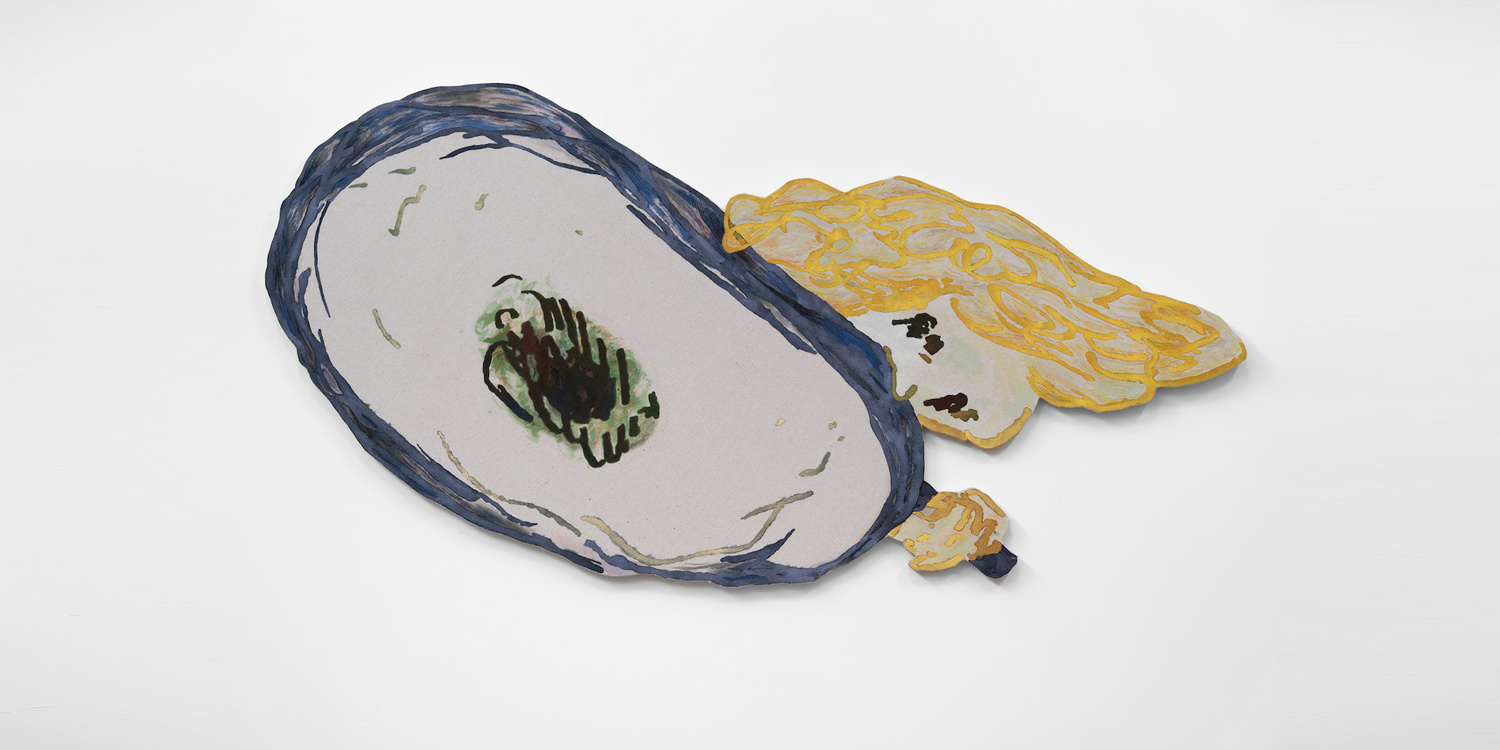
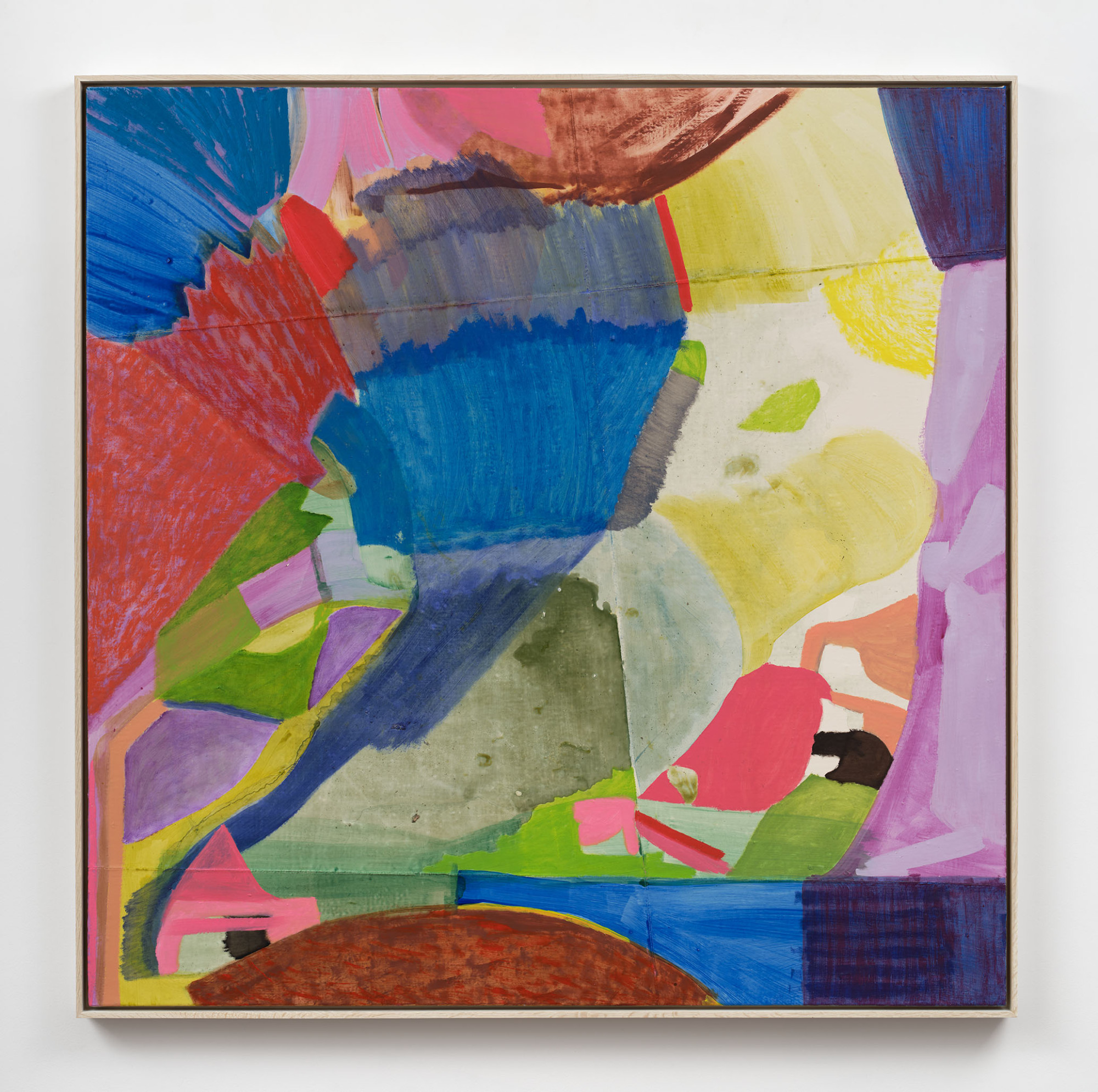
Dustin Hodges’ uniformly-scaled paintings offer repeating and morphing motifs. We see a cluster of rocks (or what began as such) derived from an Odilon Redon painting, lions in playful repose or coitus, or a shingle-style house from Tuxedo Park, New York. These motifs appear to be disparate, but are commingled, lined up, and overlaid like frames of a film. Redon’s rock cluster germinates into a spectrum of characters, personalities, alternates. However, fully apprehending his phantomic lions—variously cartoon, nature photographic, or painterly homage—remains fugitive. An architectural rendering of Bruce Price’s proto-modernist house presents a geometric counterpoint to an otherwise bucolic vision. Delicately thin, unmixed oil washes on pigmented grounds and crisp pencil lines, oscillate between transparency and definition. Hodges endeavors to map how things evolve over time and at the same time.
Dustin Hodges has held solo exhibitions at Galeria Mascota, Mexico City in 2016; Off Vendome, Düsseldorf in 2015; and Miguel Abreu, New York in 2014. He has been included in group exhibitions at The Meeting, New York in 2017; Max Mayer, Düsseldorf; Kensington Church, Montreal; and Off Vendome, New York, all of which were in 2015. Hodges lives and works in Los Angeles.
Boner, baby. (Bonheur, maybe? Bonnard, vaguely.)
In the final analysis, all one can ever have said to have shown is a part of one’s body. The other signifiers with which one embellishes the story can only cover over the void made by that part. This point, dangerously close to a lullaby sung in a psychoanalytic key, should only be made so that it and its goalposts can be discarded; as for the Situationists, the important parts are detours.
Let us index, in no particular order, some coordinates (in a show):
- A primal scene involving a pride of lions. The lead character of the family drama is a lion-baby with a boner. The figure’s positioning is such that it views the scene apart and gestures to the viewer of the painting. The figure is a copula of viewer and viewed; painters make exhibitions.
- The “primality” of the scene is a characaturish. Its location in the apex of the animal kingdom is almost a pun on Freudian primality; the viewers’ avatar is explicitly cartoonish; and there’s a perversion of the classical logic of the prohibition: “Joke’s on you; I like it!”.
- Jouissance in Lacan (to be understood as the pleasure-in-pain of self-abuse) is always solitary and always traumatic. Even en group, one jouis alone, beyond interpretation and language, with a degree of idiocy.
- When one catches view of one’s own body in the gaze of the Other, it appears as a stain. (Lacan, again.) Especially for those who make habit of showing, one could be said to be impelled by the stain: to make a mark in order that one leaves a stain.
- Hodges’ own word for the technical aspect of rendering is: yield. It means simultaneously “to stop” and “to produce.”
- Seen from outside, a window will always frame an interior (scene). The windows on view here show very little beyond the fact of the viewers’ relative exteriority. The dialogue with Alberti’s old origin-story (of painting as a window onto the world) is no coincidence.
Briefly, in Lacanian schemata, there are two primary modes by which surplus jouissance (pleasure in discontent) is sourced as a cycle of production: the mode of the Hysteric in which, not knowing what she wants but knowing this want makes her tick, provokes the other (person or ideology) who dominates; the mode of the University which, seeing the traces of wants in the activities of speaking beings, seeks to synthesize signifiers of knowledge, and puts the scholars to work. Together, these two modes form the groundwork for the Lacanian “discourse” of capitalism: induce surplus-jouissance from the syndication of objects-cause-of-desire; disseminate technical knowledge (self-help, management frameworks) on the maintenance of said enjoyment; monetize all intermediary activity.
To anyone who has followed clinical discourse or critical theory, the preceding gloss is nearly common knowledge, it was proposed by Lacan in Television forty-five years ago. Today, we’re living in the era of the objet-a ascendent, as Jacques-Alain Miller has characterized it. Individuated, fragmented, pursuant of modes of jouissance irregulated. It suffices to conduct a brief review of the business models of Facebook (Instagram) and the polar qualities of the American voter landscape to see that social links (ie, a discourse) have taken a back-seat to the super-egoic injunction to enjoy (and that the resulting flux admits considerable disproportion among its beneficiaries).
The two modes of production play out in the field of contemporary art, typically, with the artist on the side of the hysteric and the curator on the side of the university. Taken together, they form an efficient, if not always successful, symbiosis. One of the drawbacks of this arrangement, especially given the shift towards the image and post-conceptual linguistic practice as the primary network of dissemination, is that it solicits the support of a kind of knowledge that might not be pertinent and a financial arrangement that may not be sustainable.
How could an exit be effected? Lacan had his own formula but in the history of art there were many practitioners before he retroactively theorized their positions. We’ll borrow two terms which he uses explicitly: uselessness and wit.
Now, if most of these paintings can be seen in parallel as forms of interior pursuits, a lineage of painting emerges: Bonnard and Moreau as a bulwark by which to limit productivity and enclose interiorities. With an additional garnish: the boner-baby suggests a lampooning of contemporary (libidinal) economy; if a figure were to appear in one of these windows, it’s likely that the figure, in its interiority, would be showing us its ass.
- Tim Pierson, New York, October 2018