Ended Jul 28
Amalia Pica
While Inside
May 17 – Jul 28, 2019
More from Amalia Pica on Gallop
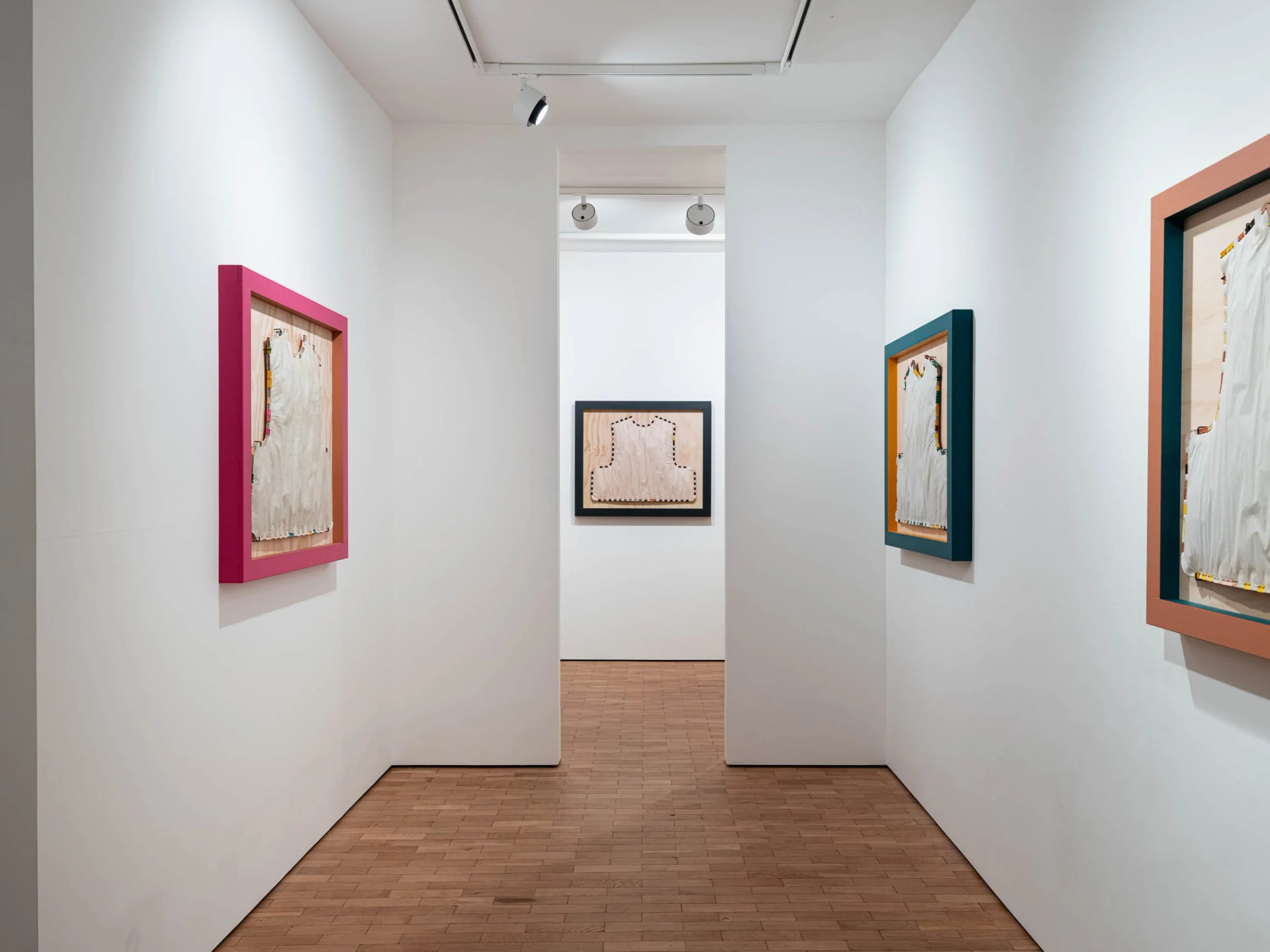
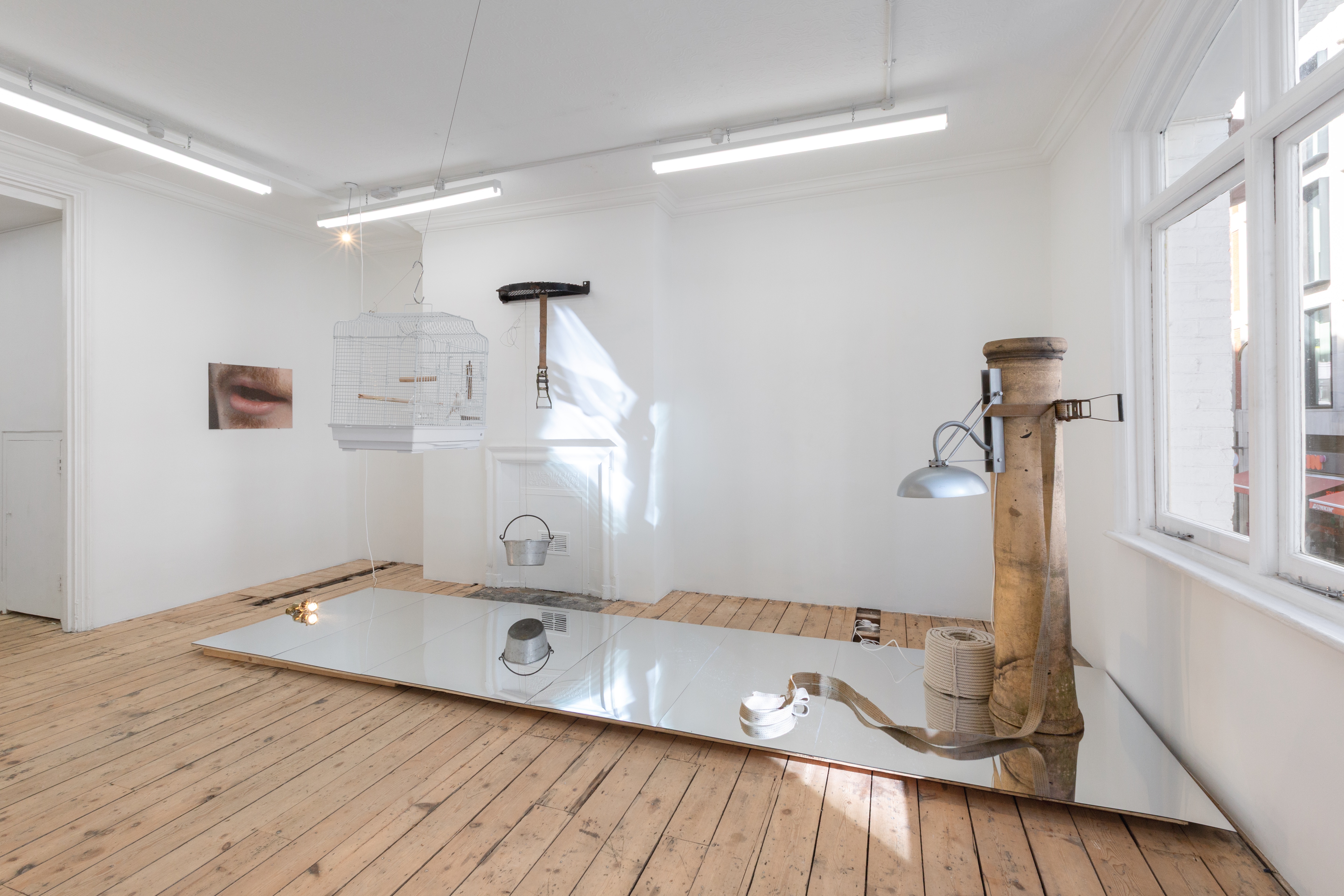
For While Inside, Amalia Pica turns her attention to the exchange with other species. As part of her long-standing interest in processes of communication, Pica chooses to focus on the material culture that is created in labs and zoos to aid the process of observation, be it scientific or recreational. The exhibition takes place across the gallery ́s two venues Herald St and Museum St.
At Museum St the new body of sculptural work utilises bespoke behavioural enrichment objects designed by humans for animals to keep them entertained whilst in captivity. Environmental or behavioural enrichment was a term first coined by pioneer primatologist Robert Yerkes, an animal husbandry principle, this seeks to improve the quality of care of captive animals providing stimuli necessary for their physical and psychological health. Made from colourful, heavy-duty polyethylene, the three-dimensional shapes are robust enough to be grappled, explored and played with. The various shapes address different requirements for the animal ́s well being, be it the alleviation of boredom through stimulating activities such as scratching, swinging, carrying, climbing and looking at themselves in the mirror, or by providing a refuge in the form of houses, hiding spaces and runs.
The wooden panels Multi male group models and one male models offer more of an intimate look at the artist observing the scientist. Pica invites us to look at the geometrical abstraction of thought by turning scientific diagrams into autonomous drawings. These studies are based on diagrams whose provenance is explained by Volker Sommer, a professor of Evolutionary Anthropology: “By looking at networks of kinship, anthropologists unravelled a considerable diversity of human societal structures. Primatologists replicated this method by recording relationships in monkey and ape groups. Diagrams then denoted genealogical connections between individual members of different age and sex classes. These pioneering studies vastly overestimated the governing role of males. This is reflected in sociometric sketches drawn up by anthropologist Robin Fox in the 1960s on which these abstract drawings are based on. We now understand that the structuring forces of sociality are embodied by females, who manipulate males through their ability to gestate and nurse babies. Moreover, today, computers allow us to conduct intricate analyses that depict social networks in three-dimensional simulations and models. Still, these webs call to mind how precarious attempts of communication will always be, given the complexity of interactions and relationships.” [1]
The video Catalogue of great ape gestures (in alphabetical order), 2018 reinterprets the gestures of primates, in which a dancer performs them sequentially. Sommer reflects: “rather than trying to teach human systems to animals, we could rely on their own long-established methods to communicate with them. In fact, at the University of St. Andrews in Scotland, primatologists led by Richard Byrne compiled a "Great Ape Dictionary". The assemblage of gestures applied by wild gorillas, orangutans, chimpanzees and bonobos reveals a surprising congruence across the different species, pointing to a shared evolutionary past. Apes, like artists, seem to have means to render visible what cannot be spoken. The researchers catalogued dozens of common gestures, from "arms wave", "beckon", "clap" and "dangle" to "stroke" and "tandem walk". The dance choreography follows the ape repertoire in its artificial alphabetical order. Ultimately, the re-enacting illustrates the limits of inter-species communication if one party prioritises its own system.” [2]
Amalia Pica (b. 1978 Neuquén, Argentina) lives and works in London. In 2020, Pica will have a solo exhibition at Brighton CCA. In 2019, she will have solo exhibitions at The New Art Gallery, Walsall, Centro Andaluz de Arte Contemporáneo, Sevilla. Group exhibitions include: Fly me to the Moon. The Moon landing: 50 years on, Kunsthaus Zürich, Zürich; Iteraciones sobre lo no mismo, Museo de Arte Contemporáneo Buenos Aires, Buenos Aires; Concrete Contemporary, Museum Haus Konstruktiv, Zurich; Museum of Contemporary Art Kiasma, Helsinki, Finland; Animalesque / Art Across Species and Beings, Bildmuseet, Umeå, Sweden; Is This Tomorrow?, Whitechapel, London and will participate in 12th Kaunas Biennial, After Leaving | Before Arriving, in Lithuania.
1, 2 - Please Listen Hurry Others Speak Better, 2018, Sternberg Press, Berlin (p.47, 93)