Ended Jun 16
Abraham Cruzvillegas
Little Song
May 5 – Jun 16, 2023
More from Abraham Cruzvillegas on Gallop
"Carmencita loves Patrick.
Patrick loves Si Lan Chen.
Xenophon loves Mary Jane.
Hildegarde loves Ben.
Lucienne loves Eric.
Giovanni loves Emma Lee.
Natasha loves Miguelito–
Miguelito loves me.
Ring around the Maypole!
Ring around we go–
Weaving our bright ribbons
Into a rainbow!"
—Langston Hughes, Little Song, Langston Hughes Reader (New York: Braziller, 1958)
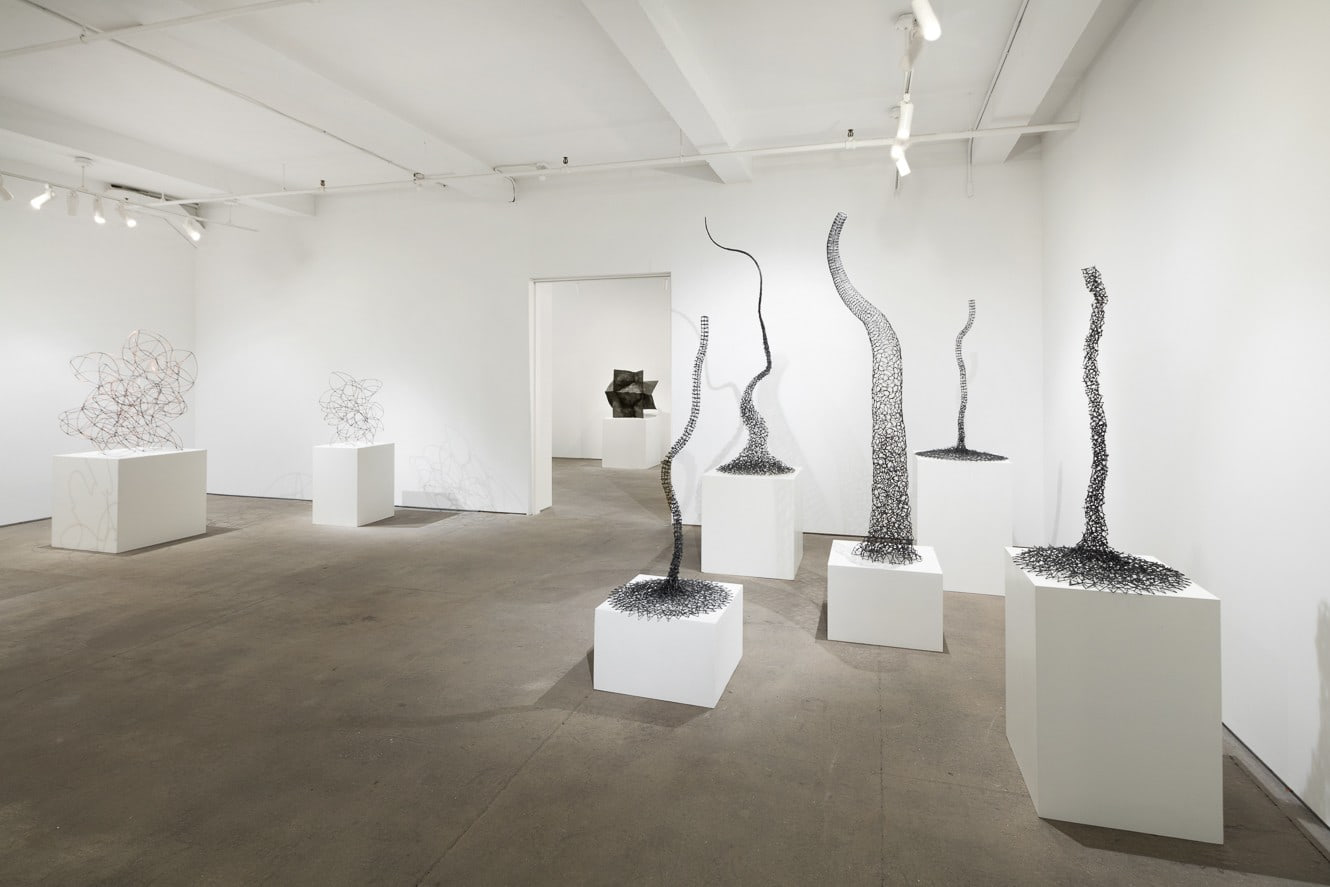
Abraham Cruzvillegas presents Little Song his second solo project with Kurimanzutto. The exhibition brings together a new body of sculptural pieces created this year. His previous show, Autocontusión, was held at the gallery’s temporary project space on the Upper East Side in 2018. The new artworks integrate Cruzvillegas’s signature pink and green, a motif used by the artist since 2003. They refer to the traditional colors of Brazilian artist Helio Oiticica’s Samba school, which Abraham encountered in the Mangueira favela in Rio de Janeiro, on a pilgrimage following Oiticica’s steps.
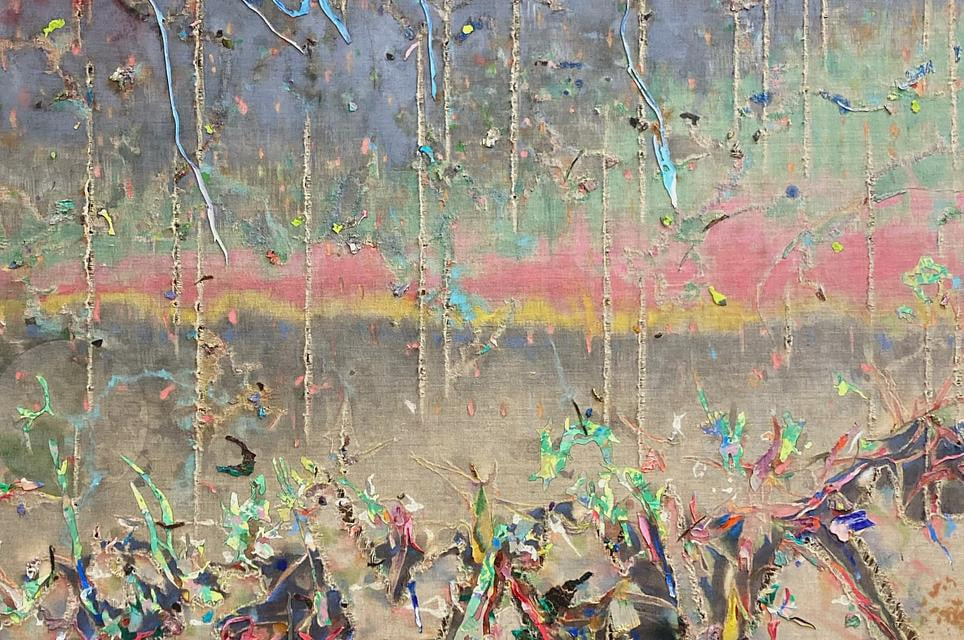
Since then, the combination of the contrasting hues has been a recurring element in many of his works. In Horizons (2005), the artist painted every single object in his studio with matte green and glossy pink to emulate the vibrant line that exists in the union of the color fields. This combination has been used repeatedly by Cruzvillegas to honor Oiticica’s influence and the disruptive ways in which he conceived art as an intricate part of life, following his rejection of his once singular vision of European Constructivism. For the first time, in this body of work, Cruzvillegas creates the colors himself through a combination of organic and mineral matter. Pink is produced by the crushing, smashing, juicing, dripping and smudging of blackberries, and green by the oxidation and alchemic transfiguration of copper in many of its forms: from scavenged cables, forgotten pennies and scraps of old plumbing pipes to pieces of engraving plaques, using vinegar, heat and air.
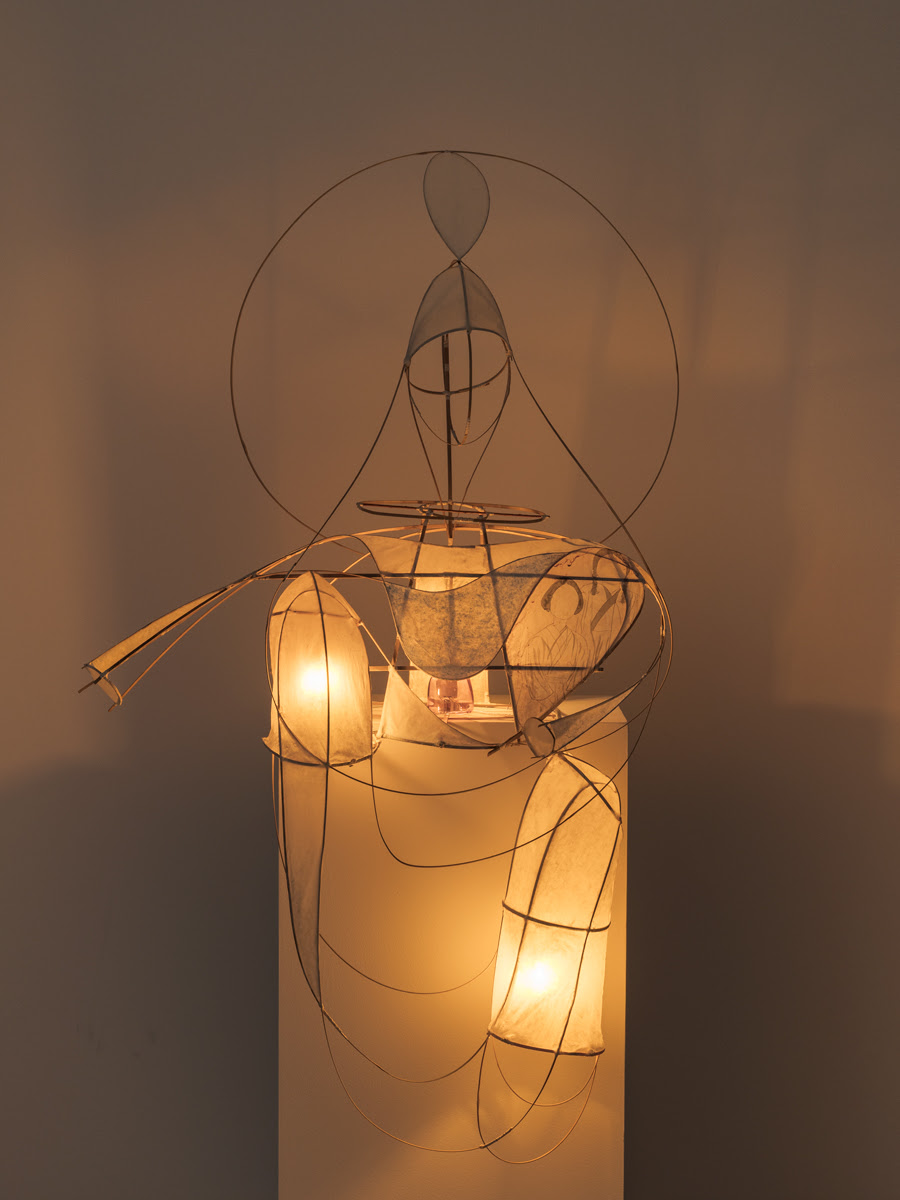
Geometric shapes cast in plaster evidence the remnants of his experiments in color creation and are covered in wax, while also containing the compositions of collected pieces of the artist’s life story: a champagne cork from a dinner party with friends, music records from Spain, horsehair ropes from a residence in Tequila, organic sponges painted for a show in Greece, repurposed scraps of paintings, ribbons from gifts, leather straps, usb cables, among many other objects that recompose fragments of Cruzvillegas’s existence. Although the selection of objects is entirely random, some will be collected from New York City itself in the run up to the show.
Inside the gallery space, these shapes hang from ceilings and walls, laid across the floor, some are connected to each other, and others stand on their own upon tubular copper legs. A few of the objects can be manipulated into different forms and have been altered throughout the duration of the show. This is a testament to the artist’s enduring fascination with using space in different ways and testing out all possible combinations in his work.
A central will for this project is to witness transformation, as he tries to understand the process of change through energy and the interaction between matter, including himself. Moreover, the artist tries to bear witness to the many ways in which we use our hands,including labor and pleasure, which is why he incorporates many handcrafted elements, manual tools used for creating other objects and bits of musical instruments, and evidence from joy, like beer bottle caps, balls, toys, shells, and seeds. The hand and its capabilities are present in all of the compositions and give a wide spectrum of activities that are part of everybodies’ everyday life, including the artist. The use of tools, as a distinctive characteristic that separates us from other primates, has been an important part of the artist’s research over the years and has been portrayed in literal, allegoric, and abstracted ways through his work, with pleasure as an engine.
Abraham Cruzvillegas’s artistic process is deeply influenced by his surroundings; rather than being defined by a particular medium, many of his projects are linked by the platform autoconstrucción: A concept that draws form the ingenious, precarious, and collaborative building tactics implemented by the people living in Colonia Ajusco, his childhood neighborhood in Mexico City. He appropriated this term in relation to his practice to describe an approach of inventive improvisation and instability which presents change as a permanent state arising from the chaotic and fragmentary nature of life. The evolving notion of autoconstrucción and autoconfusión. These inquiries have led him to explore his own origins and to collaborate with family and friends in a very personal form of research that results in a constant process of learning: About materials, landscape, people, and himself.
Through his oeuvre -which includes sculpture, painting, drawing, installation, and video–, Cruzvillegas reveals a close and constant engagement with the material world, immersing himself in the ongoing construction and transformation of personal and collective identities. Using a wide range of collected objects, his sculptures challenge the traditional conceptions of art making; while his paintings and drawings are marked by a keen depiction of the subject and a strong sense of humor —instilled in him from his early training as a political cartoonist. Parallel to his artistic production, Cruzvillegas has cultivated writing as an investigative tool of self-analysis that merges history, criticism, and fiction. His song lyrics and texts about art, politics, and culture are a layer to be added to his aesthetic practice.
Abraham Cruzvillegas studied Pedagogy from 1986 to 1990 at UNAM (Universidad Nacional Autónoma de México) in Mexico City while simultaneously attending Gabriel Orozco’s workshop Taller de los viernes. In 2012, he was the 5th laureate of the Yanghyun Prize and in 2006 he received the Prix Altadis d’ arts plastiques.