Ended Jul 19
Michael Dohr
Point of No Return
Jun 11 – Jul 19, 2025
More from Michael Dohr on Gallop
Mystical shapes, synthetic and bodily forms converge in the works of Austrian artist Michael Dohr, evoking systems and processes in flux - something being made or undone. Point of no return, the title of the artist's first solo exhibition at Kristin Hjellegjerde Gallery, Berlin, references the idea of an irreversible tipping point, embodied in the recurring motif of a falling drop. Whether a teardrop, a leak, blood, rain, ink, industrial waste, the drop is a symbol of suspended consequence, beautiful and doomed.
This is work made in response to a world saturated with decisive moments: from the pandemic to the climate emergency, from a new geo-political situation to artificial intelligence, from synthetic biology to the metaverse. We know that collapse is coming, but the drop is yet to hit the ground. In this space of anticipation, Dohr doesn't offer resolution or return, but invites us to consider what might come after the fall. The works suggest that within collapse, there may be the raw material for something new: forms of life and meaning not yet known.
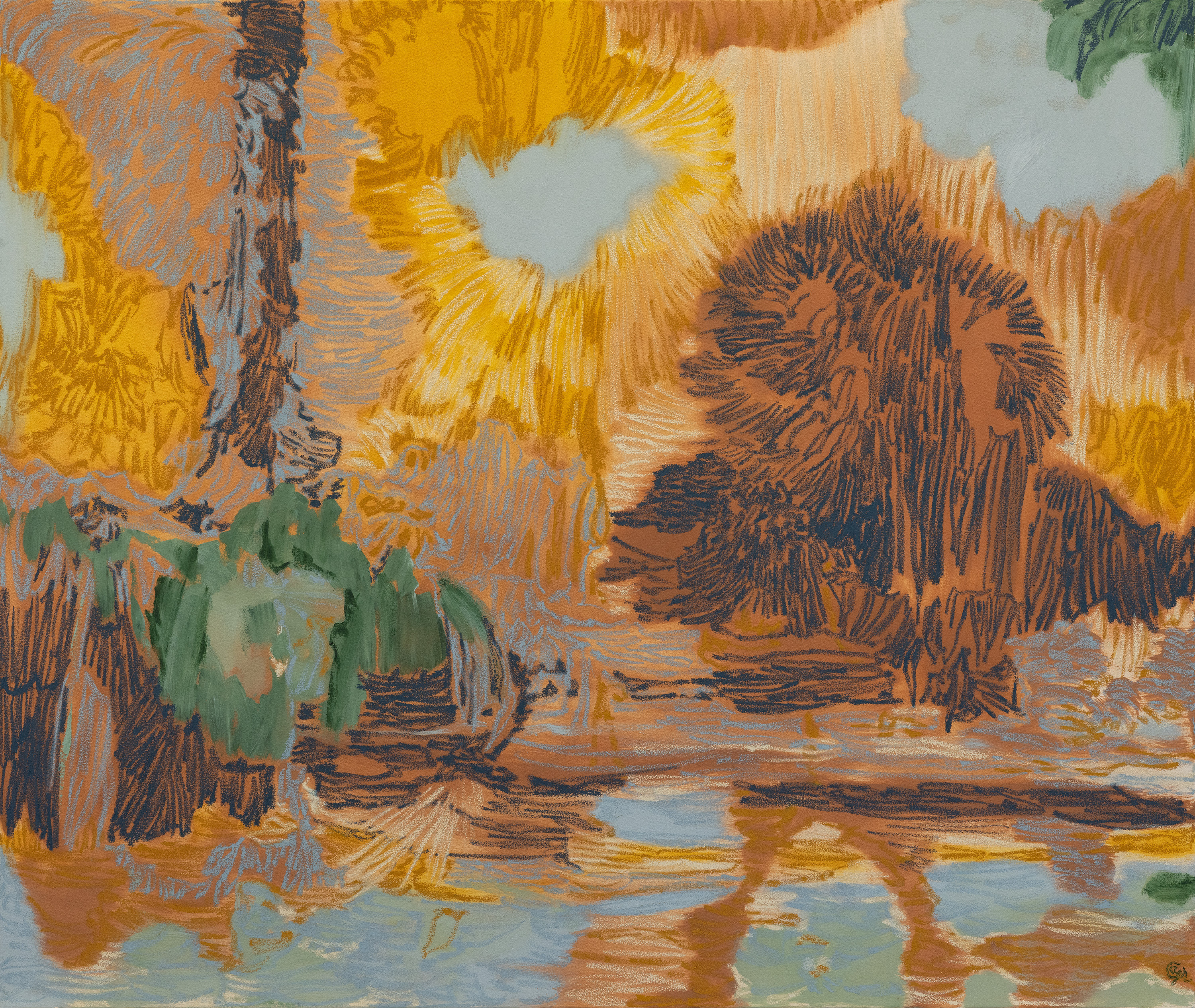
Central to this investigation is a reimagining of the body as hybrid and adaptable, no longer a single entity but part of an evolving system. Dohr's drawings, in particular, bring to mind bodily substance: red pastel marks evoke fleshy, fibrous materials and draw us into dense and chaotic spaces where branching structures resemble bones, tree roots, neural networks, tunnels or switchboards. We follow these lines in search of cohesion or clarity only for them to stutter, fade away or dissolve into dead ends. There's a push and pull between structure and entropy, precision and collapse, with multiple iterations suggesting obsessive, almost desperate attempts at landing upon a solution.
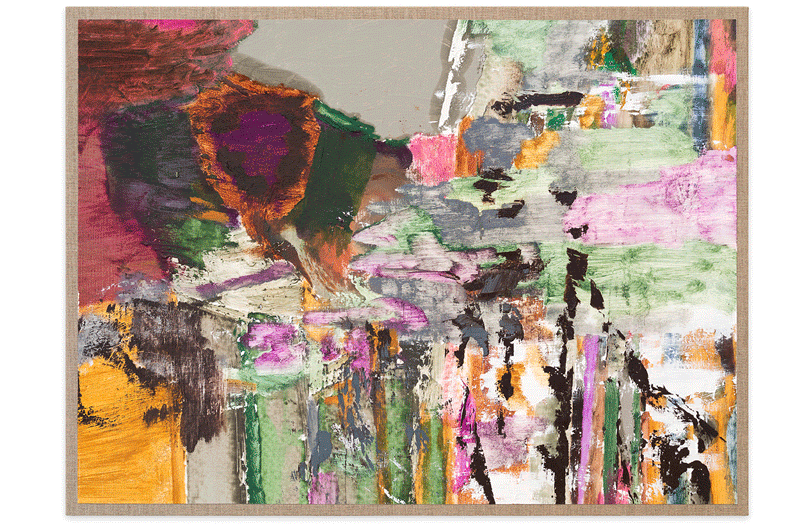
In Stacks, a series of large-scale mixed-media works, this fragmentation becomes tactile. Torn canvases are layered with linen, cardboard and metal, suggesting both wreckage and repair. These works operate like puzzles with no fixed solution, embracing uncertainty and surprise. Dohr has described this process as a form of problem-making, allowing disparate elements to interact until they coalesce into a fragile logic. It is a process both intuitive and alchemical, echoing the chaos of a world in transformation.
Dohr draws on a wide variety of source material, spanning medical imagery, construction debris, plant life and geological strata, to create works that occupy an unsettling space between organic and inorganic, human and post-human. His Nest sculptures, for example, take inspiration from natural forms to conjure hybrid objects that appear at once mechanical and alive, vulnerable and threatening. Silicone interiors suggest bodily tissue or the pulp of a fruit, cavities where something has been removed or might soon emerge.
Throughout the exhibition, there is a tension between surface and depth, symbols and matter, the flatness of code and the weight of flesh. Dohr is attuned to the metaphors encoded in materials: stains that speak of accidents, torn canvases that suggest rupture, drops that fall but never land. His works grapple with a world where the body is increasingly dislocated and yet remain rooted in physical experience, in texture and the insistence of form. In this way, Dohr offers a space where rupture makes room for strange beauty and reinvention.
Michael Dohr (b. 1982) is an Austrian artist whose work draws inspiration from the combining of the natural world with the industrialized society we live in. In his work, Dohr reflects on the manipulation of nature by creating landscapes depicting an ongoing process that involves notions of organic growth or materiality. In several of Dohr's pieces, he plays with the concept of an artificial replication of nature, inviting viewers to analyze innovative worlds caught between an organic past and a technological future. Dohr holds a BA in Transcultural Communication from University of Graz in Austria (2013), as well as a MFA from Chelsea College of Arts in London (2021).