Through Nov 14
Paula Rego & Thornton Dial
To Give Fear a Face
Oct 13 – Nov 14, 2026
More from Paula Rego & Thornton Dial on Gallop
Max Levai Gallery is pleased to present To Give Fear a Face, a two-person exhibition of important works by Portuguese-born British artist Dame Paula Rego (1935–2022) and American master Thornton Dial (1928–2016).
The exhibition looks at how images are constructed when the circumstances of an individual life become inseparable from the forces that shape it, and where storytelling becomes a way of examining how power is lived, negotiated, and resisted within ordinary life. The psychological complexity of Rego’s life is ever present in these works, and the rich, built-up surfaces of Dial’s canvases invite equally complex readings. Scholars, among them the critic Thomas McEvilley, have placed Dial within African American traditions of improvisation and of coding information through metaphor and abstraction, connected to what Henry Louis Gates Jr. called signifyin(g): a practice of allusion, irony, and innuendo that has long served as a means of critique.
Through this unexpected pairing of Paula Rego and Thornton Dial, a strong and rich dialogue emerges. Rego embraces traditional art historical tropes of storytelling, with tableau composition, the scale of history painting, and recognisable characters who return from picture to picture, while Dial, in his highly architectonic assemblages, uses equally enticing narrative devices and arguably calls on the same faculty in the viewer that Rego does. Both artists invite us to ask questions about the narratives within the picture, and both allude to a flawed view of something ideal. In each, there is a sense that the climax of the narrative has happened off stage: whether in Dial’s The Rich Man’s House (Tsunamis Don’t Discriminate) or Rego’s Lidia, we, the viewers, are left in the aftermath of an event, among its detritus, in a powerful combination of the literal, the metaphorical, and the psychological. In both bodies of work there is a palpable sadness, and a sense that the tragic event has travelled through the picture. We are left with images of lamentation, the stillness after the storm.
Rego was born in Lisbon in 1935, three years after António de Oliveira Salazar became prime minister. While her parents lived in England in the late 1930s she was cared for by her grandmother and the family maid, whose folk tales became as real to her as the world around her. From 1945 to 1951 she attended St Julian’s School in Carcavelos; her father, who told her that Portugal was no place for a woman, urged her to leave, and after a year at a finishing school in England she entered the Slade School of Fine Art in London in 1952. Her work remained deeply connected to Portugal, drawing on its folklore, domestic customs, and religious imagery alongside literature and contemporary political events. These sources were inseparable from her experience of a society in which authority reached into family life and prescribed the roles available to women.
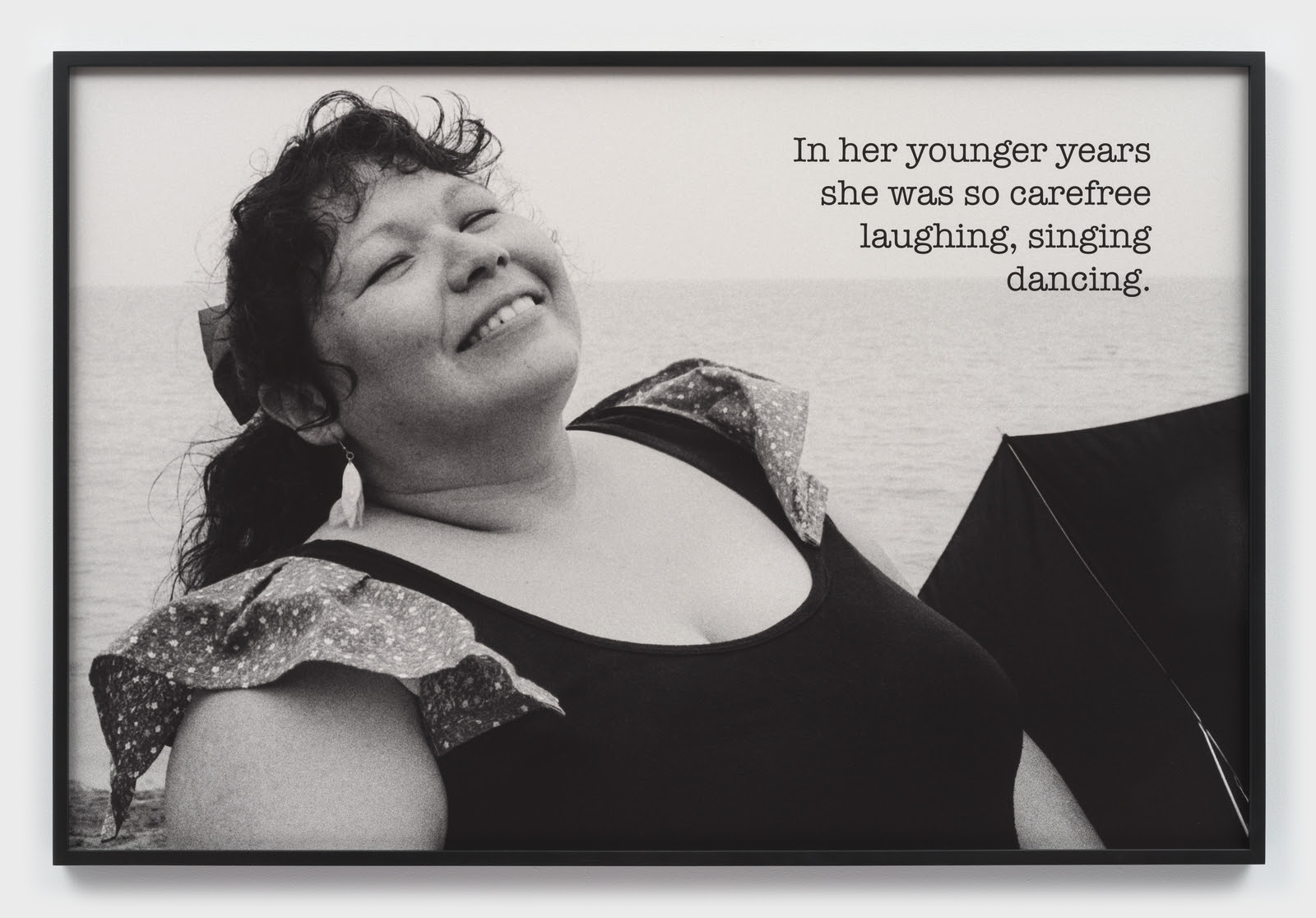
The Rest on the Flight into Egypt (1998), from her pastels after Eça de Queirós’s novel The Crime of Father Amaro, recasts the Holy Family with the novel’s priest, Amaro, in the place of Saint Joseph, the patron saint of fathers. He cradles the infant son whom, in the novel, he hands over to be killed; Amélia, who dies after the birth, kneels beside him, and a doll looks on from the background. As the scholar Maria Manuel Lisboa writes, the picture shows a family that never was, and the priest’s outsized scale makes him less a man than an emblem of the family, church, and state that protect him. Lidia (2000), a large Conté drawing, holds a single figure at close range. The Cake Woman (2004), prompted by a reunion with her childhood dance teacher, returns to the beaches of Estoril during the Second World War, when neutral Portugal filled with exiles, spies, and refugees, and a familiar figure from those beaches becomes a watchful presence over illicit encounters.
Rego’s activism is most direct in the untitled abortion pastels she made in 1998–99, after a referendum to liberalise Portugal’s abortion law narrowly failed; their exhibition in Portugal is widely credited with helping the 2007 referendum that finally passed. “The series was born from my indignation,” she said. Throughout her work, Rego transformed familiar characters and situations into encounters that unsettle inherited expectations: stories of devotion, protection, or obedience become questions about who provides care, who depends upon it, and what that dependence demands.
Born into a sharecropping family near Emelle, Alabama, in 1928, Dial came of age under Jim Crow segregation and spent most of his working life in Bessemer, where his trades included bricklaying, carpentry, and some thirty years as a metalworker building railroad boxcars at the Pullman-Standard plant. “I was raised by women,” he said; his great-grandmother brought him up, and his labor began almost as soon as he could walk. His artistic practice grew alongside this work, first as a yard show at his home, drawing on the materials, relationships, and resourcefulness of everyday life. “I mostly pick up stuff,” he said. “I start on a picture when I get a whole lot of stuff together. And then I look at the piece and think about life.” Rooted in the Black South’s vernacular culture, his imagery gave animals and familiar objects allegorical roles: the animal jawbone in Bone Dry becomes a symbol of both the drought and what was left behind. All five works here date from 2011, a year in which Dial was making work about Hurricane Katrina, the Japanese tsunami, and the Texas drought. In Farmer’s Green the sun shines on abundant crops made of heavy masses of rags, with spear-like strips of wood flying through the air, questioning the weight of labor in a Southern landscape Dial had farmed himself, and where, during the civil rights years, his hay was burned. The Berry Patch makes a harvest out of rags, wire, and artificial plants. Dial had been addressing Katrina since 2005, when Broken Levee made both the flood and the storm out of layered fabric, and Louisiana takes its name from the state at the center of that reckoning. In The Rich Man’s House (Tsunamis Don’t Discriminate), window screen, discarded furniture, and an artificial flower are held in Splash Zone, an epoxy made for patching metal, and a house is reduced to the debris a flood leaves behind. Dial used these visual narratives to connect personal experience with the larger histories of racial oppression, industrial labor, and the struggle for freedom.
Both artists belong to eras and cultures in which their own folklore, inherited stories, and ways of communicating experience through symbolic forms were part of the fabric of everyday life. Neither treated those traditions as closed worlds to be preserved or simply reproduced. Their respective pasts were living resources through which memory could encounter the present and where a story could be created. To Give Fear a Face brings this shared approach into focus without collapsing the differences between their lives or practices, and invites a reading of the two that moves between tension and harmony.