Ended Dec 16
Futurity
Nov 2 – Dec 16, 2022
Gabriel Chaile, Matías Duville, Marcelo Pombo, Alejandra Seeber, Amalia Ulman, Agustina Woodgate
The future past is the imagined future of past religious, political, philosophical, scientific, and artistic movements. Ideologies of the world around us were conceived by a future past. These have been used to imagine the emancipation of humanity.
Today the future evokes feelings of imminent catastrophe and the dark idea of extinction. The spirit of the times is eschatological. Humanity as a species is destined of being-toward-death.
Art is the design of future modes and, as such, provides new ways of being, seeing, interpreting reality, innovating artistic procedures, and thinking about humanity from a critical and creative perspective.
Artists can bring light because art is the exercise of thinking about different ways of being and experiencing the future. Art gives us the space to talk about time, whether it exists or not.
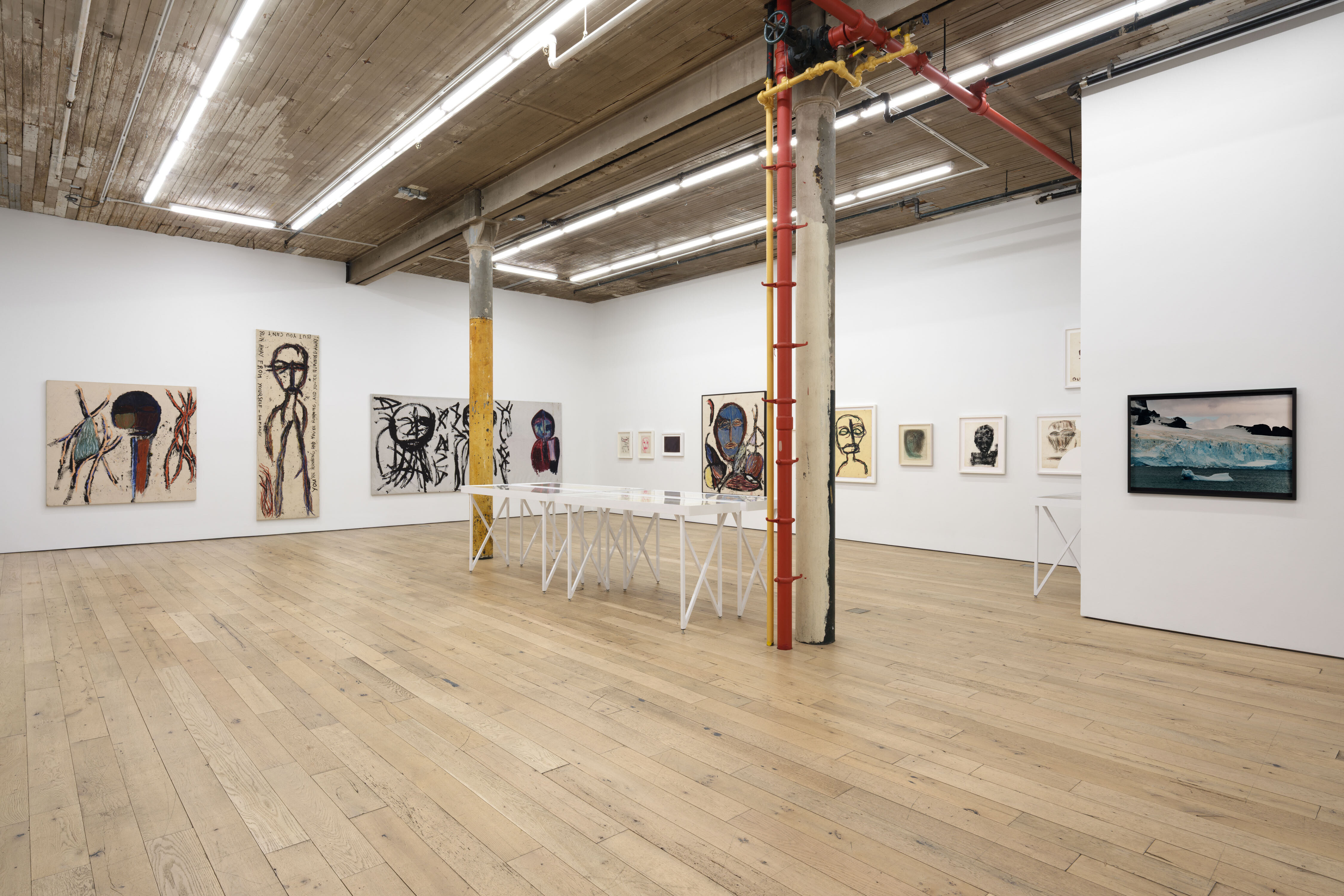
This exhibition explores different angles on life on a critically damaged planet around the notions of Social (Gabriel Chaile and Agustina Woodgate), Nature (Matías Duville), Language (Alejandra Seeber), and Sexuality (Amalia Ulman and Marcelo Pombo).
The strategies are heterogeneous: humor, criticism, irony, joy, or allusion. The articulation between the media, the materials, the procedure, and the theme are singular, none supposes a direct relationship between the representational and the political.
Art could be understood as a time granted by the passing of the last god. In this sense, artists can shape a new philosophy for collaborative survival because art is the opening on the horizon of possible worlds.
Gabriel Chaile’s art disposes of commensality as a political philosophy to think about a possible future for humanity. Chaile creates a poetic singularity connecting methodology, objects, languages, and subjectivity at the intersection of the sacred and the profane expressed through imagery of pre-Columbian communities. He carries out his anthropological and visual research in dialogue with postcolonial theory. Chaile’s visual and theoretical frameworks are based on two key concepts. The engineering of need consists of creating objects and structures from artistic practice to a collaborative survival strategy improving the conditions of a particular borderline situation. The genealogy of shape implies acknowledging that every object in its historical repetition has storytelling that is recovered and updated concerning the new context. These two essential concepts articulate the ancestral life and the contemporary knowledge as matter and media of an artwork that creates future models of survival on a damaged planet.
Matías Duville has a dreamlike vision of an explorer looking into the sky in a retrospective vision of the universe: the memory traces of starlight in the immense darkness. Duville’s work evokes scenes of quantum reality with timeless atmospheres and metaphysical landscapes devastated by cosmical, human, and planetary catastrophes. Duville’s work is characterized by experimentation with different mediums and materials, such as mud or charcoal. Where the earth is life and the charred wood has a direct relationship with the barren, burnt, congealed, and devastated landscapes that are a recurring image in his drawings. It is a dialectic between mutation and time. The procedure and expressive strokes of the drawing modify the surface of the image, leaving traces in the representation and marks that fuse the material’s nature with the landscape’s symbology. Fungi also appear in the imagery of his works, organisms that feed, heal, reveal the universe’s secrets, and could save the planet.
Alejandra Seeber’s paintings explore the notion of a fluid spacetime relying on her practice of pictorial meditation, a mantra of the gesture, a satori of the brushstroke. Seeber’s artistic procedure consists of focusing on the idea of quantum spacetime. Some of her paintings look like electrons in a magnetic field and can be regarded as moving in quantum spacetime. Her work deconstructs and lifts the layers of the object of the gaze. Seeber undresses its intentions and suggests a new approach to what is real. Art is that which crosses configurations of meaning. Seeber’s painting is a phenomenology of language. Painting is a painting of something. Painting is the dialectic of looking and being looked at.
It is the language of things that do things, of thoughts that make thoughts in the face of multiple points of view. The painting is thus transformed into reality from multiple views. The painting crosses the body like an X-ray. It is the investigation of visual language and its ability to create portals to imagine possible worlds.
Agustina Woodgate’s National Times comprises a series of analog “slave” clocks operated and synchronized by a digital “master” clock.
The master clock has unidirectional control over the slave network. The master/slave clocks are a hallmark of a factory education system designed for the capitalist mode of production to achieve mass orchestration and industrial exploitation. As National Times progress, the minute hands of the slave clocks scrape away the numerals on their faces.
The clocks will operate until all numbers are entirely eliminated. Time, School-Discipline, and Industrial Capitalism generate a condition of precarious production that never accounts for the actual costs of its power infrastructure. National Times depicts current economic measures of labor and value in the process of disintegration.
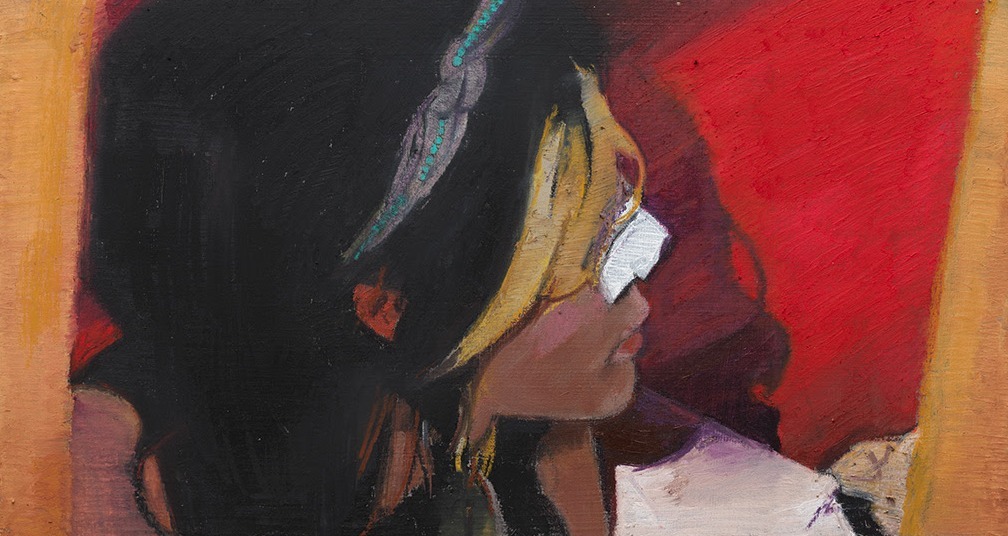
Amalia Ulman ponders human relations, social imaginaries, power, and hierarchy in the face of particular themes such as gender, sexuality, seduction, authenticity, and adolescence. This possibility motivates the choice of specific subject matter, mainly social, which evokes certain media such as social networks, performance, sculpture, installation, photography, film, or artificial intelligence, managing to set bodies and consciousness in space and time. Dignity shows the reactions from corners of the Internet community, with people outdoing each other in their expressions of hostility, resentment, and hate. A central component of present-day media discourse is the excessive, unfiltered expression of aggression and false information, as well as the manipulation of public opinion. Hate speech covers many terms that promote and justify hatred, violence, and discrimination against a person or group of persons for gender, class, ethnicity, or political ideology reasons. Dehumanization represents a prior episode of ethnic or political cleansing. The terrors of language in its future represent an imminent danger for human coexistence in general.
Marcelo Pombo’s 1983 Drawings combine the counterculture of the 1970s and the dawn of gay culture in public opinion in Buenos Aires during the democratic opening after the last civil-military dictatorship between 1976 and 1983. During the collective catharsis of the last year of the dictatorship, Pombo produced a series of drawings where violence is represented through mutilations, viscera, and blood. An imaginary that articulates the dark with porn and pop with sophisticated pamphlet reminiscences of political activism.