
Ended
Hermetic Definition
Mar 24 – Mar 24, 2018
Performances by Alexander Boland, Lillian Paige Walton, Lauren Burns-Coady, Adrian Rew, Shakespeare the Sadist (Written by Wolfgang Bauer. Starring Cammisa Buerhaus, Tavish Miller, Luke Schumacher, and Dylan Aiello. Directed by Michael Pollard.)
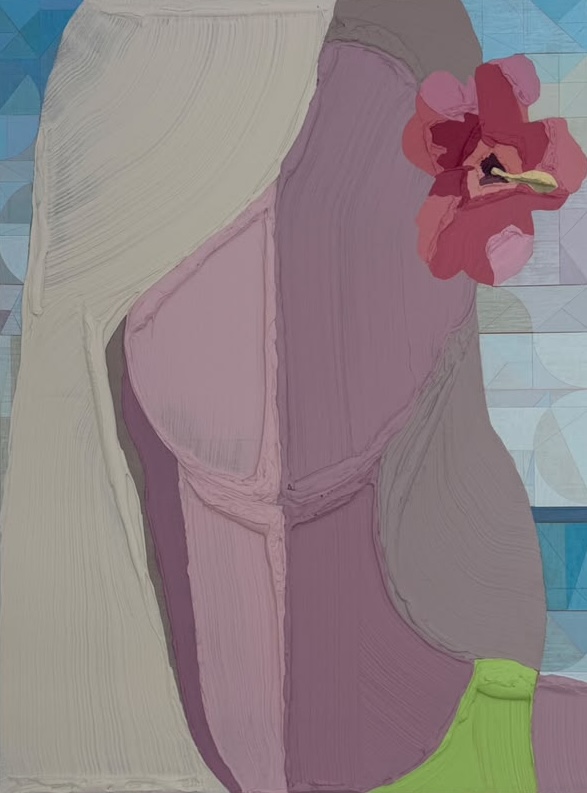
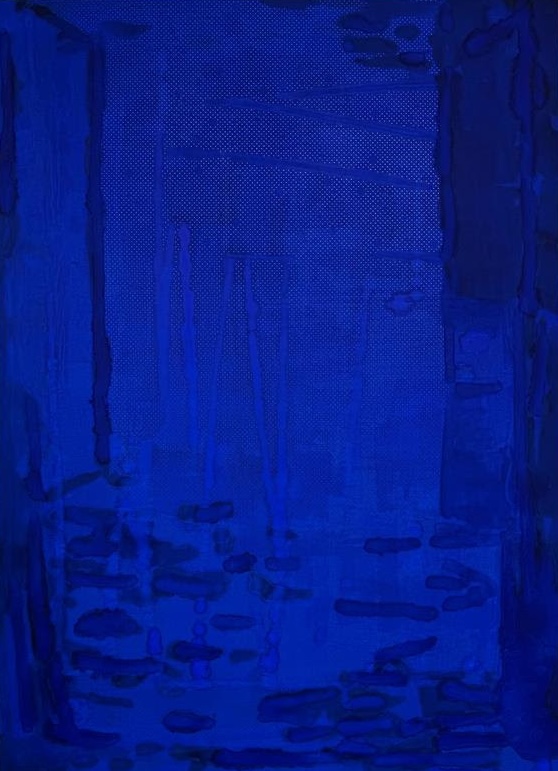
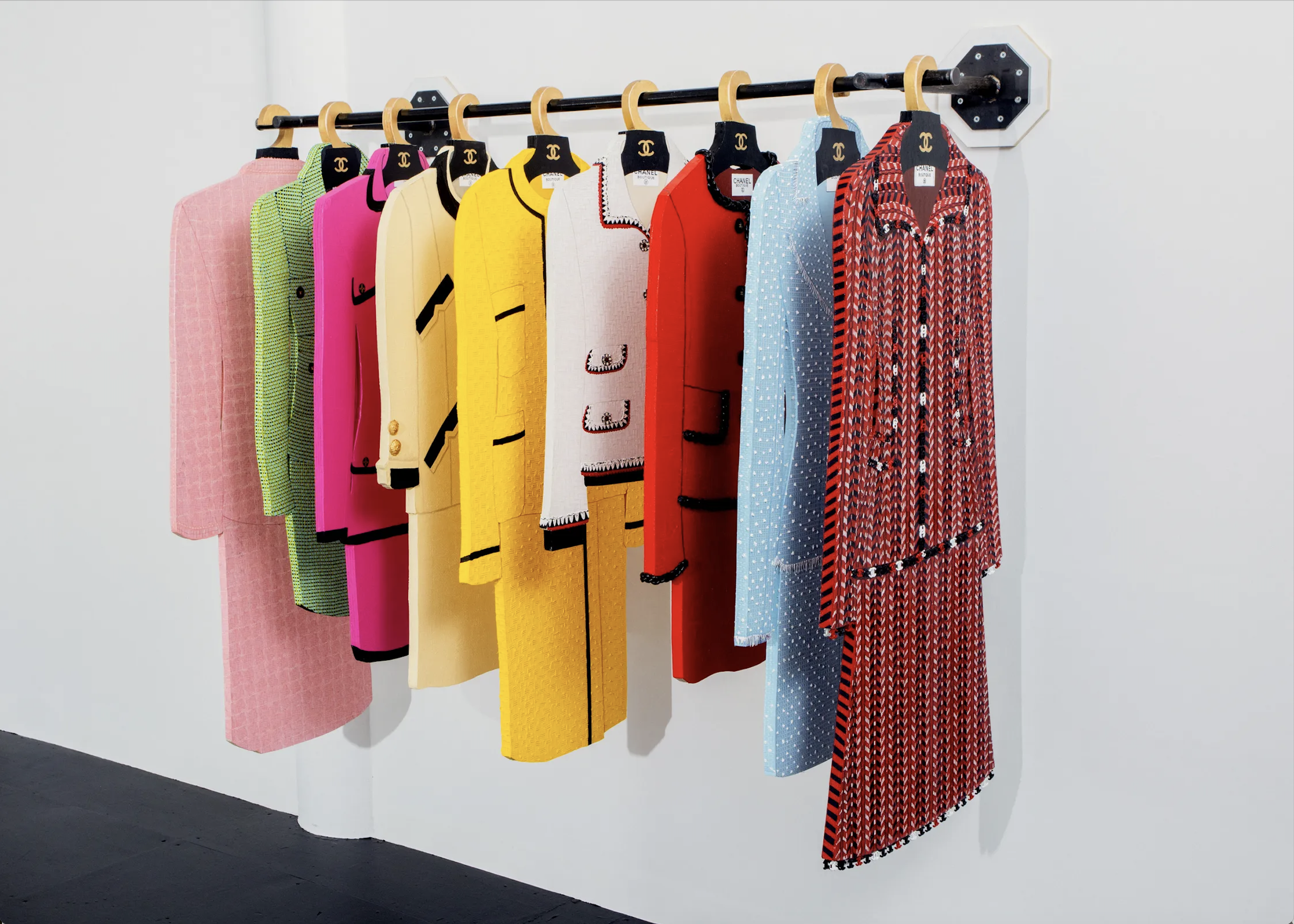
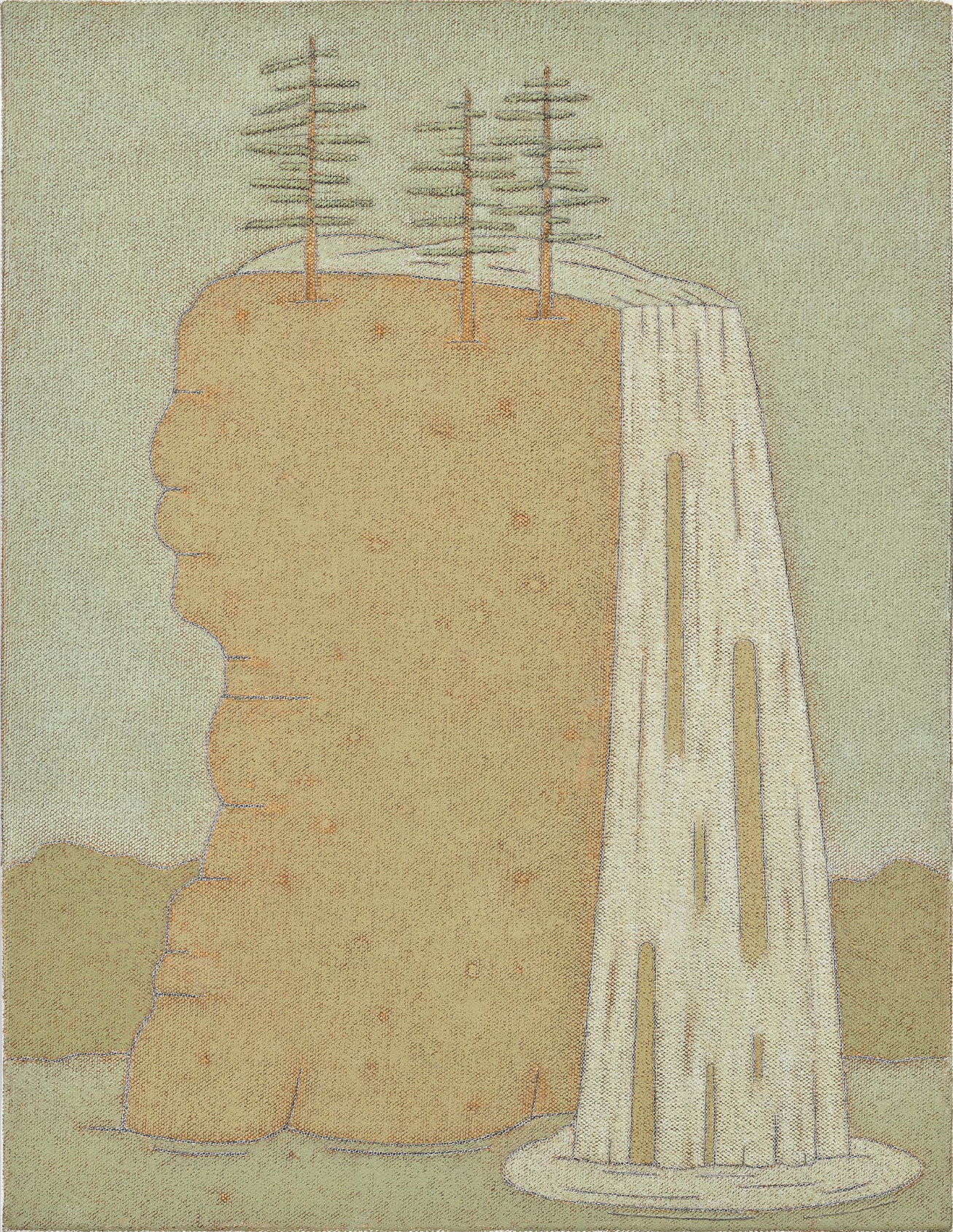
Artwork by Graham Vunderink with a piece by Marlous Borm
Curated by Kavita B Schmid
Hermetic Definition
If the set of all linearly independent subsets has an upper bound then it has a maximal element that is not smaller than any other element in the set, which is the basis of the vector space. This is proved by Zorn's lemma which is equivalent to the "Axiom of Choice" where a function can choose an element from each set based on index.
"The functioning of the 4G-smartphones depends on the phones ability to quickly carry out certain transformations (DFT/IDFT) in certain (for example) 1024-dimensional subspaces of the space of (periodic) functions." - Jyrki Lahtonen
Proof that every vector space has a basis[edit]
Let V be any vector space over some field F. Let X be the set of all linearly independent subsets of V.
The set X is nonempty since the empty set is an independent subset of V, and it is partially ordered by inclusion, which is denoted, as usual, by ⊆.
Let Y be a subset of X that is totally ordered by ⊆, and let LY be the union of all the elements of Y (which are themselves certain subsets of V).
Since (Y, ⊆) is totally ordered, every finite subset of LY is a subset of an element of Y, which is a linearly independent subset of V, and hence every finite subset of LYis linearly independent. Thus LY is linearly independent, so LY is an element of X. Therefore, LY is an upper bound for Y in (X, ⊆): it is an element of X, that contains every element Y.
As X is nonempty, and every totally ordered subset of (X, ⊆) has an upper bound in X, Zorn's lemma asserts that X has a maximal element. In other words, there exists some element Lmax of X satisfying the condition that whenever Lmax ⊆ L for some element L of X, then L = Lmax.
It remains to prove that Lmax is a basis of V. Since Lmax belongs to X, we already know that Lmax is a linearly independent subset of V.
If Lmax would not span V, there would exist some vector w of V that cannot be expressed as a linear combination of elements of Lmax (with coefficients in the field F). In particular, w cannot be an element of Lmax. Let Lw = Lmax ∪ {w}. This set is an element of X, that is, it is a linearly independent subset of V (because w is not in the span of Lmax, and Lmax is independent). As Lmax ⊆ Lw, and Lmax ≠ Lw (because Lw contains the vector w that is not contained in Lmax), this contradicts the maximality of Lmax. Thus this shows that Lmax spans V.
Hence Lmax is linearly independent and spans V. It is thus a basis of V, and this proves that every vector space has a basis.
This proof relies on Zorn's lemma, which is equivalent to the axiom of choice. Conversely, it may be proved that if every vector space has a basis, then the axiom of choice is true; thus the two assertions are equivalent.
Source: Wikipedia
For a more in-depth explanation, proof, examples, theorems, and lemmas see: http://sierra.nmsu.edu/morandi/OldWebPages/Math482Spring2005/Zorn.pdf