Opens Nov 19
Mark Baugh-Sasaki, Pan Caoyuan, and Yeoh Choo Kuan
Ephemeral Ground
Nov 19 – Dec 23, 2026
More from Mark Baugh-Sasaki, Pan Caoyuan, and Yeoh Choo Kuan on Gallop
Alisan Fine Arts is pleased to present Ephemeral Ground, an exhibition that features three artists from across the globe. Their work nevertheless shares investigations into ephemerality, the passage of time, and humanity’s changing relationship to the landscapes that surround us. Despite their distinct visual languages, the works of Mark Baugh-Sasaki (San Francisco), Pan Caoyuan (Hangzhou), and Yeoh Choo Kuan (Kuala Lumpur) reveal an underlying exploration of liminal spaces, navigating the fluid boundaries between place and time.
Mark Baugh-Sasaki’s practice examines the influence of cultural, historical, and geological forces on our perception of landscape—and, in turn, how those landscapes shape our understanding of ourselves. The Present Throws Its Shadow was made at the height of the pandemic, the same season in which Mark Baugh-Sasaki welcomed his daughter into the world and the 2020 wildfires burned across California. In a time of great stress and upheaval, his world shifted overnight. Places that had long offered peace and respite were drastically changed by fire, a jarring reconfiguration of the landscape he knew. As he contemplated what had been lost, Baugh-Sasaki began to question his expectations of the terrain, and how much of that assumption was shaped by perception rather than by the land itself.
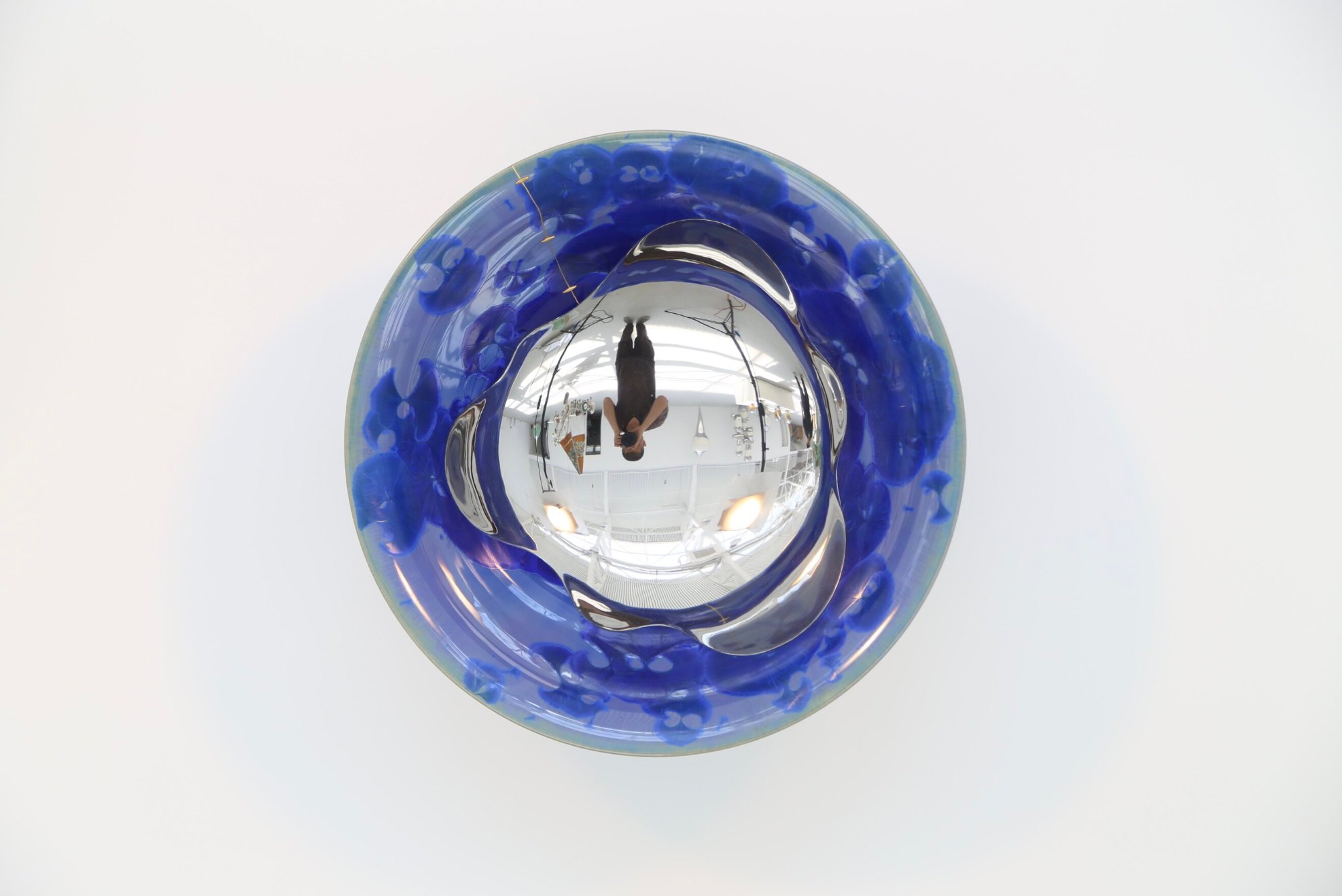
The work comprises a length of wood bent under the weight of a stone, which was gathered from the Carson River within the burn area of the Tamarack Fire. The stone hovers just above a container of earth from the same site, a location Baugh-Sasaki has long been connected to. He often sees the bowed wood as a reflection of himself: flexible under the weight of circumstance, reshaped by it. The stone carries the psychological gravity of the event. It remains suspended over the soil, at once a part of and forever separated from the earth.
“In this suspension, the work holds the memory of what was lost, the current state of the place, and its uncertain future. The landscape exists as past, present, and future all at once.”
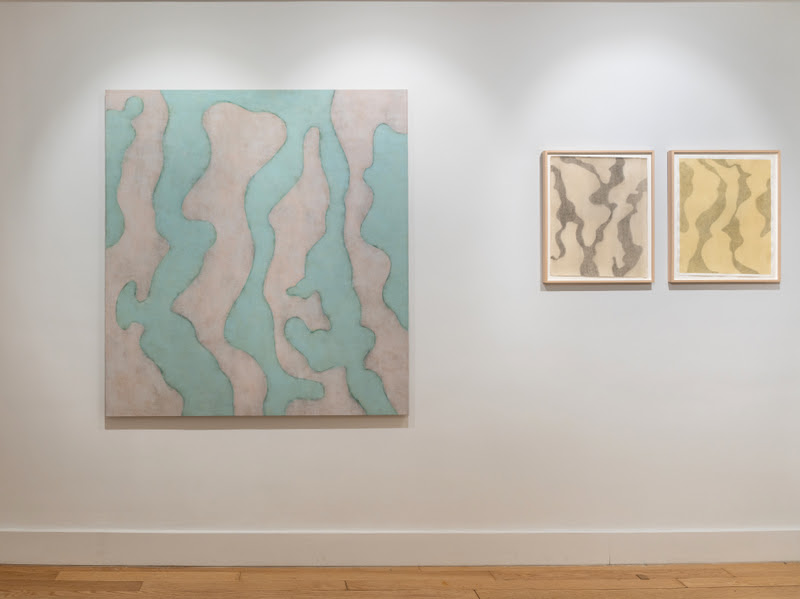
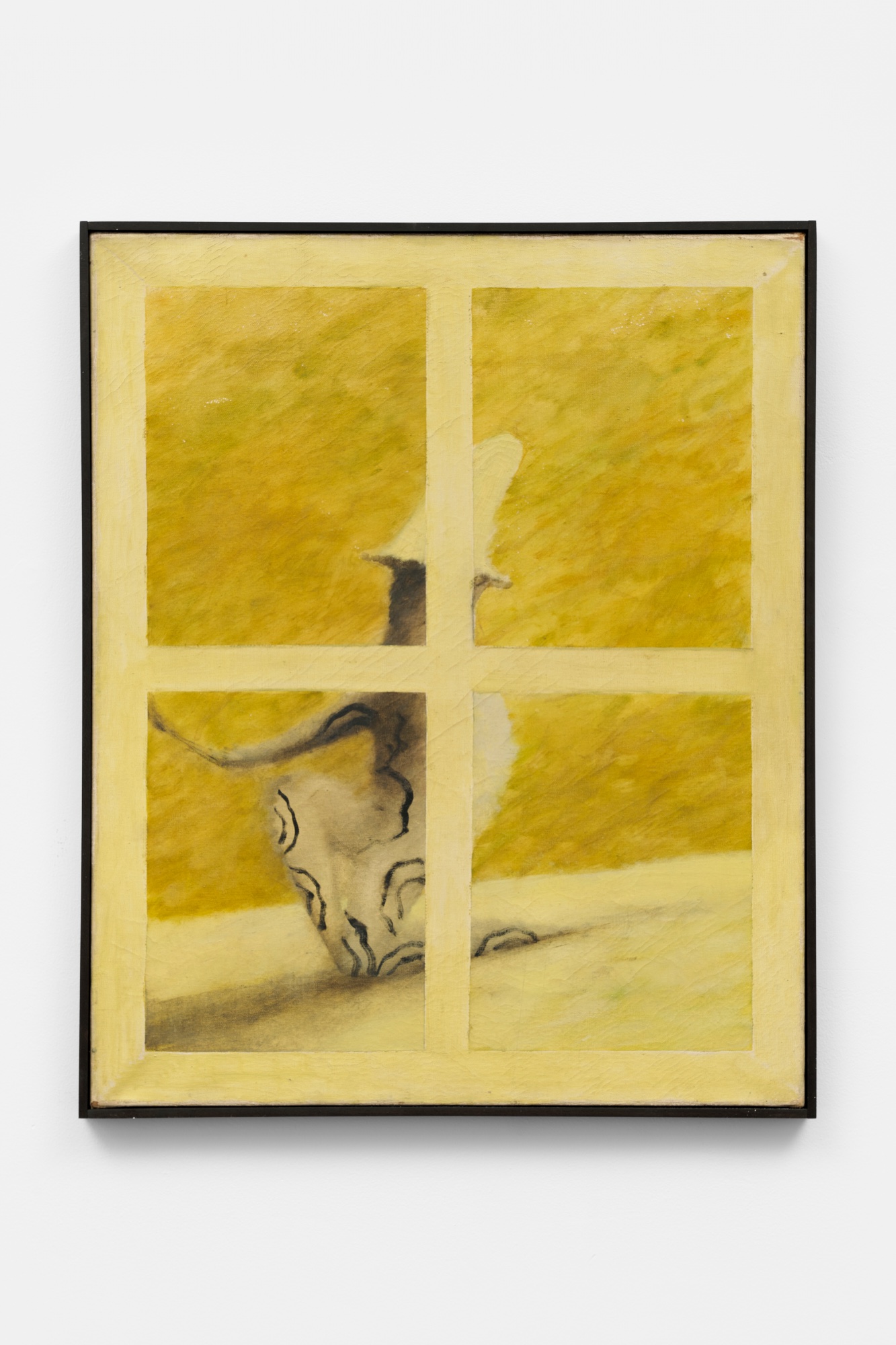
Yeoh Choo Kuan creates ‘mountain-scapes’ through his signature method of spilling, dripping, and scratching paint across heavily textured canvases—a technique he calls “fleshing abstraction.” Marks accumulate, repeat, bleed, and peel away, with geometric structures overlaid and interrupted by looser gestures. The irregular wooden surfaces are built as overlapping visual fields, though the artist blurs the physical ‘boundary’ between them. A stain begins to suggest a mountain, a drip resolves into water, a fold reads as a cliff face, and repetition turns pattern to terrain—before the reading slips, and the surface re-abstracts.
The resulting works carry themes of impermanence, fluidity, and even violence. Indeed, in his artist statement, Yeoh reveals a fond memory of discovering an illustrated book on Diyu, the Buddhist depiction of hell. The experience sparked a life-long fascination with human suffering. “It was weird,” Yeoh reflects with a smile. “I felt guilty that I was so excited by these images within such a spiritual environment. They were designed to scare, yet I was so inspired by them.”
Yeoh’s works, though they are read as landscapes, are an act of transformation rather than concealment. He is interested in the assumption of the eye—how little visual information is required before we label artwork as landscapes, and whether a landscape can be present without ever being depicted. Yeoh treats traditional landscape painting not as a fixed historical aesthetic, but as a way of organizing sight—one capable of inhabiting materials and processes it was never intended for.
Pan Caoyuan works with natural lacquer, incorporating metals, mother-of-pearl, pearls, fibers, and various powders used in preparing lacquer supports and grounds. She is drawn to the inherent volatility of lacquer, which is consistently changing and becoming. The artist explains:
“Lacquer sap is harvested from lacquer trees, and its properties are affected by differences among the trees themselves: their growing conditions, and the timing and method of harvesting. Its curing into a lacquer film involves a series of reactions, including the laccase-catalyzed oxidative polymerization of urushiol; the composition of the sap, laccase activity, temperature, humidity, and other conditions all affect this process. Even after more than ten years of working with lacquer, I still cannot fully predict how it will appear at each stage. To some extent, I look forward to these changes, and to accidents in the making process.”
Pan’s practice unites a diverse and sweeping collection of visual art practices: painting, tracing, modeling, carving, incising, filling, inlaying, grinding, splashing, and more.
Pan Caoyuan’s Secluded Play series is created on a wooden panel and constructed through the application of numerous layers of sap. Each layer requires time, polishing, and controlled conditions to cure, resulting in a shifting, luminous polymer surface that changes with the viewer’s movement. Embedded in the lacquer are pieces of mother-of-pearl, abalone shell, and silver snake forms; red mica creates iridescent splashes of color that seem suspended in space. Grounded in Chinese lacquer customs, Pan bridges themes of ritual, ornamentation, and premodern cosmologies with the contemporary, exploring modes of understanding that predate modern scientific materialism.