
On view
Brice Marden
From Line to Plane
Sep 24 – Nov 20, 2026
Susan Sheehan Gallery is pleased to present Brice Marden: From Line to Plane. The exhibition brings together complete sets of Marden's landmark print portfolios Ten Days (1971–72), Etchings to Rexroth (1986), Cold Mountain Series, Zen Studies 1–6 (1991), Han Shan Exit 1–6 (1992–93), and Suzhou I–IV (1998), alongside other foundational prints spanning more than three decades of his practice.
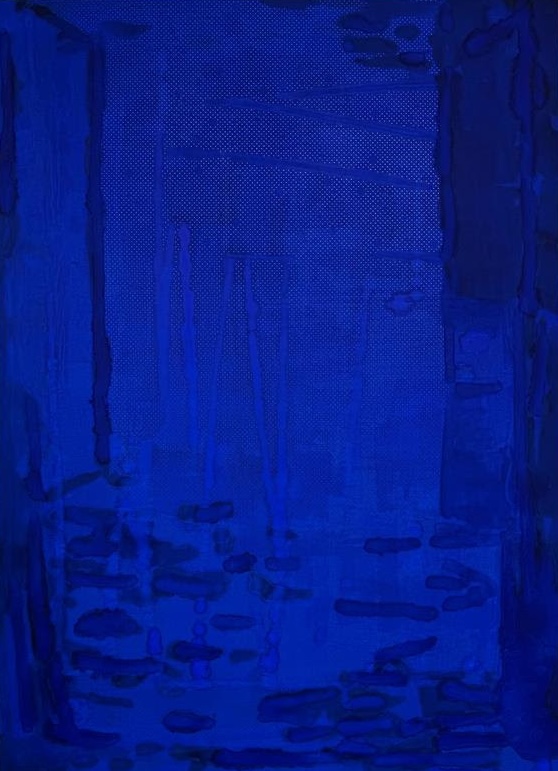
Marden created pioneering, postwar era abstractions whose elegant linearity and subtle variations of color and texture possess a complexity that belies their apparent simplicity. From his early monochromes to his later calligraphic works, he pursued a unity of form and surface, texture and color, gesture and composition. This is as evident in his prints as it is in his paintings. Together, these works reveal printmaking not as a secondary pursuit, but as a vital arena in which Marden tested and refined his visual language.
Building on his graduate studies in printmaking at Yale, where he worked alongside Richard Serra, Robert Mangold, and Nancy Graves, Marden later collaborated with groundbreaking publishers including Chiron Press, Gemini G.E.L., and Parasol Press.
In Ten Days (1971-72), a set of eight etchings, six with aquatint, Marden offers a sustained meditation on the minimalist grid. Repeated hatching and errant marks animate the surfaces, transforming blank voids into scintillating planes rich with incident. As print scholar Jeremy Lewison observed, "Marden eschews the grand gestural marks of Abstract Expressionism in favour of a tighter, more controlled stroke."
By the time of Cold Mountain Series, Zen Studies 1–6 (1991), the modular structures of Marden's early work had evolved into delicate gestural lattices that tumble and intertwine like moss or weeds. Across these six large-scale etchings, he expanded his graphic vocabulary through aquatint, sugar-lift aquatint, and spit-bite aquatint. Created alongside his Cold Mountain paintings, the prints draw a parallel between viewing an image and reading poetry. In the artist's words, "You read the characters against each other a little bit. The first phrase joins up with the next phrase. It's a much more open kind of translating than that which is done in Western poetry." Here, the seemingly opposing acts of reading and looking, cognition and emotion, become inseparable.