
Ended
Constellations
Feb 21 – Mar 22, 2025
Michael Buthe, Jay Carrier, Gabrielle L'Hirondelle Hill, Siobhan Liddell, Mickael Marman, Ipeh Nur
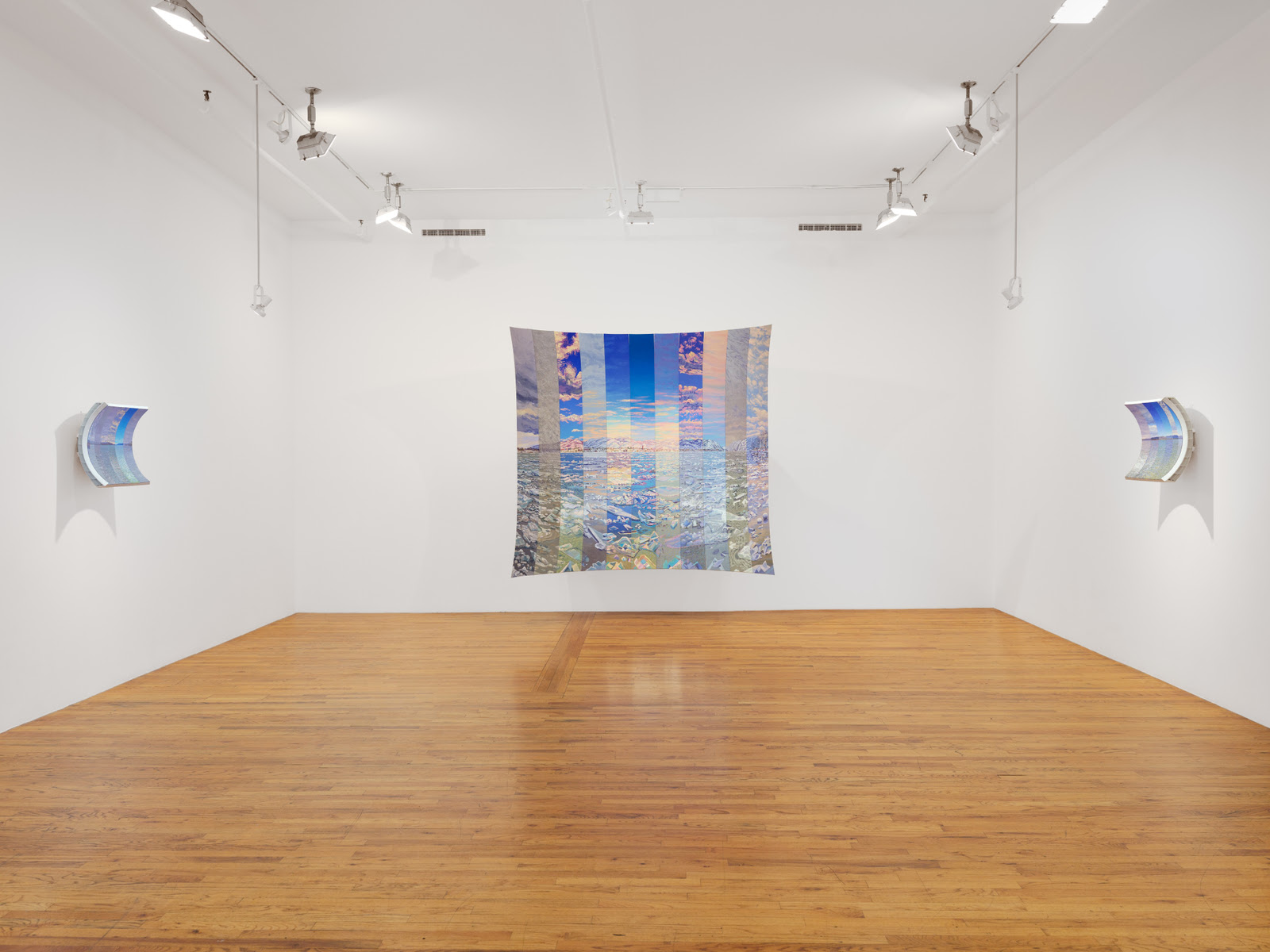
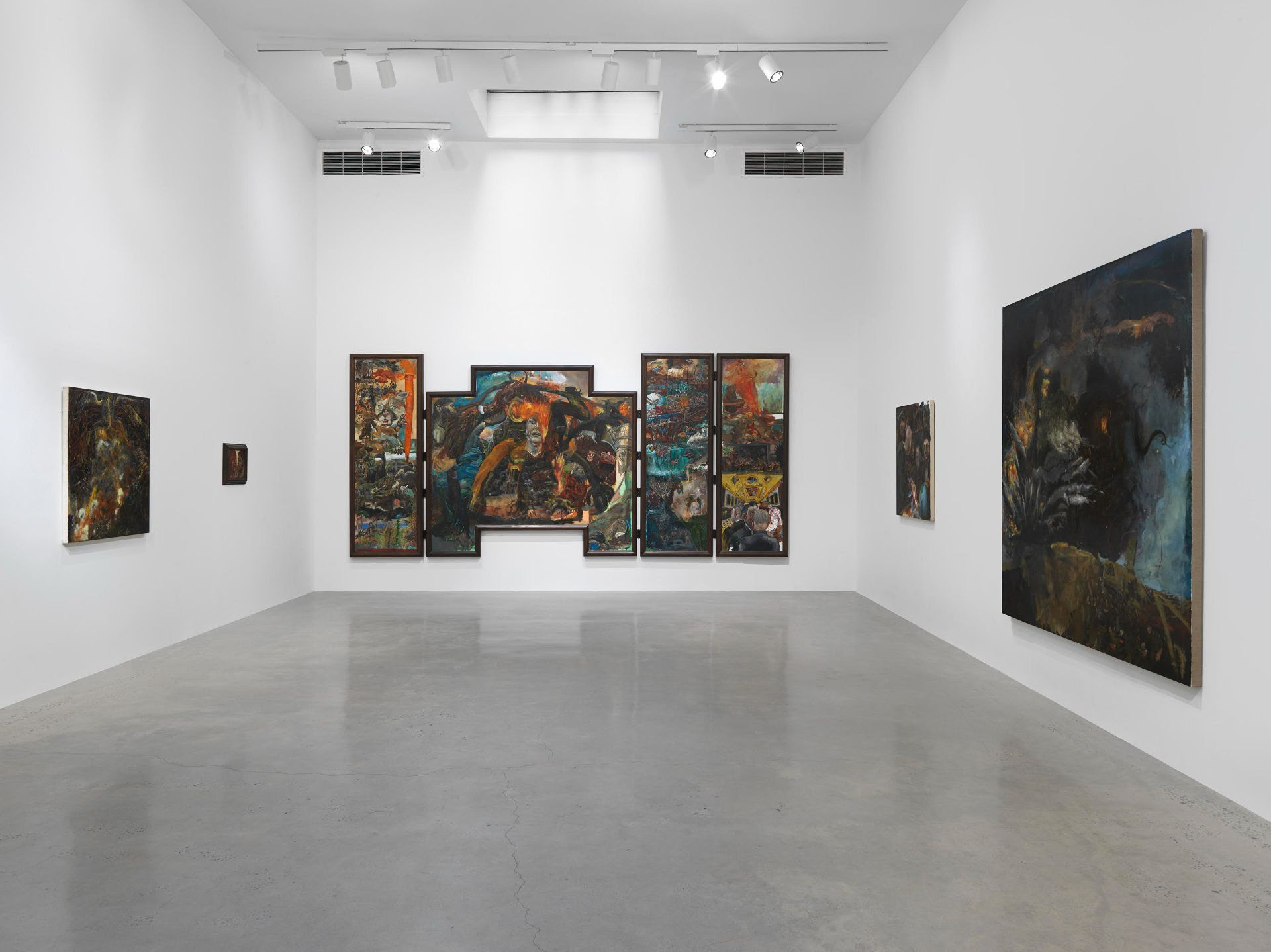
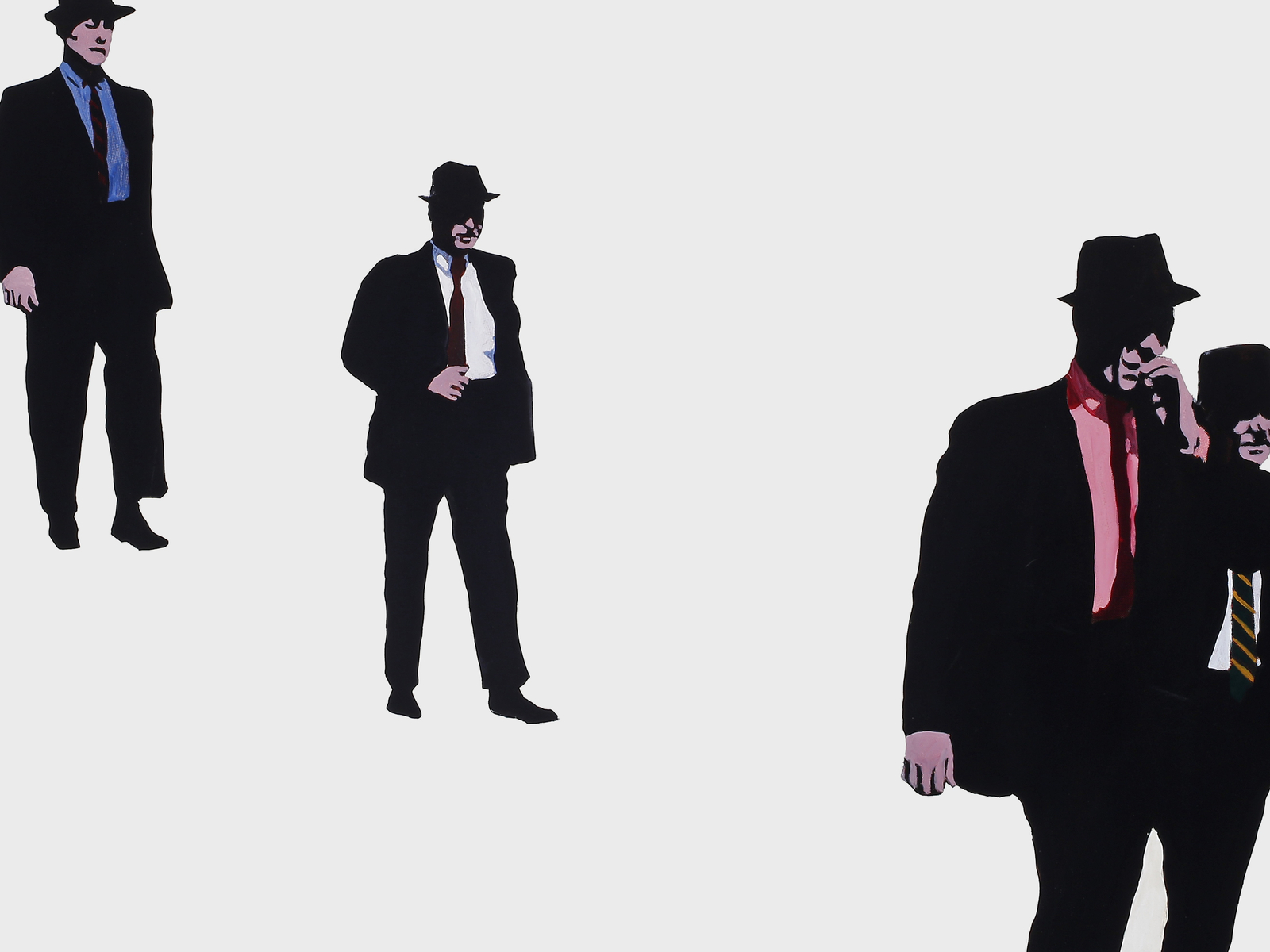
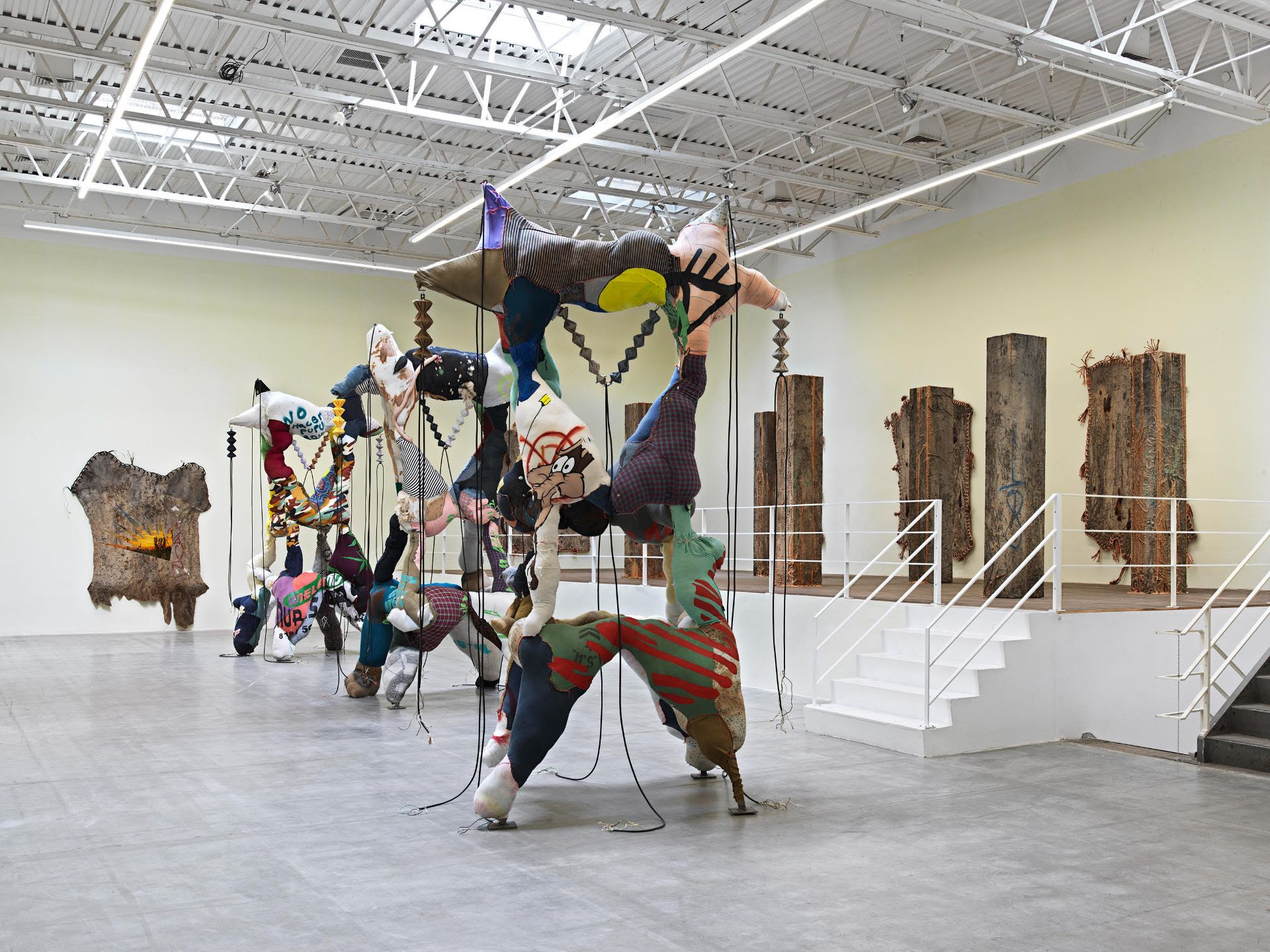
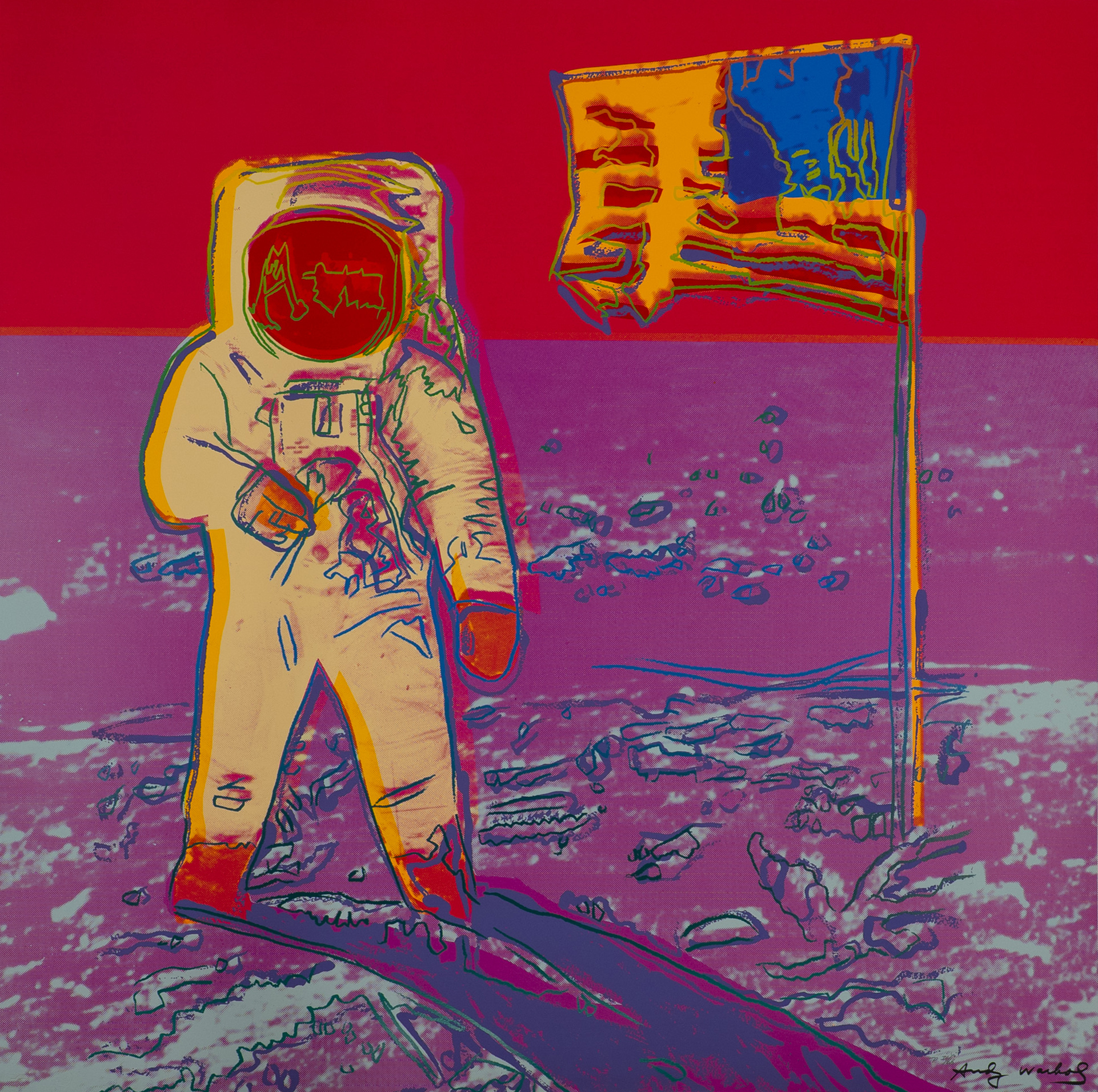
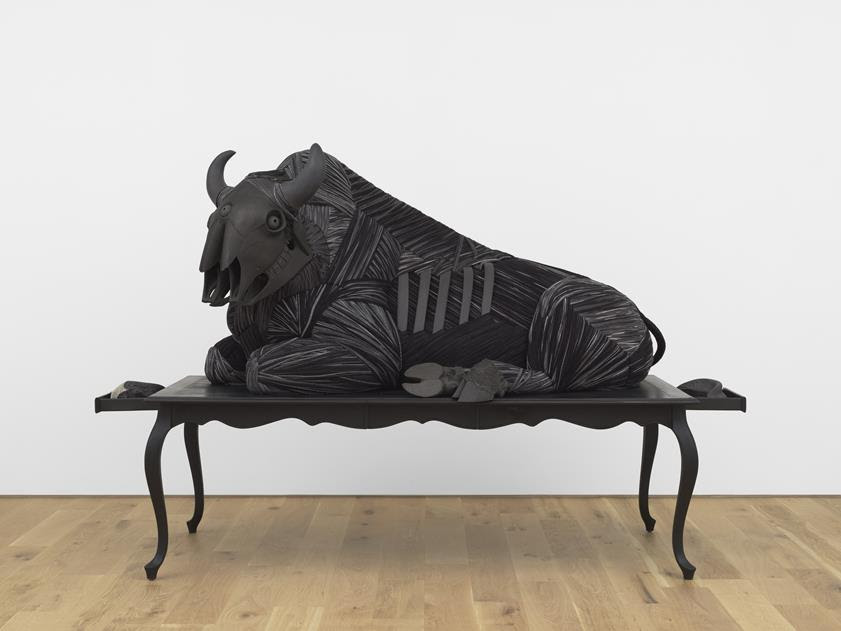
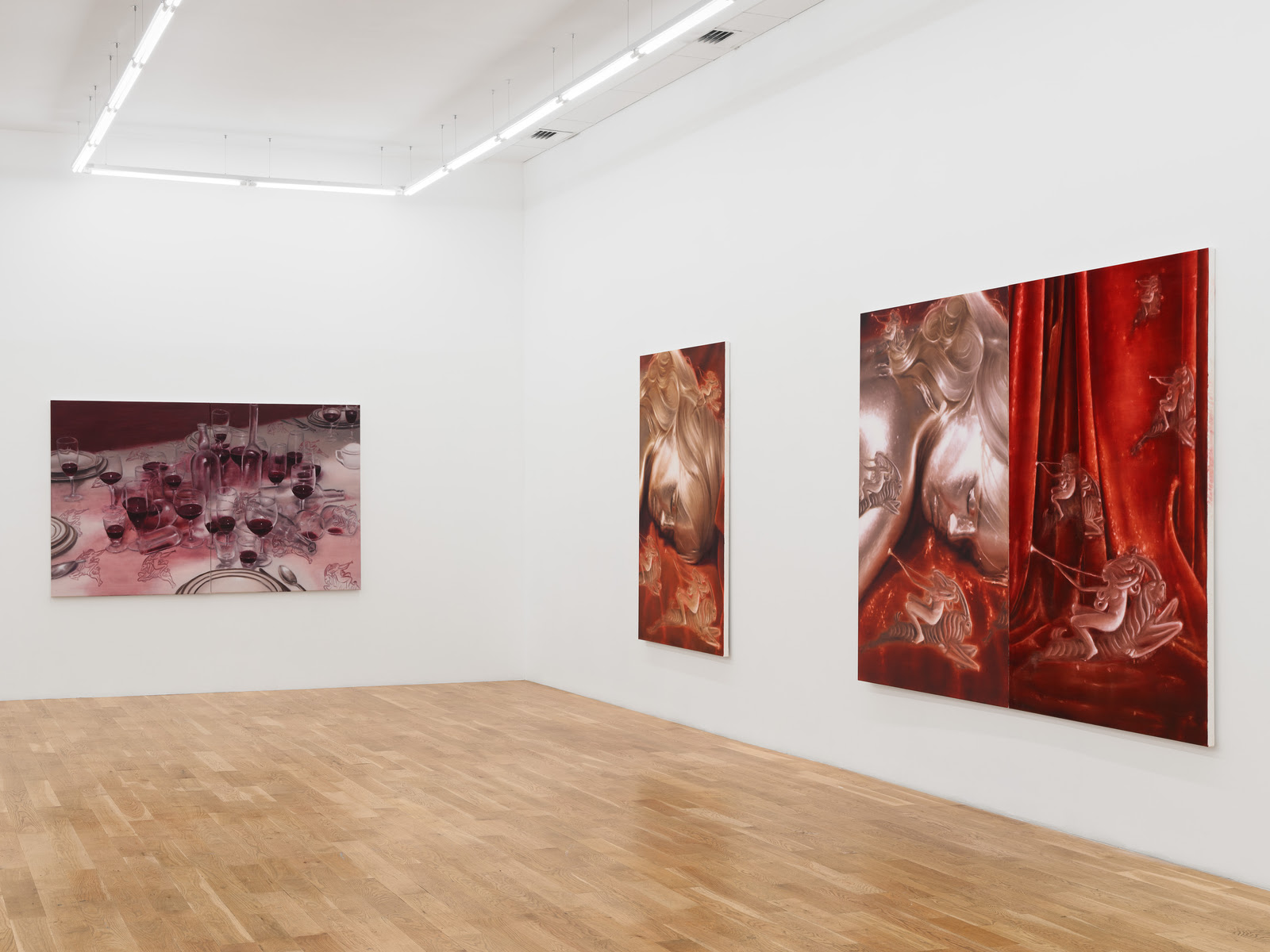
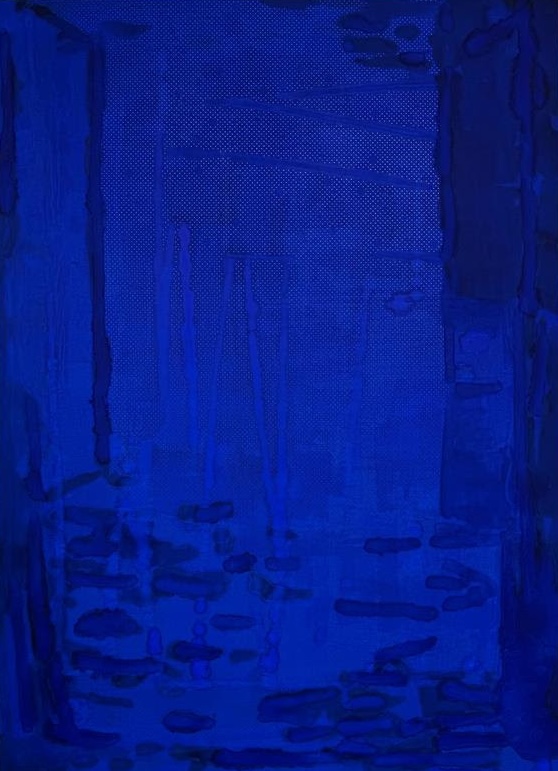
47 Canal is pleased to present Constellations, a group exhibition of works by Michael Buthe, Jay Carrier (Onondaga/Tuscarora Nations, Wolf Clan), Gabrielle L'Hirondelle Hill (Métis/Cree), Siobhan Liddell, Mickael Marman, and Ipeh Nur. Central to the thematic concerns of this exhibition is the spirit of material experimentation and intervention. Constellations brings together various works by these artists who oscillate between abstraction and representational styles, while employing objects and nontraditional materials on their surfaces.
After participating in Harald Szeemann’s landmark exhibition Live in Your Head: When Attitudes Become Form (1969), German-born artist Michael Buthe began to spend much of his time in northern Africa and the Middle East. During this period, the nature of his work shifted significantly. The fragmentary work he was known for––monochromatic torn cloth paintings that marked a particular moment after minimalism–– grew into an increasingly syncretic practice that took liberally from encounters or contact with cultures that were new to him. The vibrancy and contradictions in color, pattern, and material reflect his eclectic spiritual and religious interests as an itinerant gay Catholic hippie occultist. He frequently incorporated found objects and organic materials into his work, resulting in a bricolage like Untitled (1972), where vellum, a translucent and hardwearing material used to create the finest illuminated manuscripts in the medieval era, has been pressed together, and from both ends of the framed composition emerge outlines of hands reaching for each other. Buthe’s use of metallic paint further references Christian iconography, while dried rose petals and delicate flowers trapped behind the glass capture an ethereal and devotional expression.
Buthe has also been known to adhere stones to the surfaces of his paintings, a method that Norwegian- born artist Mickael Marman has seamlessly incorporated into his. Having studied at Städelschule in Frankfurt and Hochschule für Bildende Künste in Hamburg, Marman’s application of sand and gravel are a nod to artworks he had seen on his visits to the Gambia, where his father’s family is from. Where Buthe’s rocks sit clunky, Marman’s linen and burlap canvases are washed with buzzing surface textures of gravel and fine sand bound by adhesive medium, offset by irregular splashes of energetic color. In previous works, the artist would underlay sheets of newspapers found at local cafés in Berlin, where he works, a reference to the mundane passings of daily life. Patterns of dots and circles feature frequently in his abstractions, which he has referred to as a kind of universal mark making shared across cultures.
This occupation with quotidian life is one of New York-based artist Siobhan Liddell’s as well. Liddell has for years explored the phenomenological potential of common materials and familiar scenes in her sculptures and increasingly in her paintings. Here, her abstract paintings exude a quiet yet playful tension, and hover almost into the realm of sculpture. Ceramic globes perch on the edges and hang onto the faces of her paintings from thin copper wires. Seeing the irregular globes dangle on the taught surface of It Goes Without Saying (2024) might cause one to imagine what gentle sounds they make when moved. Hands appear again in this exhibition in Cardinal Points (2024), this time directing the viewer towards the center of the canvas where a hole has been cut out and a soft congregation of pale colors seen from a distance nearly conceal or distract from the large flat disc balancing deftly on its side.
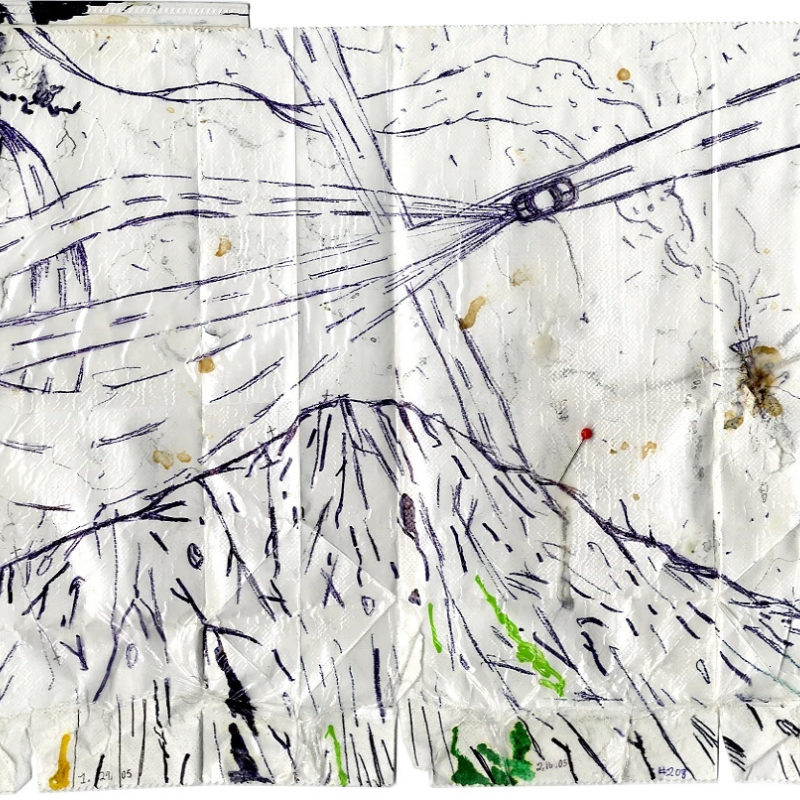
Gabrielle L’Hirondelle Hill’s (Métis/Cree) work requires a different economy of attention to seemingly unconventional materials also taken from life. Tobacco features prominently in a number of her works, including the ongoing series Spells, which she began in 2018 as a gift to a friend. For these drawings, Hill infuses the vegetable shortening Crisco with tobacco—a sacred crop that was once the primary material for exchange among Indigenous communities in pre-Columbian North America, which became the first currency used by British settlers thereafter. Hill adds pigments to the tobacco-infused Crisco, making her own kind of oil paint, which she then builds up in layers on top of paper. Small cutouts from magazines, and detritus collected around sites by her studio she calls “the Waste Lands” in Vancouver. Beer can tabs, press-on nails, wildflowers, and other charms are adhered or sewn on to the works. This time consuming and labor intensive process points to the complex histories and loaded remnants of capitalist projects that span scales both intimate and global, and imbues alternative modes of exchange and spirited reciprocity with care.
Born and based in Yogyakarta, Indonesia, Ipeh Nur began her series Beautiful Destruction after encountering the ruins of ancient temples in neighboring Cambodia. The resilience of those centuries old rock-based constructions inspired Nur to consider the oft overlooked strength and flexibility of more humble everyday plant materials from the region. Trained as a printmaker, she often interprets Indonesian history and ancient mythologies through her work, blending her own personal experiences and recollections. Plants and natural pigments derived from spices, charcoal, and rocks enliven her intricate paper-based compositions––a reflection of the local landscape and the memories that these materials hold. Braided gebang leaves appear like entangled roots breaking through a temple wall or grass sprouting from secret crevices. Disembodied figures emerge and disappear behind screens of cassava paper. In Beautiful Destruction (2024), Nur’s ongoing investigation into Indonesia’s vast maritime cultures is referenced throughout the scenes embedded within the gridded bamboo structure, which is reminiscent of Micronesian navigational charts.
The work of Jay Carrier (Onondaga/Tuscorora, Wolf Clan) spotlights affinities with his hometown of Niagara Falls in New York, the histories, vistas, and atmosphere of which are condensed in his wide- ranging use of imagery, styles, and materials. In many of his paintings, Carrier uses mud and debris taken straight from the banks of the Niagara Gorge, where he fishes regularly in warmer months. Transformation / Niagara Gorge Little People (2019) exemplifies the kind of freedom that the artist takes in his practice in becoming a conduit between what he describes as the contradictions and complexities of contemporary life as a Native American man, and the accompanying lore and tragedies of the region that have passed over centuries. In this painting, natural materials pulled from the Niagara Gorge become the literal ground from which the painted figure emerges. Spiky blades of grass and purple flora extends from the left panel to the right, there appearing in bas-relief.
Michael Buthe (1965—1994) divided his time between his native Germany and North Africa, with stopovers in Spain. These experiences, melded with his European upbringing and the zeitgeist embraced by his contemporaries Sigmar Polke and Gerhard Richter, led to the development of Buthe’s distinct and constantly evolving vernacular. Selected recent solo exhibitions include “Michael Buthe: Zerrissene Leinwände Das konzeptuelle Frühwerk,” Galerie Judin, Berlin (2022); “Infinite – Michael Buthe’s Artist Books,” Kunsthalle Mannheim, Germany (2020); and “Michael Buthe: Selected Works 1968 – 1994,” Alexander and Bonin, New York (2020). His work has been included in selected exhibitions at Kunstmuseum Bern, Switzerland (2020); Museum Ludwig, Cologne (2017); The Jewish Museum, New York (2020); and Kolumba, Art Museum of The Archdiocese of Cologne (2014). His work is included in selected public collections such as Kunstmuseum Bern; Kunstmuseum Düsseldorf; Städtische Galerie Erlangen; Tate Gallery, London; Museum of Modern Art, New York; and Centre Georges Pompidou, Paris.
Jay Carrier (Onondaga/Tuscarora Nations, Wolf Clan; b. 1963, Six Nations reservation in Ontario, Canada) lives and works in Niagara Falls, NY. Recent solo exhibitions include “Niagara, It’s Great to be Here!” Buffalo Arts Studio (2025); “Other Side of the River,” 47 Canal, New York (2025); “Undercurrents,” Onondaga Community College, Syracuse, NY (2023); “Free to Roam,” Hallwalls Gallery, Buffalo, NY (2021); and “We Took Things With Us,” Buffalo Arts Studio Gallery, Buffalo, NY (2020). His work has been exhibited at 47 Canal, New York (2024); Buffalo AKG Art Museum, Buffalo, NY (2024); Birge Mansion, Buffalo, NY (2024); UB Anderson Gallery, Buffalo, NY (2022); and Burchfield Penney Art Center, Buffalo, NY (2018), among many others.
Gabrielle L’Hirondelle Hill (Métis/Cree; b. 1979, Comox, British Columbia, Canada) lives and works in Vancouver, British Columbia, Canada. She is a Métis artist and writer. Hill received her MFA from the California College of the Arts, and a BFA and BA from Simon Fraser University. Recent solo exhibitions include “The Spider Plays,” Cooper Cole, Toronto (2024); “M*****,” Mercer Union Centre for Contemporary Art, Toronto (2024); “M*****,” Contemporary Art Gallery, Vancouver (2023); and “Projects: Gabrielle L’Hirondelle Hill,” Museum of Modern Art, New York (2021), among others. Her work has been included in group exhibitions at institutions such as Art Gallery of York University, Toronto, Canada (2024); Kamloops Art Gallery | Central Gallery, Kamloops, Canada (2024); Blackwood Gallery at University of Toronto Mississauga, Toronto, Canada (2024); Hessel Museum of Art, Annandale-On-Hudson (2023); and the 59th Venice Biennale, Venice, Italy (2022), among many others. She is also the co-editor of The Land We Are: Artists and Writers Unsettle the Politics of Reconciliation (ARP 2009) and Read, Listen, Tell: Indigenous Stories from Turtle Island (Wilfred Laurier 2017).
Siobhan Liddell (b. 1965; Worksop, United Kingdom) lives and works in New York. She is a graduate of Central Saint Martins, University of Arts, London, and is represented by Gordon Robichaux, New York and Hollybush Gardens, London. Recent solo exhibitions include at “Going Without Saying,” Gordon Robichaux, New York (2024); “Been and Gone,” Hollybush Gardens, London (2023); “Mist and Nuts,” Gordon Robichaux, New York (2022); and “Among Ancients,” Galerie Eric Dupont, Paris. Her work has been included in recent group exhibitions including “Finding Aid,” (curated by Matt Connors), Goldsmiths CCA, London, UK (2024); “Luxe, CalmE, Volupté,” Candace Madey, New York (2023); “Fragments,” a two-person presentation with Linda Matalon (curated by Ksenia M. Soboleva), Candice Madey, New York (2022); and “Get Lifted!” (curated by Hilton Als), Karma, New York (2021), among many others. Liddell’s work is held in the collections of the Hammer Museum, Los Angeles; the Whitney Museum of American Art, New York; and the Dallas Museum of Art, Dallas; RISD Museum, Providence; and CCS Hessel Museum of Art, Bard College, Annandale-On-Hudson, New York. Reviews of her work have appeared in the New York Times, the New Yorker, Frieze, the Brooklyn Rail, the Los Angeles Times, the Village Voice, Art on Paper, and Flash Art.
Mickael Marman (b. 1983, Oslo, Norway) lives and works in Berlin, Germany. Recent solo and two person exhibitions include: “zeit und gefühl,” 47 Canal, New York (2024); “Gemaelde,” Kunstnerforbunet, Oslo (2023); “KMS/ACC/FRA/TXL/CPH,” 27DAGE Art Hub Copenhagen, Norway (2022); “Man and Sea,” Damien & The Love Guru, Brussels, Germany (2020); and “Time Delay,” Bad Bentheim, Germany (2017). He has participated in group exhibitions at Hamburger Kunstverein, Hamburg (2024); Trautwein Herleth, Berlin (2024); Sun Works, Zurich, Switzerland (2021); Bosse & Baum, London (2020); Cucina, Copenhagen (2020); and Qb Gallery, Oslo (2016), among many others.
Ipeh Nur (b. 1993, Yogyakarta, Indonesia) lives and works in Yogyakarta, Indonesia. She creates narratives exploring Indonesian history and its connections to her experiences and memories. Recent solo exhibitions include “Menghanyut: Tubuh dan Perjalanan,” Soboman 219 Art Space Yogyakarta, Indonesia (2022); “Salimah,” Redbase Foundation, Yogyakarta, Indonesia (2018); and “Banda,” Kedai Kebun Forum, Yogyakarta, Indonesia (2018). Recent group exhibitions include the Sharjah Biennial 16, Sharjah, UAE (2025); Future Generation Art Prize, Pinchuk Art Centre, Ukraine (2024); Indonesia Bertutur: Visaraloka, Arma Museum, Bali, Indonesia (2024); Small World Cinema, Sculpture Center, New York, USA (2024); Small World, 13th Taipei Biennial, Taipei Fine Arts Museum, Taipei, Taiwan (2023); and Biennale Jogja XV, Yogyakarta, Indonesia (2019), among many others. Nur is represented by Ara Contemporary in South Jakarta, Indonesia.