
Ended
Peter Scott
Picture City II
Apr 29 – May 1, 2016
"Well, I sure don't have nostalgia about being mugged. But I do get a little weary when I realize that if anybody could find one dangerous block left in the city, there'd be a stampede of restaurant owners fighting each other off to open there first."
-John Waters
A wave of nostalgia for New York City in the 1970's and 80's has descended upon us. From HBO'S retro-rock show Vinyl (co-produced by Mick Jagger and Martin Scorcese), to exhibitions of Peter Hujar, David Wojnarowicz, and the Ramones, the appeal of an angst ridden past now asserts itself within the consumer-oriented present. Perhaps based on a longing for an anything-goes spirit suppressed under the demands of a well-manicured, "livable city", dystopian imagery of a city fraying at the edges offers original source material for the current urban environment, where bohemian neighborhoods like Bushwick now feature corporate messages delivered through the once transgressive medium of graffiti.
While cultural nostalgia for this era often approximates the alienation of the original as it discreetly dispenses with it, the new post-industrial urbanism of Soho, Dumbo, and The High Line have managed to repackage the historical as cutting-edge brand. As the grim streets of Taxi Driver were replaced by the soap opera dramas of Sex and the City, the city's current physical characteristics reflect an odd co-existence between mid-century modern gloss and theatrically reproduced post-industrial grit. Where the sleek transparency of new residential towers attest to limitless progress, the historical pastiche of countless restaurant and night-club interiors speak to the need to keep the past close, perhaps as a means of distracting us from its perpetual disappearance.
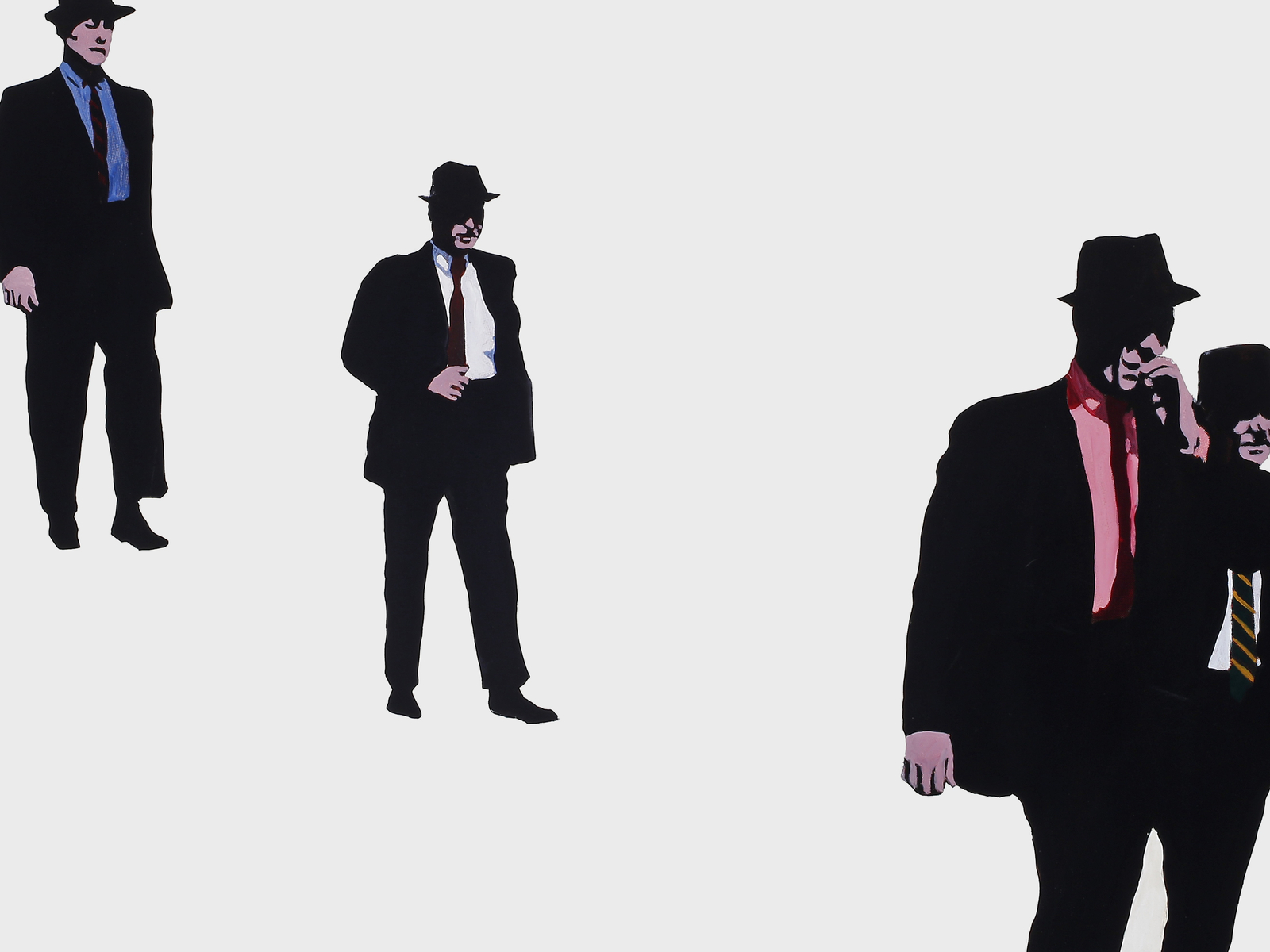
Overlapping film stills from an iconic narrative of urban alienation (Taxi Driver, 1976) and its more contemporary counterpoint, which unabashedly celebrates the city as a consumption machine (Sex and the City, 2008), Peter Scott's two day double-sided projection presentation Picture City II at the Emily Harvey Foundation continues his exploration into the ongoing rapport between popular media narratives and the physical alteration of the urban landscape. Through images that contrast a period of urban anxiety and social decay which locate the existential "otherness" of Travis Bickle's 1970's New York against the more self-assured (if self-consciously neurotic) Carrie Bradshaw's New York of the mid-2000's, a kind of double portrait of the city emerges.
Becoming inseparable from one another in a looped twenty-minute sequence of paired film stills, scenes from of Times Square's seediness merge with Bryant Park's Fashion Week glamor, brightly lit diners are "seen through" elegant bistros, and streetwalkers and pimps from New York in the 1970's shadow Meat Market nightclub revelers of the last decade. Co-existing through streets, interiors, and portraits thirty years apart, the city and its (fictional) inhabitant's are presented in a temporary stasis, affording a momentary examination of urbanism's forward march.Through focusing on dramatic recreations of two eras of New York, the recessionary "Ford to City, Drop Dead" 1970's, and the period of excess just before the 2008 crash, Picture City II reflects on the ongoing reshaping of the city and its economy while speculating on the nature of an urbanism which possesses an increasingly ambiguous relationship to time and place.
Peter Scott is an artist, writer, curator, and director of the non-profit gallery carriage trade. His artwork has been exhibited in the US and Europe, most recently at Marianne Boesky Gallery, Martos Gallery, and Koenig & Clinton Gallery in New York, Rectangle in Brussels, and Galerie Sophie Scheidecker and the Pavilion De L'Arsenal in Paris, and will be included in upcoming exhibitions at the Emily Harvey Foundation in New York and the MAAT museum in Lisbon. His writing on art and culture has appeared in The Brooklyn Rail, Art Monthly, Grey Magazine, Artscribe, Art US, artnet, and The Architect's Newspaper, as well as several exhibition catalogs. His projects have been featured in Time Magazine, The New Yorker, The Huffington Post, The New York Times, The Observer, The Village Voice, The Boston Globe, Frieze, Hyperallergic, artnet magazine, and Artscribe.