Ended Aug 9
Alliances: Gallery Summer Show
Jul 5 – Aug 9, 2024
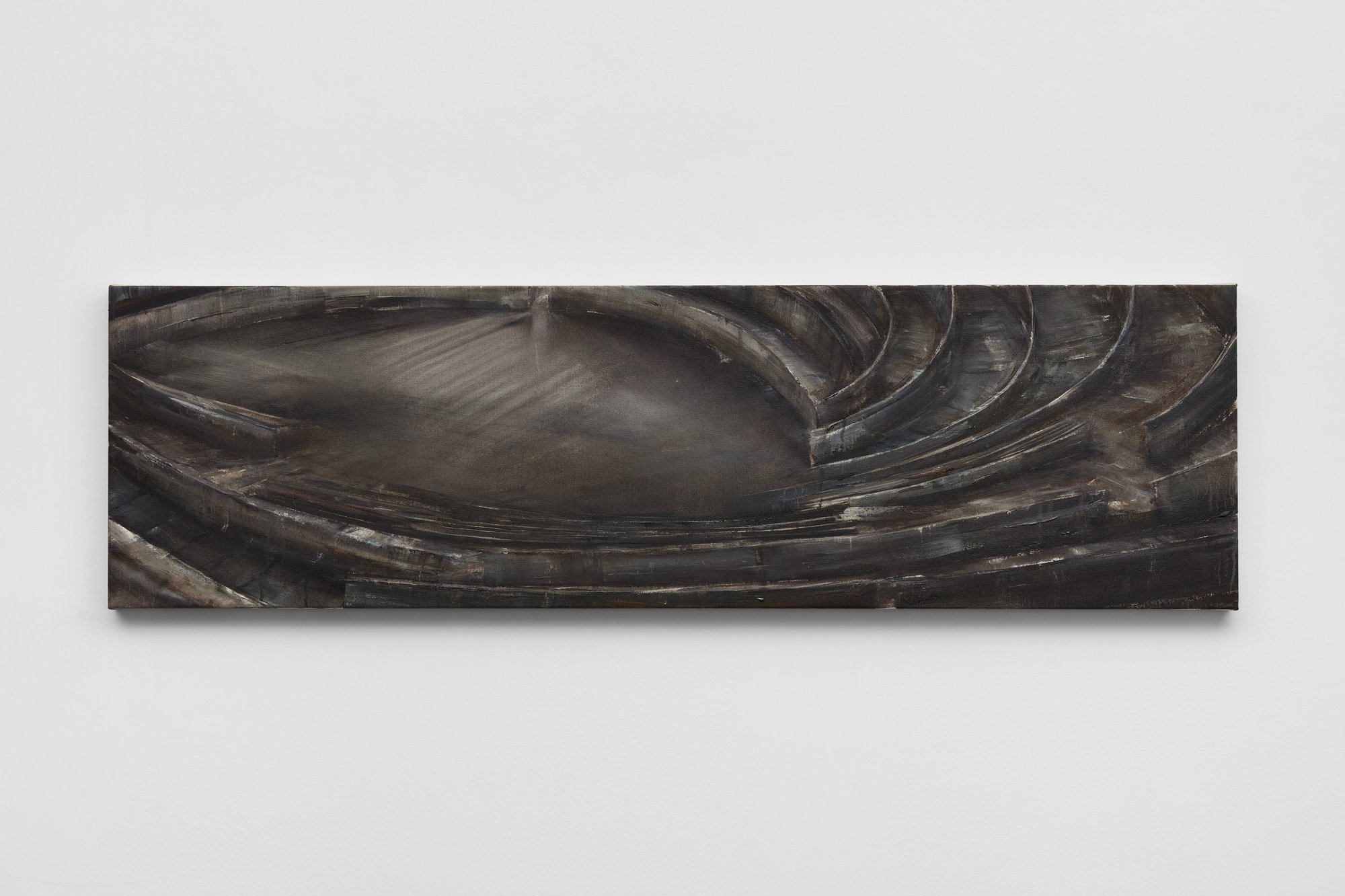
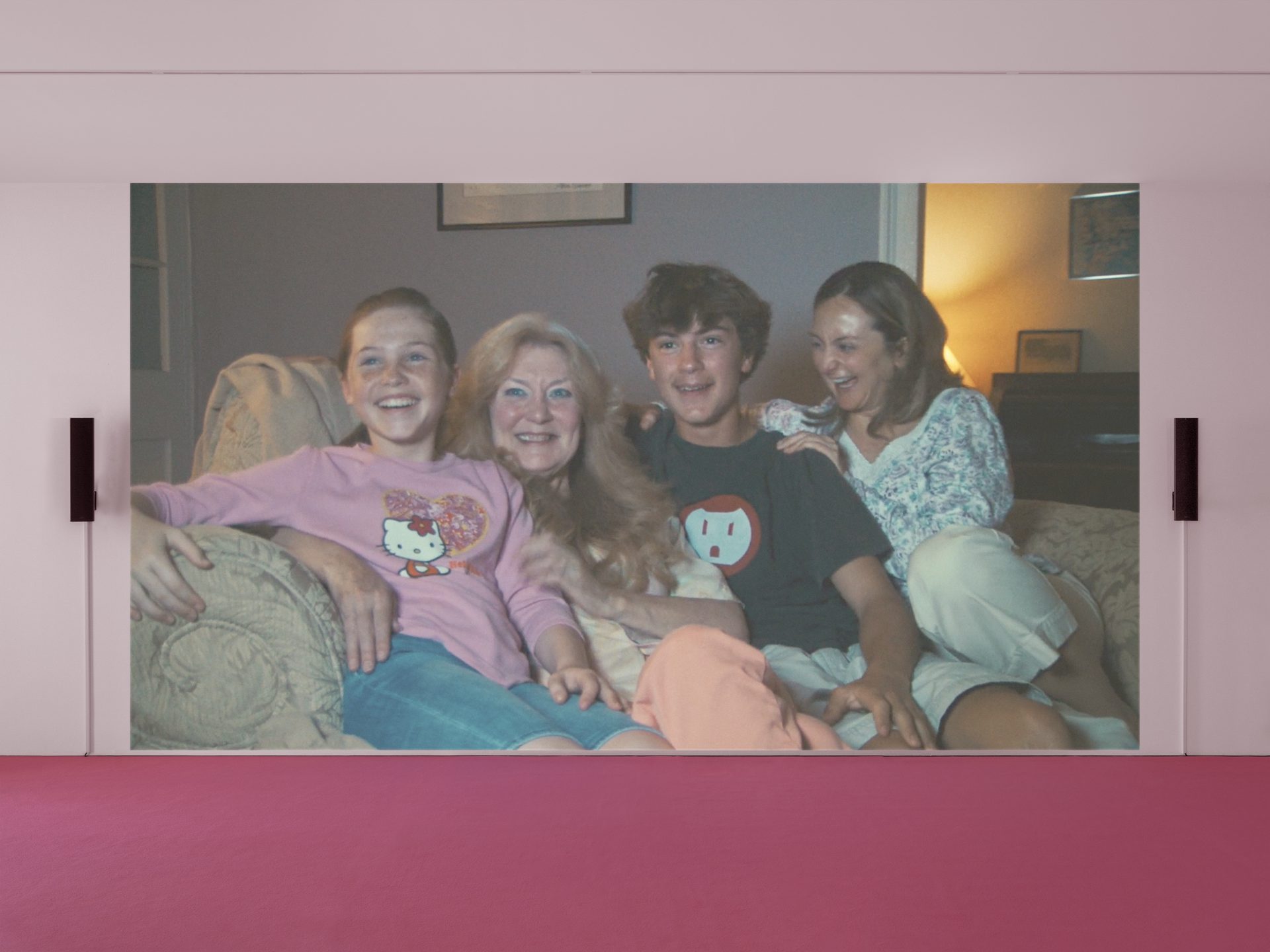
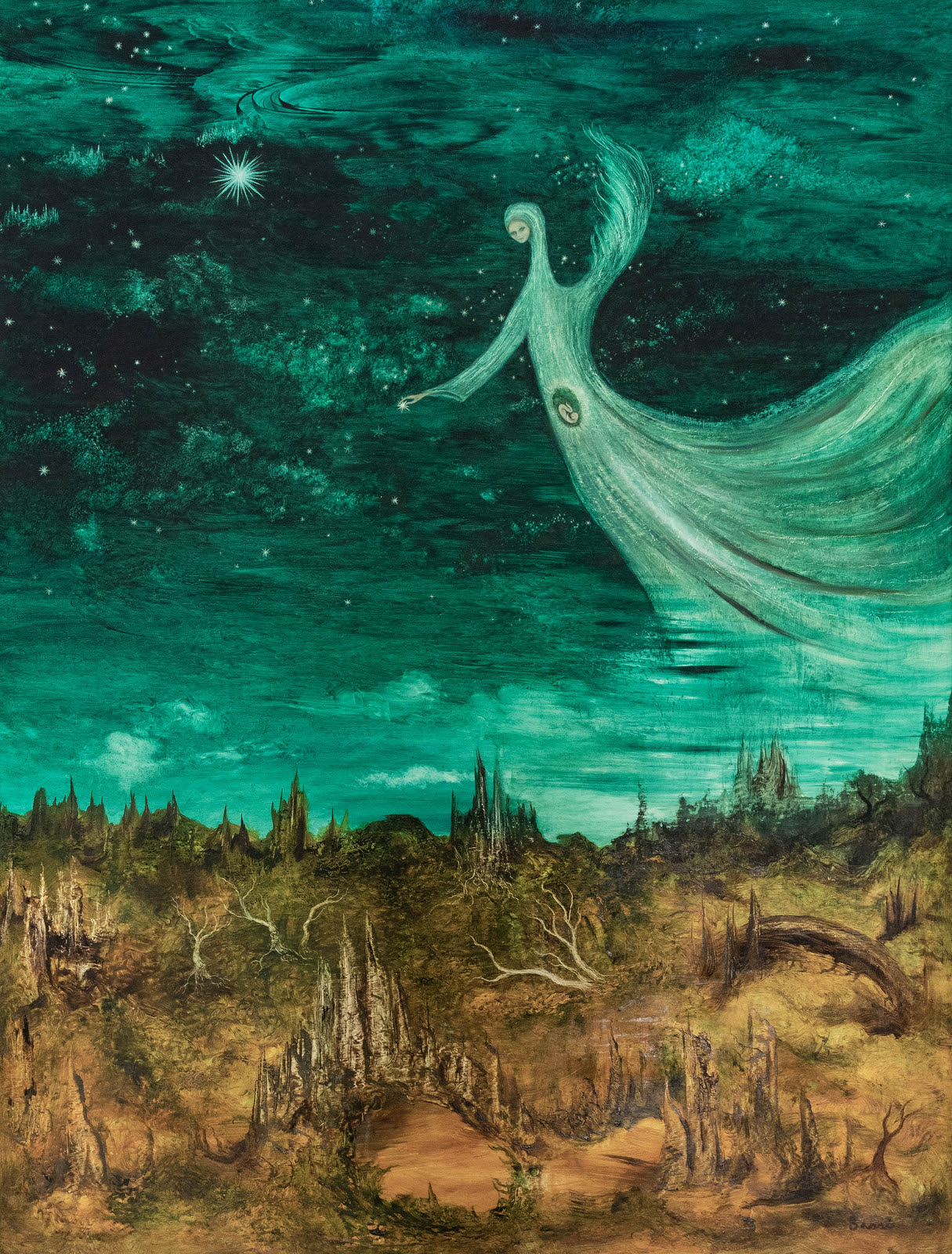
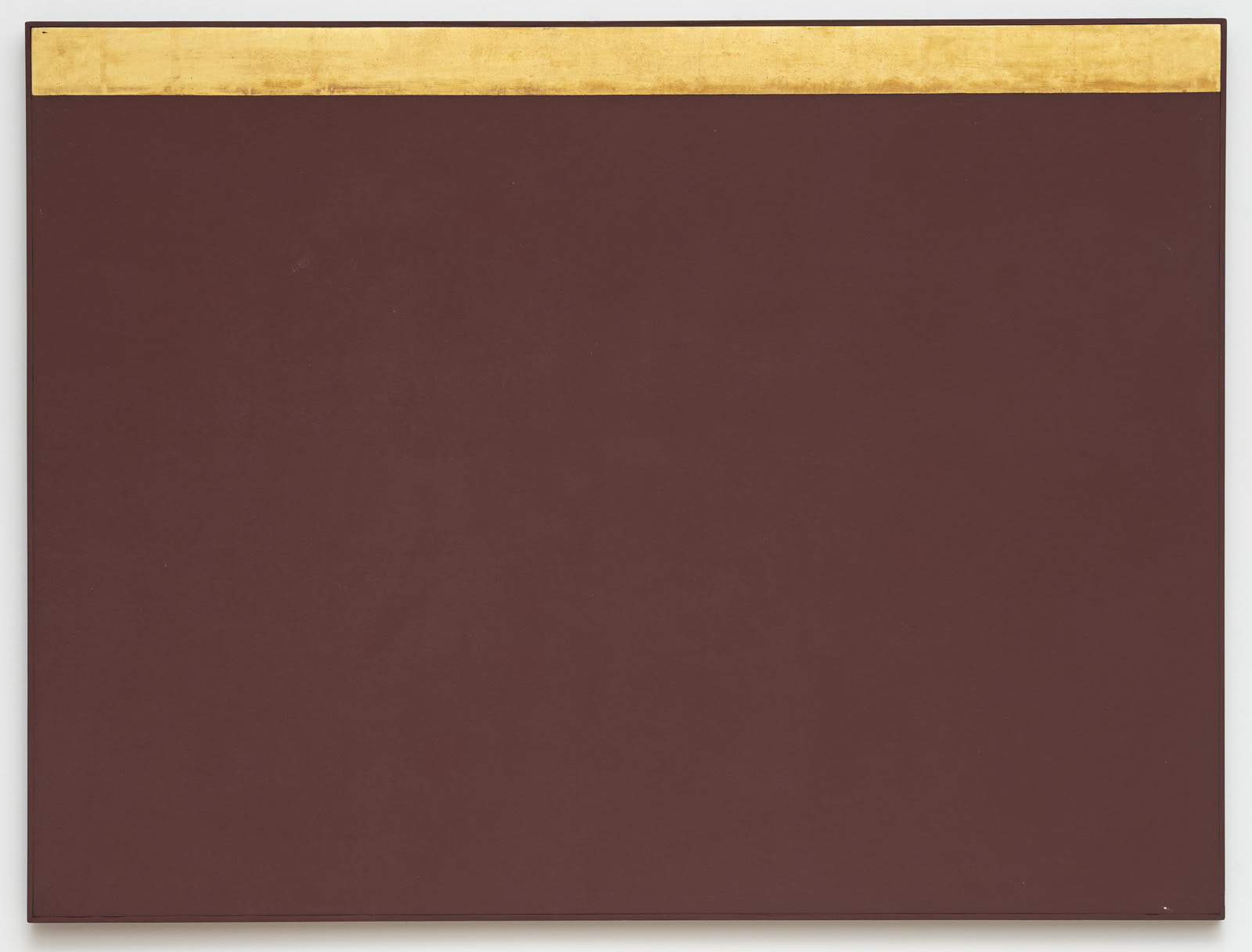
Polly Apfelbaum, Fiona Banner aka The Vanity Press, Anna Barriball, Massimo Bartolini, Dorothy Cross, Tacita Dean, Marlene Dumas, Shilpa Gupta, Callum Innes, Jaki Irvine, Małgorzata Mirga-Tas, Cornelia Parker, John Riddy, Thomas Schütte, Daniel Silver, Dayanita Singh, Nancy Spero, Fiona Tan, Juan Uslé, Daphne Wright
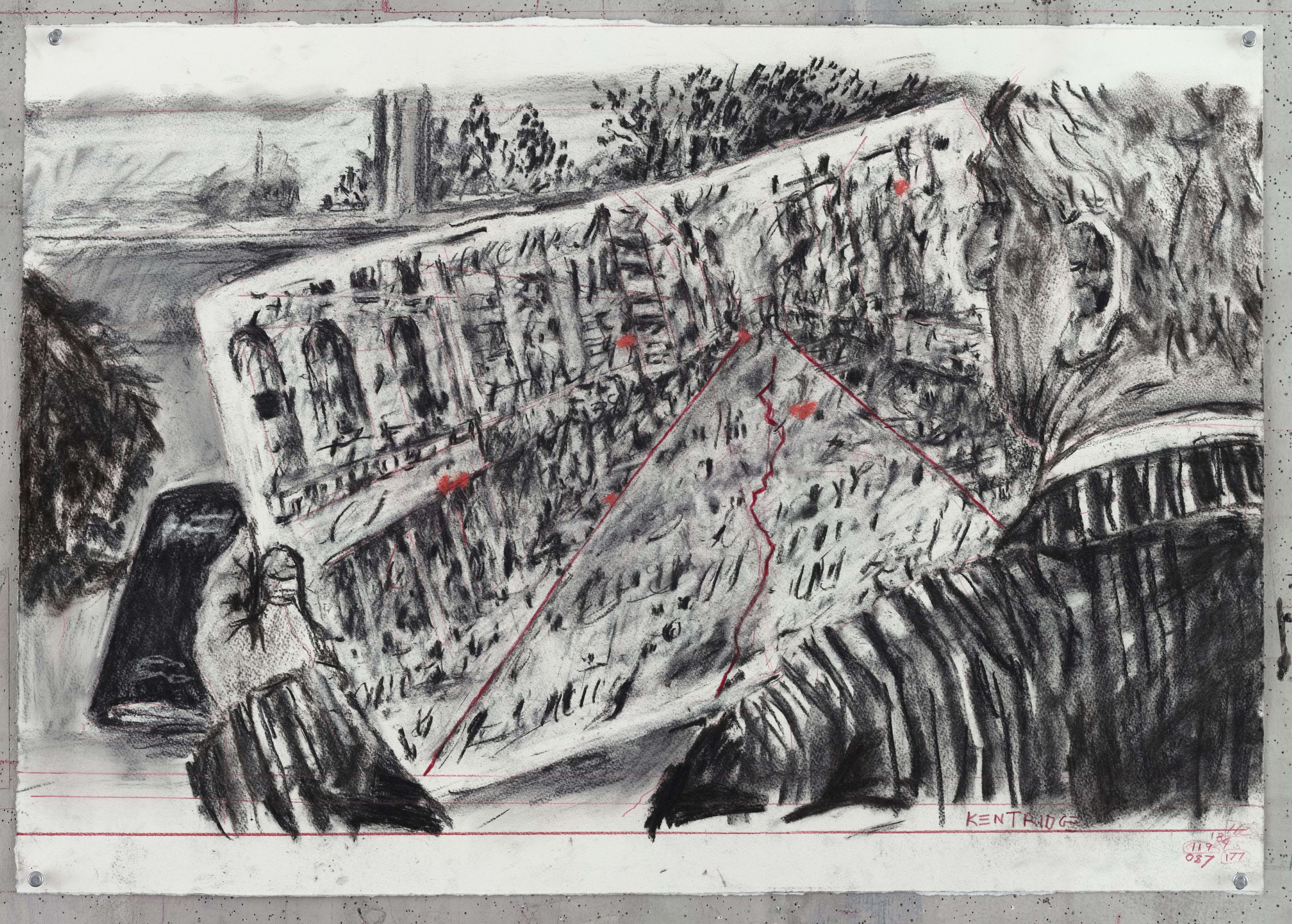
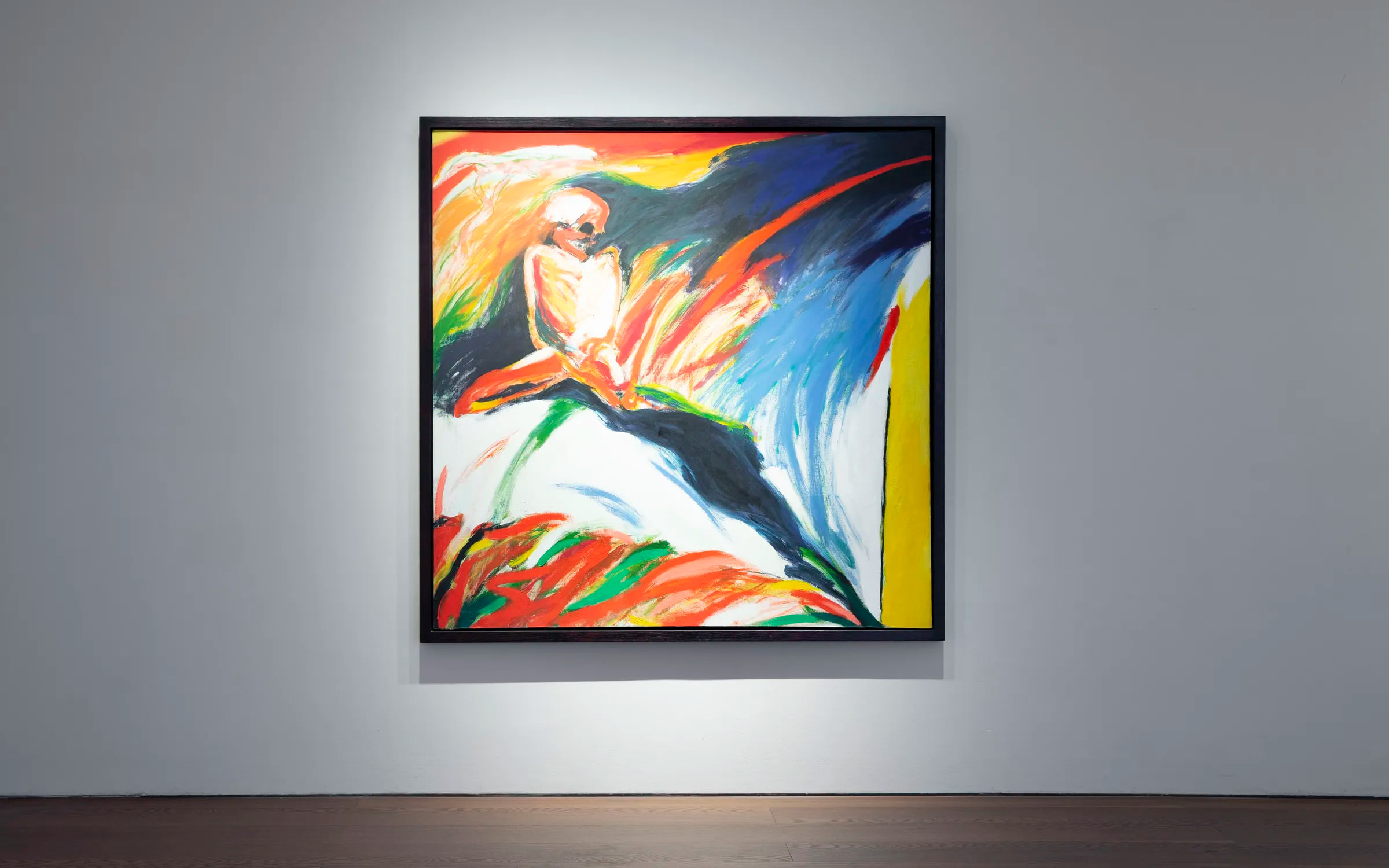
Frith Street Gallery is delighted to present Alliances, a summer exhibition. This eclectic and playful show presents pairs of works by different gallery artists selected by members of the gallery team. The relationship between the two can be related to media, it can be formal, poetic, or purely visual, creating temporary dialogues between diverse artworks. Many of these pieces are intimate in scale, they invite the viewer to look closely and form their own connections
Thomas Schütte’s Frauenkopf, halb Nr. e.a. (2022) has gently downturned eyes and an ambiguous expression. The head is hollow at the back, allowing light to enter, creating a range of luminous effects. Where the glass is thicker, the bust darkens, heightening the details, curves and hollows in the sculpture, lending mystery to her translucent features. Schütte, recognised as one of the ‘principle reinventors of modern sculpture’, works with a range of mediums, from ceramics to bronze.
Daphne Wright is known for her multi-narrative sculptural installations using a variety of techniques and media, including fragile materials such as plaster, tinfoil, unfired clay, sound and video. Her work often develops from observing her own children or older people, exploring issues often ignored by contemporary artists, such as care, parenthood and ageing. The Little Sad Faces (2019) are empathetic, delicate watercolours conveying the emotional labour required in reassurance. Here, Wright explores how children are taught to recognise emotion through learnt facial expressions. This is continued by the current visual language of emojis.
Marlene Dumas’s Couple Kissing (2014) was created for an exhibition of works on paper at Frith Street Gallery in 2015 in response to a series of historic ‘Mouth Drawings’ by Juan Muñoz. Although the bodies in Dumas’s work are usually inspired by images from films or pictures seen on television, newspapers and magazine, she maintains a very ‘human touch’. Instead of depicting actual persons, Dumas often uses form and colour to represent an emotion or a state of mind.
Cornelia Parker’s Alter Ego (Communion) (2006) is from an ongoing series of pairs of silver-plated objects, one intact and one flattened. Sometimes, their reflection is a double, at other times it may be a near relative. Parker describes them as ‘domestics’, not only in terms of the spaces that they can occupy (hovering over the mantle or tabletop) but also in the sense of power play, where one of the objects has the upper hand. Thoughts of identity crises and class divides abound, as well as ideas of life and death, inhaling and exhaling, conscious and unconscious, reflection and shadow. Sometimes, there’s a sense of a dark psychological undertow, an underlying threat; at other times, just reflected glory.
Ascent from Nagaizumi (2016) by Fiona Tan is a print which was inspired by her film Ascent (2016). The film is a reflection on Mount Fuji's importance to the Japanese, and is both a study of its visual culture and a tribute to the history of both photography and film. The print itself depicts the mythical mountain rising above clouds and the image is annotated with thoughts on the nature of place.
John Riddy’s Shin-Fuji (Dusk), 2005 is part of a series exploring the relationship between the traditional and modern landscapes of Japan. Layering the urbanised small town of Shin-Fuji with the natural beauty of Mount Fuji, Riddy contrasts the polar opposites – rural and urban, old and new, natural and artificial. Riddy uses the mountain as a precisely placed point of reference to suggest the sophisticated spatial awareness in Japanese society and the Fuji fervour of modern tourism. Here Mount Fuji is presented according to artistic tradition, but by including the town of Shin-Fuji, Riddy demands a new perspective, both perpetuating and adding to the myth of a mountain.
Callum Innes's most recent series of ‘Tondo’ paintings reference the rich art historical context of circular paintings, prevalent in 15th century Italy. The works are made using heavy, round plywood panels and, unlike canvases, their surfaces are rigid rather than giving, requiring a different approach to the application of paint; some are gessoed prior to painting while others are varnished which causes the paint to react in very different ways to the works on canvas. Abandoning the former's clearly defined straight edges, the sides of these new pieces are slightly bevelled imparting a feeling of expansiveness, of moving outwards.
The abstractions of Juan Uslé evoke a range of associations, from the cadence of human breath and the beat of a pulse to the environs and energy of his homes in northern Spain and New York City. The paintings and works on paper might resemble a landscape even as they present a manifestly abstract pattern of subtly controlled mark and colour, often evoking a piece of music or the rhythmic transcription of a recording device.
‘I move the brush and press down until the next heartbeat occurs’, says Uslé. ‘I try to follow a sequential rhythm, marked by the beating of my pulse ... and in general it turns into a sequential field or territory of marks and routes reminiscent of the sea, a landscape, or a pentagram.’
The title of Massimo Bartolini’s work Grotoni e Malochi (2019) is inspired by the Italian writer Maurizio Maggiani. The words Grotoni and Malocchi are untranslatable in English, though they refer to ‘components’ of ploughed earth; the Grotoni being dry clods, the Malocchi wet. To retain this differential state the artist requires the 'devotional act' of watering the work every day.
Anna Barriball’s rolled paper sculptures, Copper pipes (2011) are made using paper painted with copper- coloured acrylic paint to evoke the form of copper plumbing tubes. Beautiful in their metallic sheen, they seem to be testing out what paper can do, how much form it can take on. As sculptures, they are material in action - paper drawn on, rolled up, propped up. These works are de-natured paper; paper made solid and self-supporting. The register of the uncanny is evoked not so much in the order of representation, but in the medium in which they are made.
Nefertiti (2013) comes from a series of interventions made by Tacita Dean on antique photographic prints and postcards. In these works, whose subject matter ranges widely, Dean highlights and concentrates the eye on different aspects of a particular image. Here she has picked out the simple climbing gear belonging to two ladies scaling a rock reminiscent of the famous bust of the Ancient Egyptian Queen.
Daniel Silver’s work explores the many forms and presences of the human body. His practice is influenced by the art of the ancient world, modernism, Sigmund Freud and psychoanalytic theories. Untitled (2018) is an intimate bust made in white marble. It is part of a series of works which began life as readymade copies of ancient sculptural heads which Silver has worked on further; giving the appearance of an object in the process of being worn away.
The works from Dayanita Singh’s series Dream Villa explore how the night transforms what seems ordinary by day into something mysterious. These lush photographs are saturated with intense colour, they present a landscape which exists as much in the artist's imagination as in the real world; Singh travels to many different cities never knowing where Dream Villa or its inhabitants present themselves. The empty streets, the arrangements of neon lights and the silent façades have an unsettling and, at times, sinister atmosphere, this is a place where nothing is quite as it seems - it comes into being at night, when all is lit by artificial light and the moon is mere ornamentation.
Jaki Irvine’s ro’ro’rose (2019) is one of a number of neon works by the artist spelling out anagrams derived from the words Cracklin’ Rosie, the title of a Neil Diamond song from 1970, which has personal significance. Treating language as endlessly reconfigurable, the neons present this text as modular sonic components: repeated, distorted, anagrammed or spliced into their most elemental forms.
Throughout her radical career the American artist and activist Nancy Spero placed the lived female experience at the heart of her practice. She challenged aesthetic and political orthodoxies, abandoning figurative painting in the 1960s in reaction to the horrors of the Vietnam War. In 1966 Spero decided to work only on paper as an act of defiance, resulting in works such as Helicopter, Pilot and Eagle (1968). She said, ‘Part of my resistance as an artist in the War Series was a decision not to work anymore on canvas. I was madder than hell about the war.’ In place of slow-drying oil paint, she adopted the thinner water-based vehicles of gouache and india ink which she explained ‘bled instantly into the surface of the paper as indelible stains or transparent washes and outlines.’
Fiona Banner aka The Vanity Press has long been fascinated by military aircraft, finding them at once beautiful and horrifying, almost ‘prehistoric, from a time before words’. This relation to language and conflict underpins much of her work as does the idea of the ‘one-off’ publication registered by ISBN numbers. These unique works are editions only of themselves, editions of one, a book reduced to a reference. Nought Poem (2018) is made from a military helicopter blade to which the artist has given an ISBN number as if it were a publication. The number is transcribed in words partly using the NATO Phonetic Alphabet.
Małgorzata Mirga-Tas’s practice addresses anti-Roma stereotypes and engages in building an affirmative iconography of Roma communities. She uses patchworks made of curtains, jewellery, shirts, and sheets, sewn together to form 'microcarriers' of history. Her work depicts a society which is physically and emotionally close and is inspired by overheard conversations, scenes of work, leisure and rest, which are interwoven with such motifs as the sun, flowers or animals. Ordinary life and people are thus transformed into Romani archetypes. The title of this screen Romane Ryćhine (2023) translates as Roma Bear. In Roma culture the bear holds unique significance and for Mirga-Tas, the bear symbolises a mystical entity, both transgressive due to its human-like features and possessing extraordinary power that bridges the human and natural realms. Simultaneously, the bear embodies familiarity and habituation.
Exploring contemporary ideas surrounding craft, gender and identity, Polly Apfelbaum’s ceramic work melds painting, ceramics and installation. The exuberant colour palette of these wall-mounted ceramics, which read like abstract paintings, is derived from Apfelbaum’s memories of her early exposure to Pennsylvania German art. These works have become a means to reflect on the inception of her artistic sensibility and its investigation of the materiality of colour. The title of this six-part work Bright Stars to Shine (2022) refers to a popular Amish quilt motif inspired by the Morning Star and the celebrated love poem by John Keats which opens ‘Bright Star! Would I were steadfast as thou art’.
Working in sculpture, film and photography, Dorothy Cross looks at relationships between body and time and the human and the natural world. Based on Ireland’s rural West Coast, Cross’s immediate environment is inseparable from her practice, present in the richly symbolic materials she uses to create strange and often unexpected encounters. Talking about the video Endarken (2000), she explains; ‘There is a derelict cottage, that dates from famine times, slowly decaying on a hill near my house. I filmed the cottage under foggy skies. A small black spot appears in the centre of the screen. It expands rapidly like the pupil of an eye. It appears to slow down as it grows to ultimately fill the screen and obliterate the image’.
Shilpa Gupta’s series of photographs reflects on a mood of existential loneliness amid the Covid 19 pandemic. Taken in urban areas, the prints are mounted on aluminium, but altered by the artist to create a gaping absence at the heart of the image. The viewer sees only the outer edges of the photograph, such as the mottled surface of a road, a hint of a building, a fragment of sky or some trees. Each photograph creates a sense of longing – for completeness, or a return to the bustling fullness of normal life. As a group, they recall the minimalism and seriality of Sol LeWitt or Donald Judd, or the repetition of a daily calendar.