
Ended
Not Today: Cyanotypes, Polaroids, Photograms, Digitals, Emulsions, Holograms and 35mm Film
Apr 5 – Apr 13, 2025
Goldfinch Bolton, Joy Chen, Sheva Fruitman, Zina Gladiadis, Thais Glazman, Peter Grass, Ari Kim, Gyorgy Lorinczy, Katalin Lorincy, Andrea Matthews, Folana Miller, Richard Ogust, Ha Neul On, Sam Urdang, Alex Westfall, Zawadi
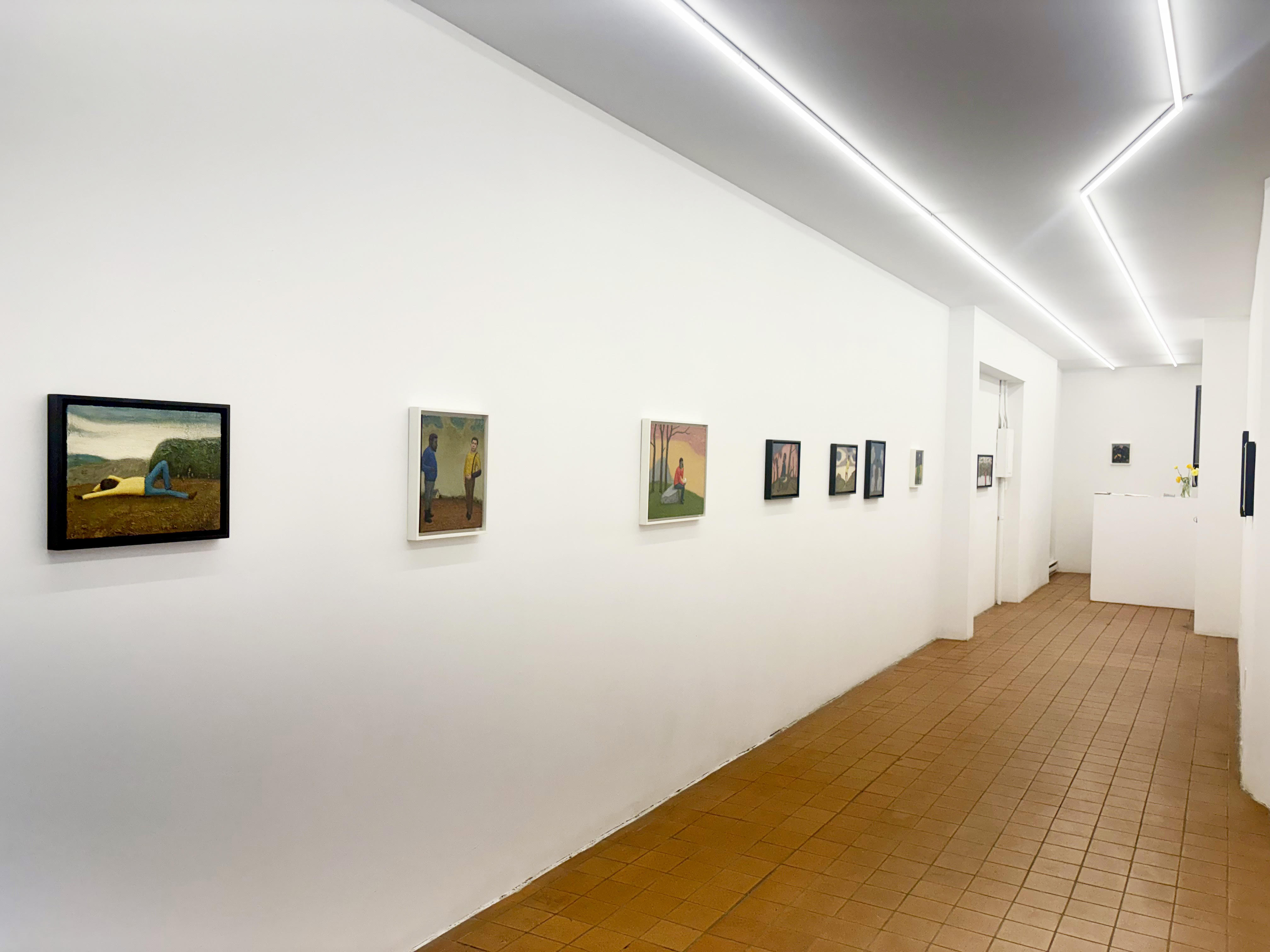
Not Today is a photography exhibit but only in a specific sense. It is not fashioned to emulate a photographic aesthetic ofsubject or processing or curation that might be better sought in an uptown photography gallery. It is not trying to be particularly contemporary nor historical. It is not overly quotidian, and not much concerned with the contemporary photographic moment (whatever that might be.) It does not feel like your usual photography show, but it is elegant and it delivers many punches.
The exhibit is more concerned with the affect associated with different photographic processes and with the affective relations between various photographic practices in the room, than with any thematic thru-line, though several thematic thru-lines do emerge.
The interplay between the works on display is sometimes overt and formal, in opposition, contrast or sympathy. But equally often that interplay is implicit, in subsumed personal friendships, intellectual histories and bonds spanning decades, and in more recent alliances and networks bridging social realities. The divergent processes and aesthetic objectives within the context of the exhibit co-exist and cohere in an affine space of curatorial playfulness and polemic which posesthem as matters of feeling, affective relations and habits.
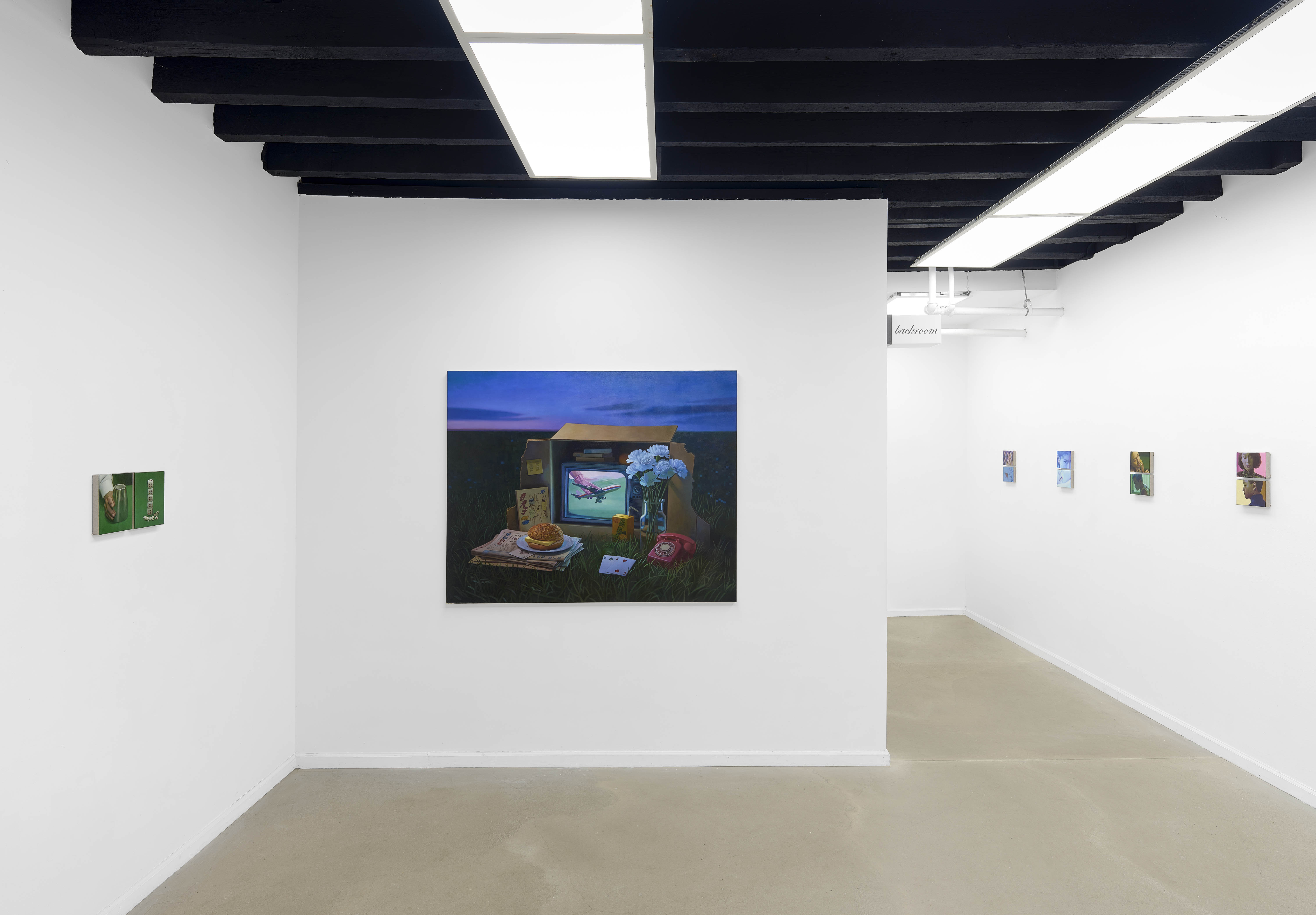
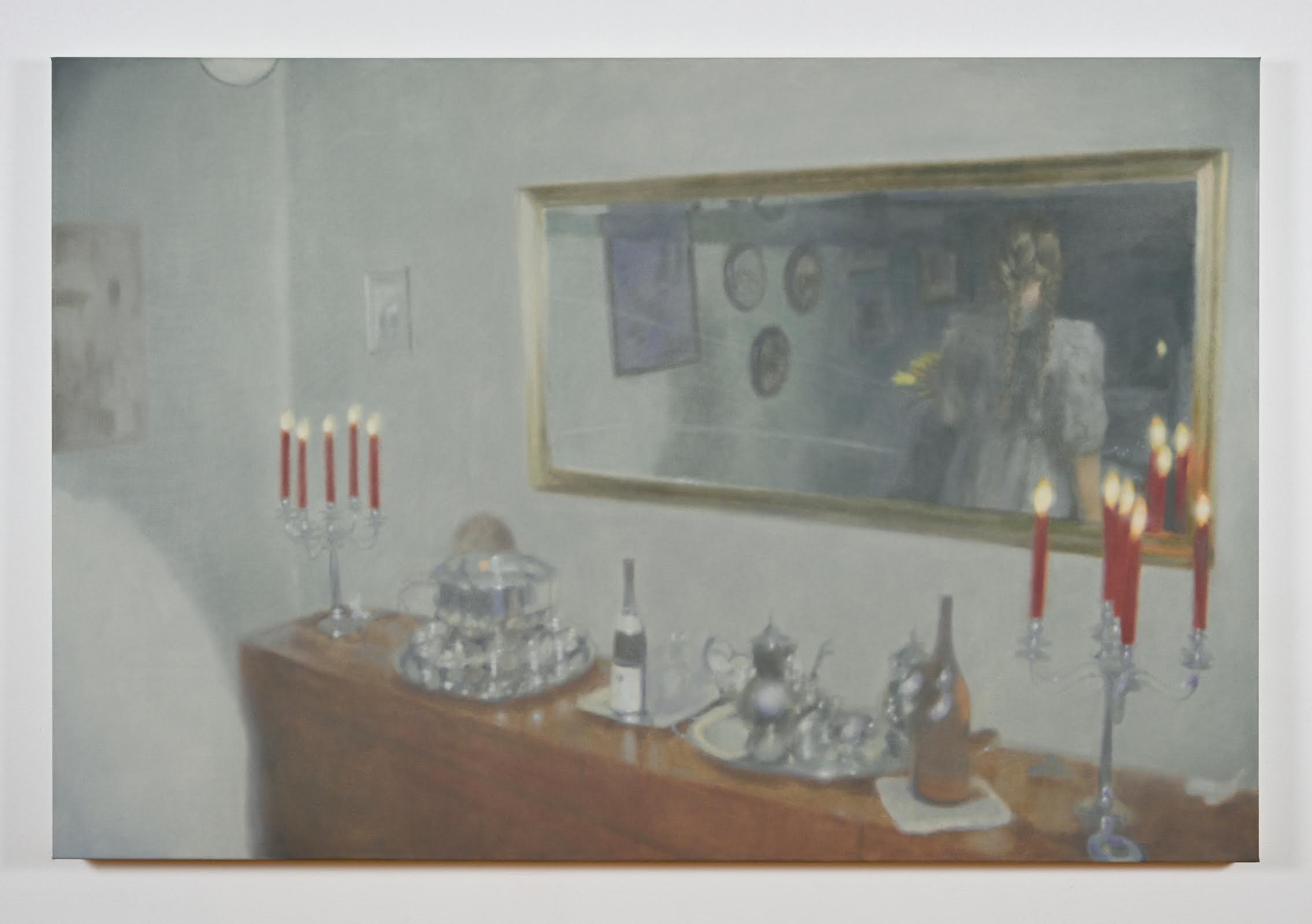
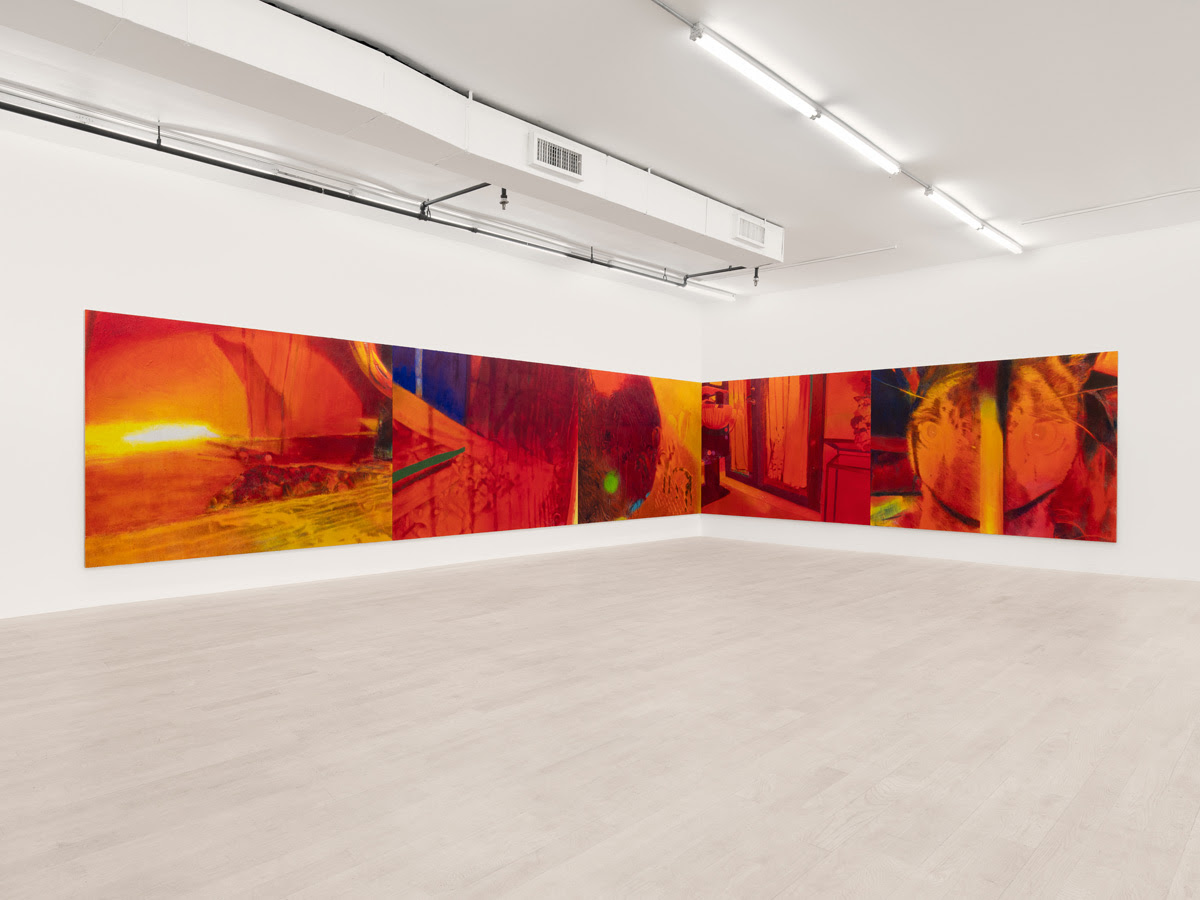
The works exhibited range from 1968 to 2025 and include toned cyanotypes, multiple negative film stocks, b/w photograms, Polaroids, digital prints, digital-film hybrids, photo emulsions, xeroxes and holograms on multiple paper stocks and fabrics. The exhibit is held on two floors of Galerie Shibumi, is not universally pretty and demonstrates a surprising amount of blur advanced towards many ends.
Not Today as a curatorial approach has direct antecedents in the seminal Photography/Not Photography show (1975) curated by Edit DeAk (and iconically recalled in the current exhibit by a photograph of Edit DeAk and an invitation.) One motivation and premise of the Photography/Not Photography show, as well as of the current show, was that the aesthetics follow the objectives. The processes of aesthetic production were thematic.
In specific, Not Today features, inter alia, the first significant New York City exhibition of Gyorgy Lorincy since Edit DeAk’s loft show in 1981, the year of his death. Gyorgy Lorinczy is recognized as one of the most influential photographers of his generation in Hungary and Europe. His upcoming retrospective is the inaugural exhibition for the new Museum of Hungarian Photography opening in Budapest in 2027.
Not Today includes two works by Gyorgy Lorincy never publically seen, “Devil Dancers, Berchtesgaden” (1977/1978), a photo emulsion probe for his late “Painted Pictures” series which examined the problematics of depiction and perception, and “Pre- Flasher”, a display of his technical diagrams for a device to accelerate film on an in-camera frame-by-frame basis from 400 to 4000 ASA. Also included is one of his photographs of Edit DeAk (1974-1975).
And while, pace, the aesthetics follow the objectives and Not Today is not curatorially guided by the emulation of some photographic aesthetic more normal to a gallery contending for a spot in photography’s inner circles, the works of several artists included here clearly could fit into such a setting, including Thais Glazman’s cooly non-nostalgic nostalgia in “Scenes from Motherland” (2025) toned with the teas and herbs of her implicit subject’s Soviet era kitchen, Alex Westfall’s single print diptych “At the Water on my Own” (2025), Sheva Fruitman’s “large apple” from a series of one hundred platinum and cyanotype images of decaying fruits and flowers (1989-1998), and Ari Kim’s languid “Bo at Space M” (2021) and glistening “Sounds of the Wind” (2025). Ari Kim incidentally is a Galerie Shibumi regular whose recent show Mae Deup was critically acclaimed.
Memory, longing, displacement, separation and death are the stuff of much photography. Auto-narrative and queer identity issues with their own political histories inflect the objectives which inform the use of specific material processes and the contextual and affective meanings that emerge from those material processes, rather than the reverse situation in which valorized processes would dictate the objectives and aesthetic ends.
Zawadi’s “Manny’s Passport” (2023) photography and collage is a marker of movement and borders, of navigating spaces which attempt to erase and define one’s existence, of East-African queer identity and nostalgia for a homeland that barely was and of the reassertion of presence.
Andrea Matthews’ work of grief, outrage and transformation "As We Lay Her Down To Rest" (2025) holds their sister's memory, an Ohio transwoman who committed suicide at age 24, within a photograph and slowly buries it within the fibers of their sister's clothes and their own suspended in handmade recycled paper. The 24 sheets, one for each year of their sister’s life, are not perfect. They are messy, their colors bleed, they are fragile, they are strange, and they never truly manage to obscure them. They are the closest physical manifestation “of my grief that I could manage with my own two hands.” They are a memorial, a warning, a cry to action and something gentle to hold, and the piece is meant to be touched.
Goldfinch Bolton’s “Private Space, Public Accessibility” (2024), utilizing some of the few remaining photo-booths scattered throughout New York City, has the artist engaged in moments of private transition. As the number of private spaces diminishes where private rituals may be performed without a financial transaction, such as rent or the purchase of a meal to access a bathroom, private rituals at once are forced into more unshielded public areas and turn more political, or seek out other venues. The photo-booth is/was one private space accessible to the public where the rent of the space is to document what occurs within it. Many of the images in Goldfinch Bolton’s composite work reference the artist's queer identity, which in turn reference the practice of queer couples using photo-booths to take wedding pictures prior to homosexuality being legalized and decriminalized and involve the psychological and societal boundaries between public and private spaces.
Ha Neul On’s life-size “Given in Return” (2025) is a quilted tapestry in the Korean patchwork jogakbo style composed in cyanotype on fabric, toned with tree-borne acorns, turmeric, black tea and coffee. “Given in Return” bears an underlay of body prints made in wind and gravity, patched over with prints of trees from throughout the artist’s life, and is a mediation on the future giving-of-nourishment- in-return by way of death. “The Cycle” (2024) is an earlier quilted cyanotype tapestry in the same traditional Korean patchwork jogakbo style, a meditation on the exigencies of a bi-polar disorder in the life of an immigrant.
Time is an overarching conceptual element of photographic practices, but the time in many of the works included in Not Today is notso much represented asit is practiced.
Joy Chen’s five-year period of production for “225 Memories for Sale” was shot polaroid by Polaroid, only emerging as a cohering work over the course of years, and is now reconceived as the initial moment in an ongoing lifetime piece.
Andrea Matthews’ physical incorporation of their sister is a collaboration over the boundary of death as is the complex multi- year implicit nexus between Gyorgy Lorinczy, Katalin Lorincy and Richard Ogust, instantiated in this show in the physical proximity of their contributions.
Katalin Lorincy’s “Virgin Grail” was composed segmentally between 1987 and 2025, an example of the “look-into box” series conceived in 1981 with her husband Gyorgy Lorinczy, for which only a few prototype slides by him were completed. The first part of the “Virgin Grail”, a meditation on installation and love, is a group of nine installation shots from Postmasters Gallery, NYC taken in 1987.
The second part of the “Virgin Grail’ is a segue consisting as a naked self-polaroid from 1995 and a postcard of the “Unicorn in Captivity” or “The Unicorn at Rest” tapestry at the Cloisters, the unicorn variously being considered a symbol of fertility and marriage and a symbol of Christ. The enclosed garden where the unicorn rests and from which is it speculated it could escape, the hortus conclusus, is connected with the Annunciation.
The third part of the “Virgin Grail’ is hologram of a sculpture called “The Marionette” (2025) made of paper and wire which is so fragile that it cannot be moved from its current location, hence the “look- into box” where the hologram is found. Like the scene of the hortus conclusus where the unicorn rests, the “look-into box” is also an annunciation, a momentary glance at a thing that is contained but not isolated. The Marionette, an individuated puppet acting for and instead of us and replaces us as a shield, is a looking back and a looking into, half a prickly constructivist intruder, half a softening of forms. The sculpture’s susceptibility to injury and falling apart is part of the marionette’s character, as is the flickering appearance of the hologram on the verge of disappearance.
Also included in the exhibit are several of Katalin Lorincy’s black- and-white photogramsfrom the 1990’sin their flat intimacy.
Katalin Lorincy’s works face those of Richard Ogust whose “1968” series shows the photographs as fact, documents in an auto-narrative, and whose “1969” series uses the photographs as intervention to keep the presentshow from becoming too comfortable. This factive use of photography is extended to Gyorgy Lorinczy’s “Pre-Flasher” (1977-1978), a display of technical diagrams and photographs documenting the artist’s intervention in the limits of his own medium.
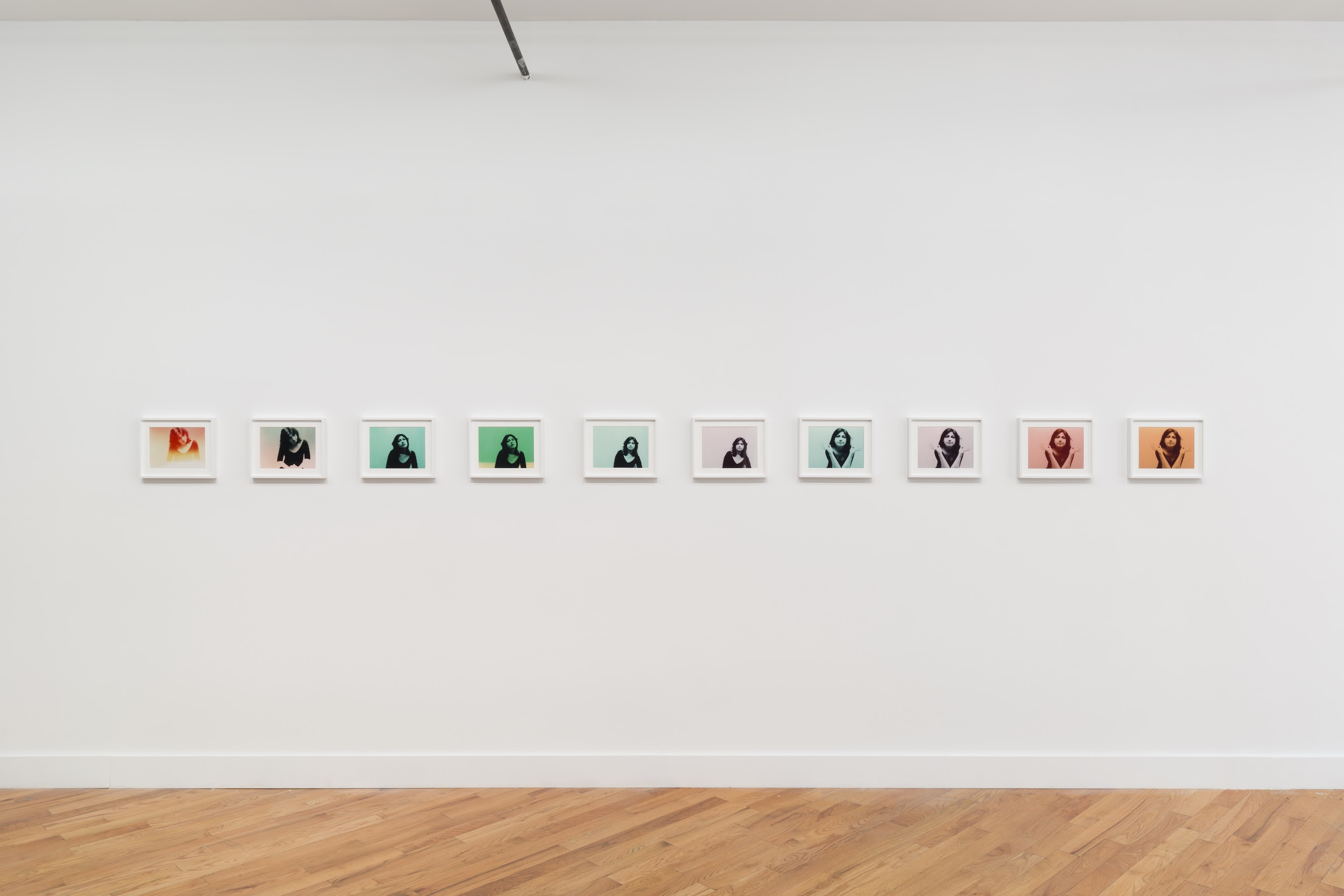
Sam Urgang’s more specifically “commercial” work plays equally hard in a series of commissioned headshots and performance photos of Leanne Antonio, Lulu Black, Ariel Iasevoli, Jenny C'est Quoi, Lilin Lace, Cara Seymour, Lydia Wilts and several others, stars of the neo- burlesque world. His commissioned self-presentations (headshots) especially are completely different, affectively and existentially, than most photographs one runs across. The subjects have commissioned the work because they want you to see them in a specific way – not how the photographer wants you to see them, not as random snapshots on the street, not as casual photographs of friends, not as posed editorial magazine shots – but emphatically dead-on in the eyes wanting you to see them and in some specific way. And this confrontation and presentation of self, in a subculture and world where the presentation ofself is often a performance orshield or marionette, a “look-into” hologram, comes across as radically under- distanced and un-posed, not because the pose is not posed, but because the wanting is not posed, and that has unintended consequencesin the character and degree of emotion is conveyed.
In the affine space of the exhibit, Peter Grass’ silhouettes of friends and playful composition from the mountains of Ecuador are contrapuntal.
At the other extreme, Folana Miller’s commercial-in-affect work of faux-Hollywood film-noir narrative over-distance race with equally uncomfortable attractiveness.
And at yet another extreme of nontraditional camera-work and public space intervention, Goldfinch Bolton’s “Locate Larry!” (2024) is an installation using traffic cameras hacked through the Traffic Camera Photo-booth website created by Morry Kolman in and around Times Square on October 13, 2024 which de-turns auto- narrative and display towards a Canetti-esque iteration of crowds and power.Initially conceptualized as a zine, the traffic cam photos all include the artist somewhere in a brightly-colored jumpsuit reminiscent of Where's Waldo, and ask the viewer to that figure in a tongue-in-cheek demonstration of the prevalence of the surveillance state and the proliferation of cameras within the public sphere. More implicitly in alignment with their other work, the piece expresses the conflict between gender presentation and gender identity. “Locate Larry!” includes “take-one-please” offprints for the gallery-goers of pagesfrom the zine.
The final work in the show from the perspective of a gallery goer walking through the two floors and multiple areas is Zina Gladiadis’s mantric “Knife Game” in the project room, a short video shot on an I-Phone in a Berlin bar in 2018 and played on a loop. Zina Gladiadis is also be taking and giving away Polaroids during the opening.