Opens Thursday
Roberto Juarez
Look Again: Early 1980s East Village
Nov 12 – Dec 19, 2026
More from Roberto Juarez on Gallop
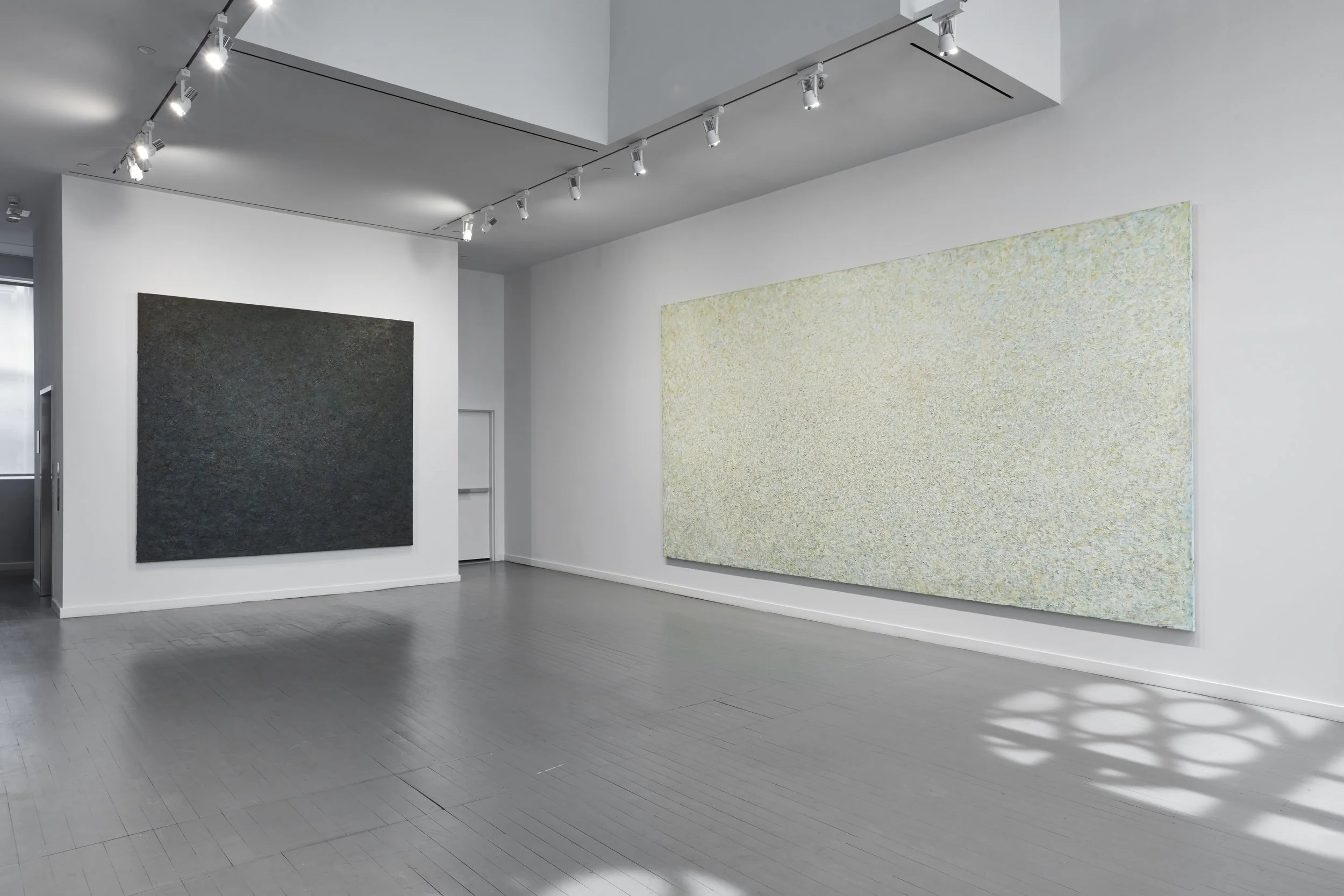
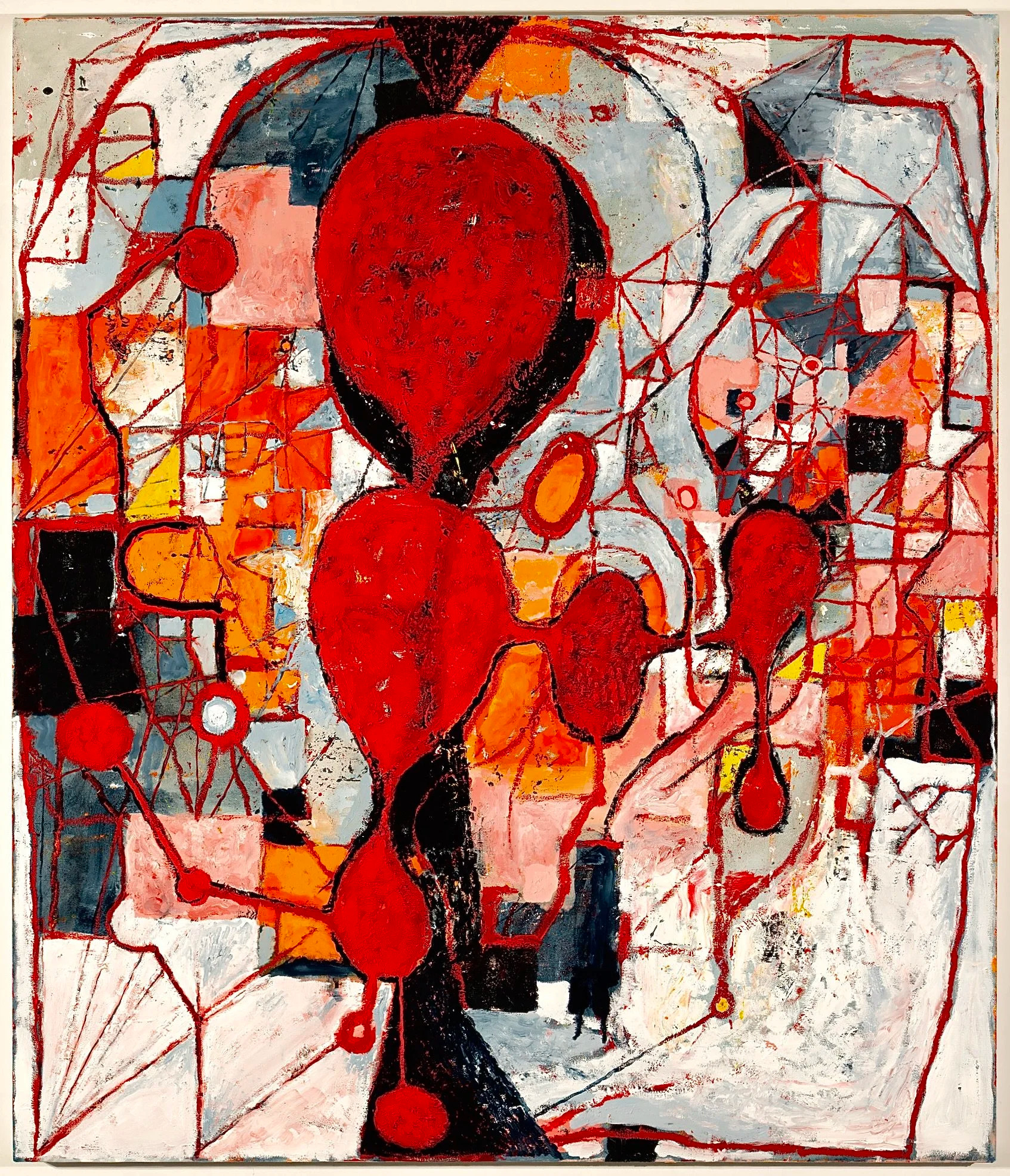
The works on view in Look Again at Magenta Plains were made by Roberto Juarez in New York between 1981 and 1986, most of them on large sheets of paper and cardboard, worked in paint, oil stick and mixed media, later mounted on canvas. Stored for decades in his studio in Canaan, NY, most of them remained unseen until during the Covid lockdown, when Juarez reopened the wooden crate that held them. More than forty years after their creation, they return to the part of the city where they were made.
Juarez was born in Chicago in 1952, to a Puerto Rican mother and a Mexican father. Family trips to Mexico gave him churches, religious imagery and archaeological sites long before they became art historical references, so that when Mesoamerican forms appear in his work, they belong to memory before they belong to iconography. He trained at the San Francisco Art Institute, studied graduate film at UCLA, and in 1978, worked on his thesis in Paris, choosing not to return to Los Angeles.
Juarez arrived in New York in the winter of 1980. The downtown he entered was economically precarious and culturally extraordinary, and the borders between disciplines were as porous as the borders between lives were: artists built sets for theaters, performers appeared in galleries, musicians worked with painters, and friendships, love affairs and professional alliances overlapped. In 1981 Ellen Stewart, founder of La MaMa Experimental Theatre Club, gave Juarez a disused garage on First Street as a rent-free studio. There was no water and no electricity. His friend, the painter Mark Tambella, ran an extension cord and a hose from a neighboring loft to give him water for his brushes. That same year he was included in New York/New Wave, Diego Cortez’s exhibition at P.S.1, where the dealer Annina Nosei singled out two artists in the crowd: Juarez and Jean-Michel Basquiat. His career moved fast, from a first solo show at Robert Miller in 1981, to the Museum of Modern Art’s International Survey of Recent Painting and Sculpture in 1984, and to the Whitney Biennial in 1987. Downtown, meanwhile, his life remained bound up with La MaMa and a circle of friends that included Arch Connelly, Mark Tambella, Jimmy Wright, Elaine Reichek, Jeff Perrone and Donna Francis, a community that AIDS would soon devastate.
The works gathered at Magenta Plains do not refine a single style; they move restlessly between languages. Pre-Columbian imagery collides with the visual noise of downtown, a face becomes a mask, a body becomes a sign, and sex can be comic, tender, or frightening. Nosei later described what holds it all together as "an inner structure or even an inner language."
Critics at the time placed Juarez among the Neo-Expressionists, and he shared their appetite for figuration, scale and intense color. But the label does not explain why a Mesoamerican reference sits beside a dildo, why a portrait becomes a mask, or why humor keeps interrupting solemnity. What these works share is freedom. They come before the demand that an artist finds a recognizable language and repeats it: Juarez did not yet have to look like Roberto Juarez, because his identity as a painter lay not in a repeated image but in the way images could be brought together.
The rediscovered works were first shown in Italy, at Apalazzogallery in Brescia in 2023 and at Palazzo Tiepolo in Venice in 2024. Now they are back downtown. The rotary telephone is obsolete, the East Village has been transformed, and many of his friends are gone. The works have absorbed all this history without becoming illustrations of it. In 1981 Annina Nosei looked at Roberto Juarez before history had decided what she was supposed to see. Forty-five years later, these works offer us the same possibility.
Look again.
—Excerpted from Roberto Juarez: Look Again by Fabio Cherstich
Roberto Juarez (b. 1952, Chicago, IL) currently lives between New York City—where he and a group of artists purchased a building on 8th Street near Tompkins Square Park in the late 1980s—and Canaan, NY. Juarez first gained attention with a solo show at Robert Miller Gallery in 1981. He later expanded into large-scale public murals, creating works for Grand Central Terminal in New York, Miami International Airport, and the University of Michigan, among others.
Notable solo exhibitions include a two-part survey at Apalazzo Gallery, Brescia, IT and Palazzo Tiepolo, Venice, IT (2024); Processing: Paintings & Prints 2008-2018, Boulder Museum of Contemporary Art, CO (2018); Roberto Juarez: Mural Paintings, Berkshire Museum, Pittsfield, MA (2011); They Entered the Road, Kemper Museum of Contemporary Art, Kansas City, MO (2004); and A Sense of Place: Roberto Juarez, Museum of Contemporary Art, Miami, FL (2003).
Juarez’s work is included in public collections such as the Brooklyn Museum, NY; the Denver Art Museum, CO; El Museo del Barrio, New York, NY; J. B. Speed Art Museum, Louisville, KY; Kemper Museum of Contemporary Art & Design, Kansas City, MO; Los Angeles County Museum of Art, CA; Metropolitan Museum of Art, New York, NY; the Saint Louis Museum of Art, St. Louis, MO, and many others.