
Ended
Joan Witek
A Survey of Paintings (1969-2012)
Sep 4 – Nov 1, 2025
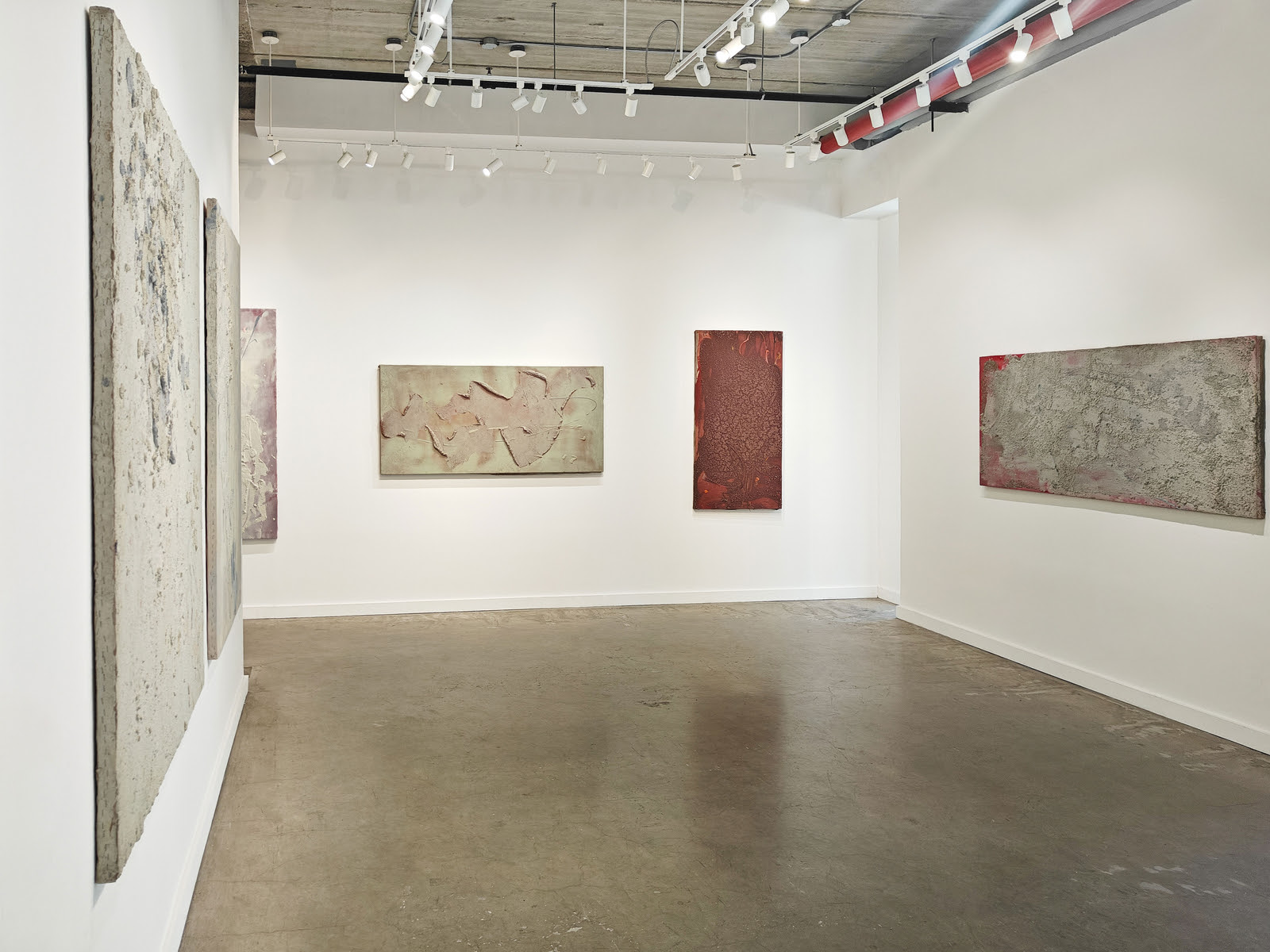
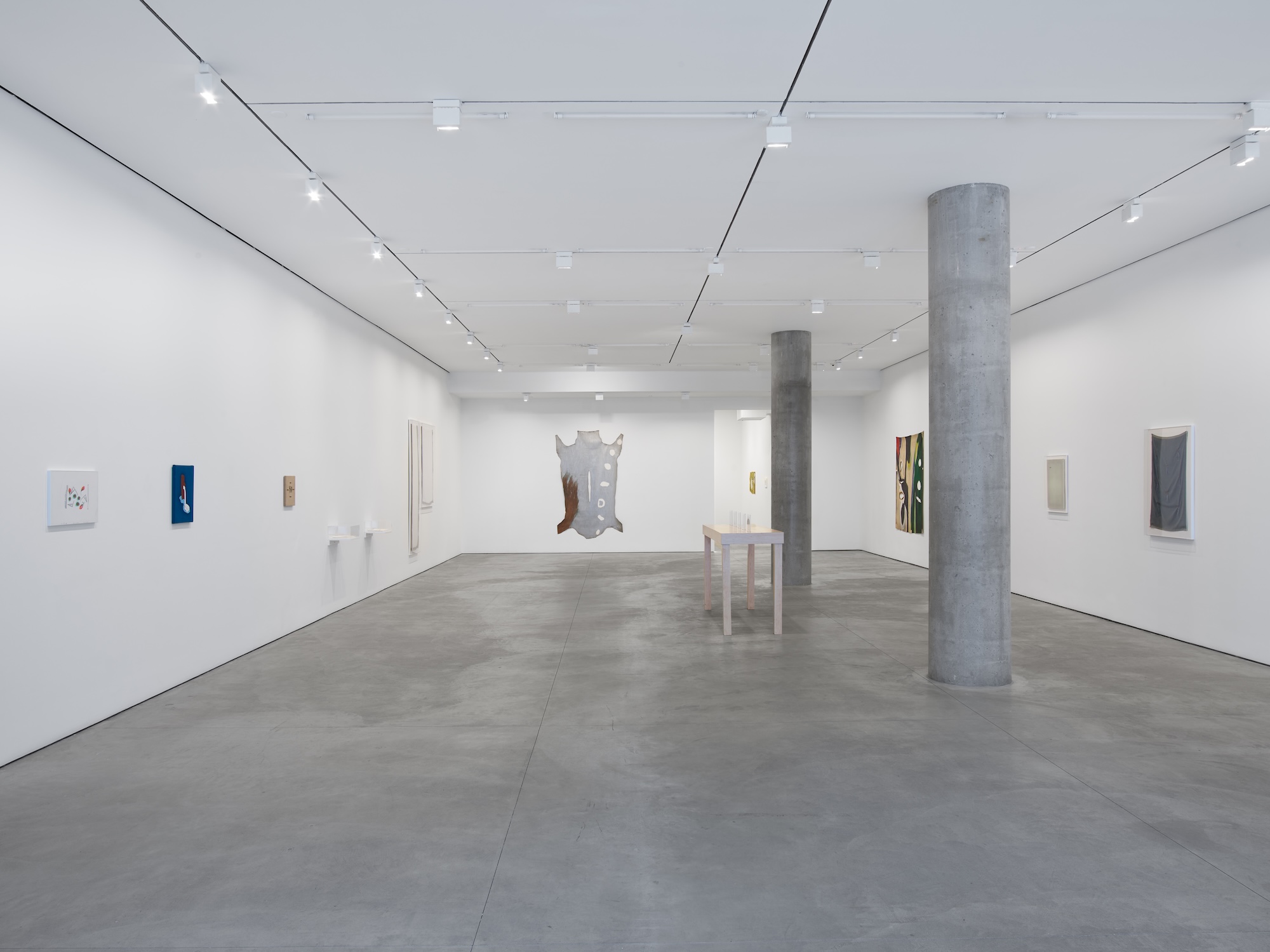
Hunter Dunbar Projects is pleased to present a survey of works by Joan Witek (b. 1943). Organized in collaboration with Artist Estate Studio, LLC, the presentation with highlight major paintings by Witek spanning over five decades -- from 1969 to 2012.
A prominent figure of the downtown New York art scene since the 1970s, Witek worked primarily in monochromatic painting: foregrounding gesture and surface, and emphasizing repetition, layering, and materiality. With echoes of Minimalism, Process Art, and Abstract Expressionism, Witek's restrained work illustrates the artist's long-time desire to reconcile geometry, abstraction, and emotion.
In the mid-1970's, Witek's work took a turn from its gestural, abstract roots as she embraced geometric forms and started exploring the infinite nuance of a singular color -- black. The monumental, four-part canvas Untitled (1974), was conceived by Witek after seeing the all-black oil stick works of her long-time Tribeca neighbor Richard Serra, as well as the experimental black canvases of Frank Stella, Ellsworth Kelly, and Ad Reinhardt.
Through the reduction of her palette, Witek allows mark-making, space, and texture to convey diverse concepts of anthropological, literary, and experiential origin. The artist's signature lozenge shapes -- adopted from the New Guinea bark paintings she studied during her tenure as curator at the Metropolitan Museum of Art -- illustrate her deft incorporation of non-objective formality with more elaborate and subjective content.
In the 1980s and 1990s, Witek began creating 'stroke' paintings that marked a significant development in her practice. The works, which she refers to as 'black impressionism,' balance fulsome black forms with breaks in the canvas. The 1984 painting Camouflaged by Fralities [P(S)-27], is densely filigreed, with oblong forms that cluster, reiterate, and collate. The lozenges seemingly interact with -- and tremble against -- each other, acting in a wider, reductive language she often referred to as "handwriting."
In the 2000s, Witek further developed aesthetically and conceptually. The Fable of Arachne (after Velázquez) [P-125] (2005), composed of black oil stick laid over white gesso, uses area of negative space to visually ventilate the orchestrations of its textured black sinews. The markings mimic motifs drawn from ancient texts, pictographs, and hieroglyphs. It is one of the many works on public view here for the first time.
P-159 (2012), is a towering work made of meditative strokes which, despite their muscular application, are extraordinarily soft, expressive, and poetic. The canvas is the pinnacle for an artist whose work has consistently evolved toward an identity of refinement.
A historic survey of the artist's works on paper will be presented concurrently as a virtual exhibition.