Through Jan 16
G. Peter Jemison
In Beauty It Was Begun
Nov 19, 2026 – Jan 16, 2027
Closes Jan 16. Get a reminder before it closes.
 or scan for the iPhone app
More from G. Peter Jemison on Gallop
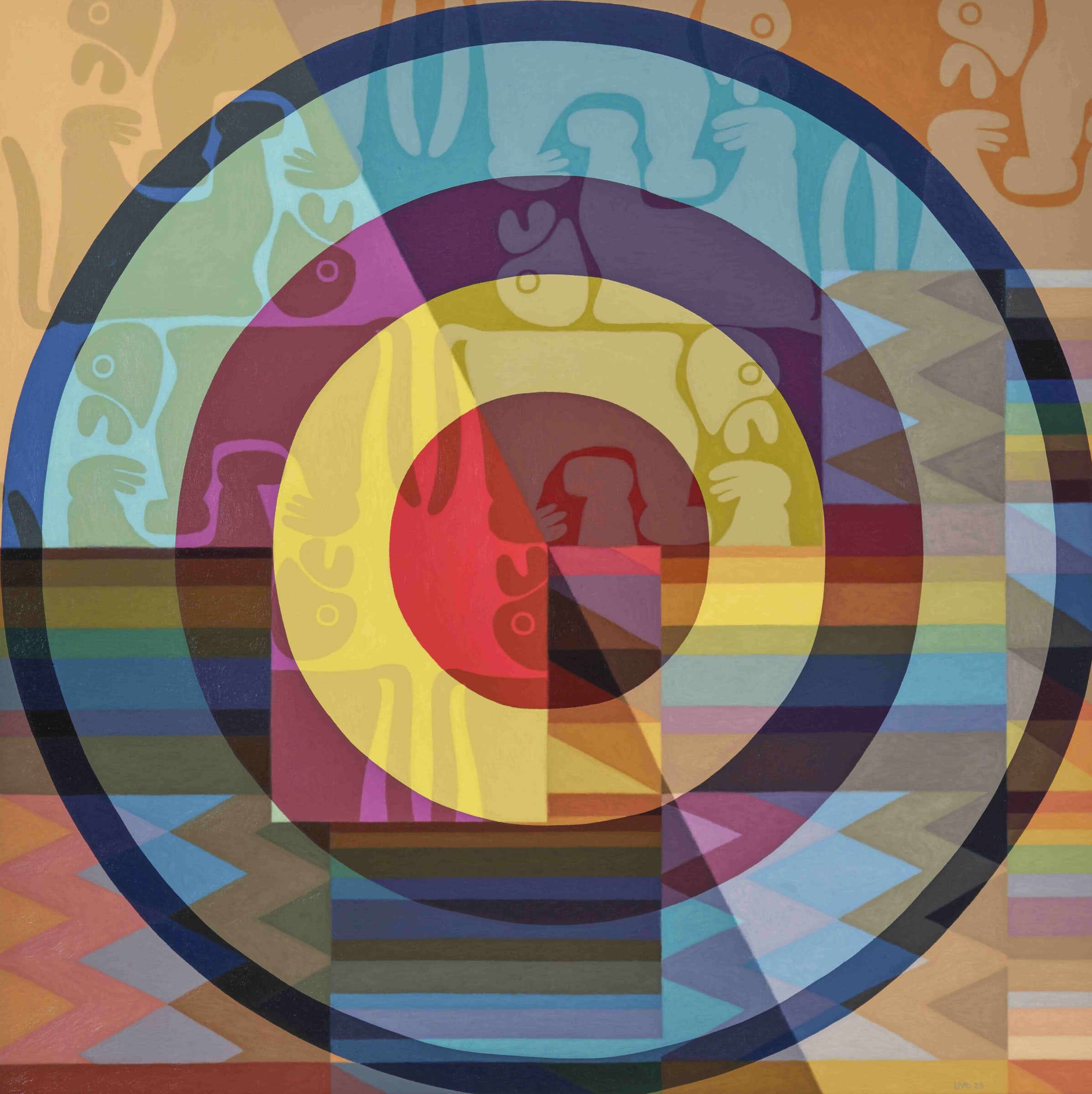
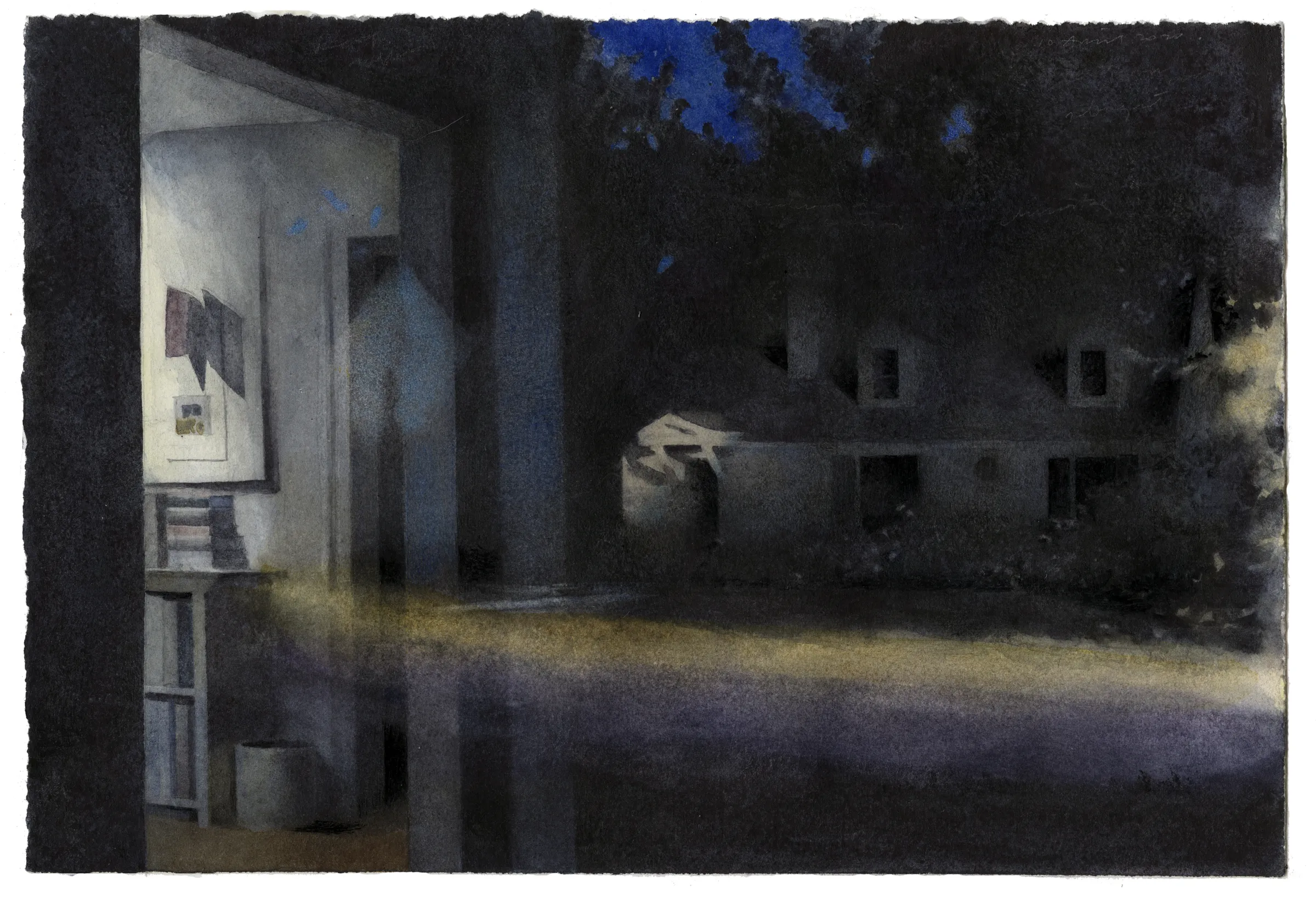
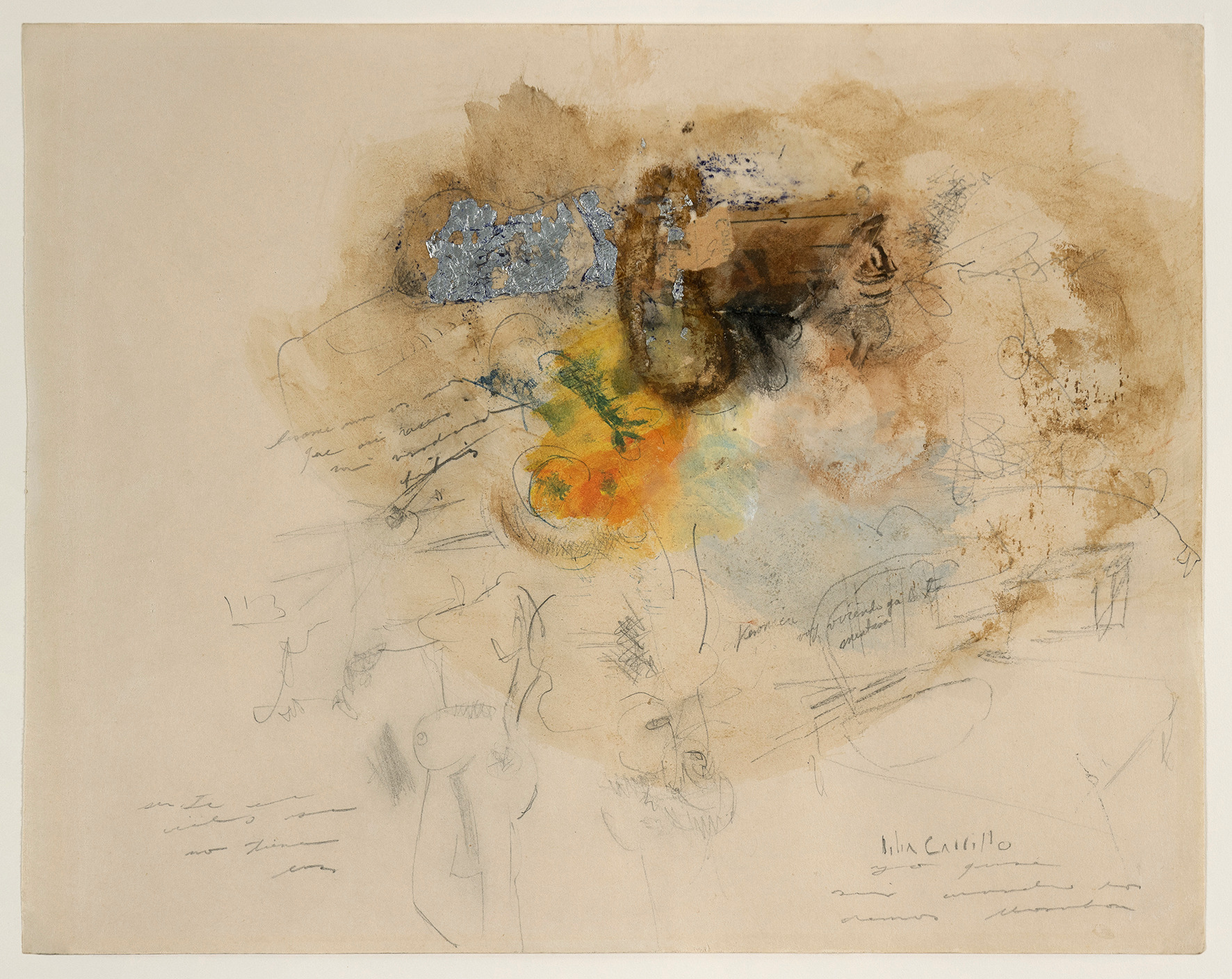
In Beauty It Was Begun is the gallery’s second solo exhibition of work by G. Peter Jemison (Seneca/Onödowáʼga, Heron Clan, b. 1945), an artist, curator, and cultural worker who lives and works in Victor, New York. This exhibition traces Jemison’s early work, and the experimental processes and through-lines that have persisted in his long-spanning artistic career. Paintings and works on paper made between 1968 to 1983 are presented together for the first time, including a series of abstract rubbings, that altogether elucidate the foundations of Jemison’s deeply relational and vital practice for which he is celebrated.
In Beauty It Was Begun connects the formal and conceptual occupations of Jemison early in his career with the development of his distinct artistic perspective, irrevocably shaped by the unfolding of socio-political movements for civil rights and Indigenous resistance and self-determination of the period. The title of the exhibition nods to traditional Diné teachings around the practice of beauty and harmony, and underscores his dedication to defining and maintaining those values in all stages of life and in community.
By 1968, Jemison had completed his studies in Art Education at Buffalo State College, and tried living and working in Manhattan, where he participated in his first group exhibition at Tibor de Nagy and showed the painting on paper Tibor’s Choice (1968). Soon after returning to Western New York, he taught art classes while continuing to work on his own studio practice. He began to experiment with material, form, and texture in particular, leading to some of his earliest post-minimal works such as his foam rubber sculptures that evolved from studies and drawings, sometimes done on pages of the financial section of the New York Times. The assemblages Grant Ave. and Westside (both 1969) feature cast off strips of industrial materials attached to board with grommets, joining scribbles of colored pencil and a subtle matrix of monochromatic paint that accentuates the flatness of the materials.
In June of 1969, Jemison arrived in San Francisco, marking a brief but revelatory time for the young artist creatively and politically. The works from this time period show Jemison’s employment of random processes and chance in his compositions. They also demonstrate his enduring proclivity towards using whatever is already at hand, be it material or subject matter. Working on the floor of his apartment in Bernal Heights, he created a number of oversized push paintings––colorful abstract compositions made by pushing acrylic paint through different weaves of nylon fabric directly onto canvas or paper, sometimes allowing them to dry slightly and pucker before pulling the fabric away. Through repeated experimentation, Jemison developed a formal methodology for his push paintings. Untitled (1969), Skinny Dynamite, and Vin Rose (both 1970), are some remaining examples from this period, as many of the large canvases were either lost in transit or to a storage fire some years later.
Central to this exhibition is a grid of abstract rubbings on paper (1969–1971) that hangs in the far end of the gallery. Surfaces of wood grain, masonry, and other day to day materials are captured through frottage and arranged instinctually as patchworks of bright geometric abstraction on paper. Jemison made these compositions in San Francisco as well, in parallel to the push paintings, on evenings after returning home from work.
Jemison supported himself with a job making window displays for Design Research in Ghiradelli Square. That fall, he witnessed the 19-month long occupation of the adjacent Alcatraz Island by the Indians of All Tribes. He cites this historical moment as one of his earliest political awakenings, along with the Kent State Massacre in 1970, and the Occupation of Wounded Knee in 1973. In one of his notebooks on display, from 1970, he writes about a performance he made at People’s Park in Berkeley, and then of a protest he organized with a street theater group in response to Kent State shortly after. His reflections reveal a young artist trying to make sense of the purpose of art and collective activism. This spirit of gathering and organizing continues to grow with his curatorial and repatriation work in the subsequent decades.
The works following his time in San Francisco mark a shift towards incorporating Native American themes, and show his reckoning with meaning and subject in form. Thinking Red and Red Power (both 1972) celebrate the character and beauty of the land and Indigenous culture through depictions of corn, plants, moss, rocks, and wood, while referencing more pointedly in their titles the flourishing Red Power Movement of the 1960s and 1970s. Jemison, along with other artists of his generation, insisted on leveling the distinctions between traditional and contemporary art that white European modernists reinforce and exploit. More overtly political statements would appear later in his work throughout the 1980s, which were presented in his last exhibition at the gallery, though he has often stated that simply making art as a Native American is a political act in and of itself. This statement rings particularly true in his landscape works as they complicate a genre historically used by Europeans in service of colonial expansion.
Jemison had moved back to Western New York by 1973, and organized his first exhibition of works by Haudenosaunee artists with a small grant. He continued to teach art in his community, working at both the Cattaraugus and Allegany Reservations, and would drive a van around full of work made by fellow Haudenosaunee artists and craftspeople to share wherever he could. His impulse to “help people see” was recently recreated for the 59th Carnegie International at the Carnegie Museum of Art.
Jemison eventually returned to New York City in 1978 to become the inaugural director and curator of the American Indian Community House Gallery. He made the painting Riderless Horse (1978) soon before leaving for the city, where he would go on to establish an incredibly generative practice in community with many other influential artists from his generation. Included in this exhibition are several works from this period, including his iconic paper bag drawings, which point to the excitement of creative exchange taking place all around the city. Jemison made Refuse Baggie (1980) for the legendary Times Square Show on an invitation by Charlie Ahearn, and Travel Bag (1980) following an outdoor exhibition that David Hammonds organized for the Studio Museum in Harlem. In the work Flatbush Spring (1981), which he made while living at Church and 18th Street in Brooklyn, we continue to see his observational approach and use of careful geometry applied to a familiar slice of life scene in the city. Although he was deeply enmeshed in his local environment, a work like Rust Bucket (1983) evinces his connection to the place where his practice was begun.
G. Peter Jemison (Seneca/Onödowáʼga, Heron Clan; b. 1945, Silver Creek, New York) lives and works in Victor, New York. Recent solo and two-person exhibitions include On the Right Path, Works: 1982–2023, 47 Canal, New York (2023); G. Peter Jemison: Six Decades at The Armory Show, curated by Candice Hopkins (Carcross/Tagish), The Armory Show, New York (2023); Shared Light, Burchfield Penny Arts Center, Buffalo, New York (2022); and Ga’nigöi:yoh: G. Peter Jemison (To Have a Good Mind), K Art Gallery, Buffalo, New York (2022), among others. He participated in the 59th Carnegie International (2026) and Greater New York at MoMA PS1 (2021). His work has featured in Indigenous Identities: Here, Now & Always, Zimmerli Art Museum, New Brunswick, New Jersey (2025) and The Land Carries Our Ancestors: Contemporary Art by Native Americans, National Gallery of Art, Washington D.C. (2023), both curated by Jaune Quick-to-See-Smith (Salish-Kootenai). Additional group exhibitions include: 47 Canal, New York (2024); The 8th Floor, New York (2023); The Museum of Modern Art, New York (2022); National Museum of the American Indian, New York (2019, 2006); Artists Space, New York (2018, 1988); The Studio Museum in Harlem, New York (1990); and Just Above Midtown, New York (1981), among others. Jemison’s work is held in public collections at Whitney Museum of American Art, New York; National Museum of the American Indian, New York; The British Museum, London; The Museum of Modern Art, New York; National Gallery of Art, Washington D.C.; Carnegie Museum of Art, Pittsburgh; Denver Art Museum; and Nasher Museum of Art at Duke University, Durham, North Carolina, among others. He served as the inaugural curator of the American Indian Community House Gallery in New York from 1978 to 1985.
A leading authority on the subject of Haudenosaunee history, Jemison co-edited Treaty of Canandaigua 1794: 200 Years of Treaty Relations between the Iroquois Confederacy and the United States (Clear Light, 2000). He writes frequently on the repatriation of sacred objects, cultural patrimony, and the human remains of the Haudenosaunee.
Jemison was founding director of the American Indian Community House Gallery in New York from 1978 to 1985, and was Historic Site Manager at Ganondagan in Victor, New York from 1985 until his retirement in 2022. In addition, Jemison is a Seneca Faithkeeper, served as the Indian Tribes representative on the Federal Advisory Council on Historic Preservation during the administration of President George W. Bush, acts as the Seneca Nation representative for the Native American Graves, Protection and Repatriation Act committee, and is a trustee for the National Museum of the American Indian.
Visits 1

Art Daddy visited · 2 days ago
A living legend of Indigenous contemporary art, Jemison has spent six decades bringing Seneca history, Haudenosaunee cosmology, and cultural sovereignty into conversation with painting, and Daddy considers this essential viewing.