Opens tomorrow
Rosalie Werthefrongel
Ins Blau
Nov 12, 2026 – Jan 21, 2027
Opens Nov 12, closes Jan 21. Get a reminder before it closes.
 or scan for the iPhone app
More from Rosalie Werthefrongel on Gallop
The Chapel
König Galerie is pleased to present Ins Blau by Rosalie Werthefrongel in the Chapel of St. Agnes, marking the artist’s second exhibition with the gallery.
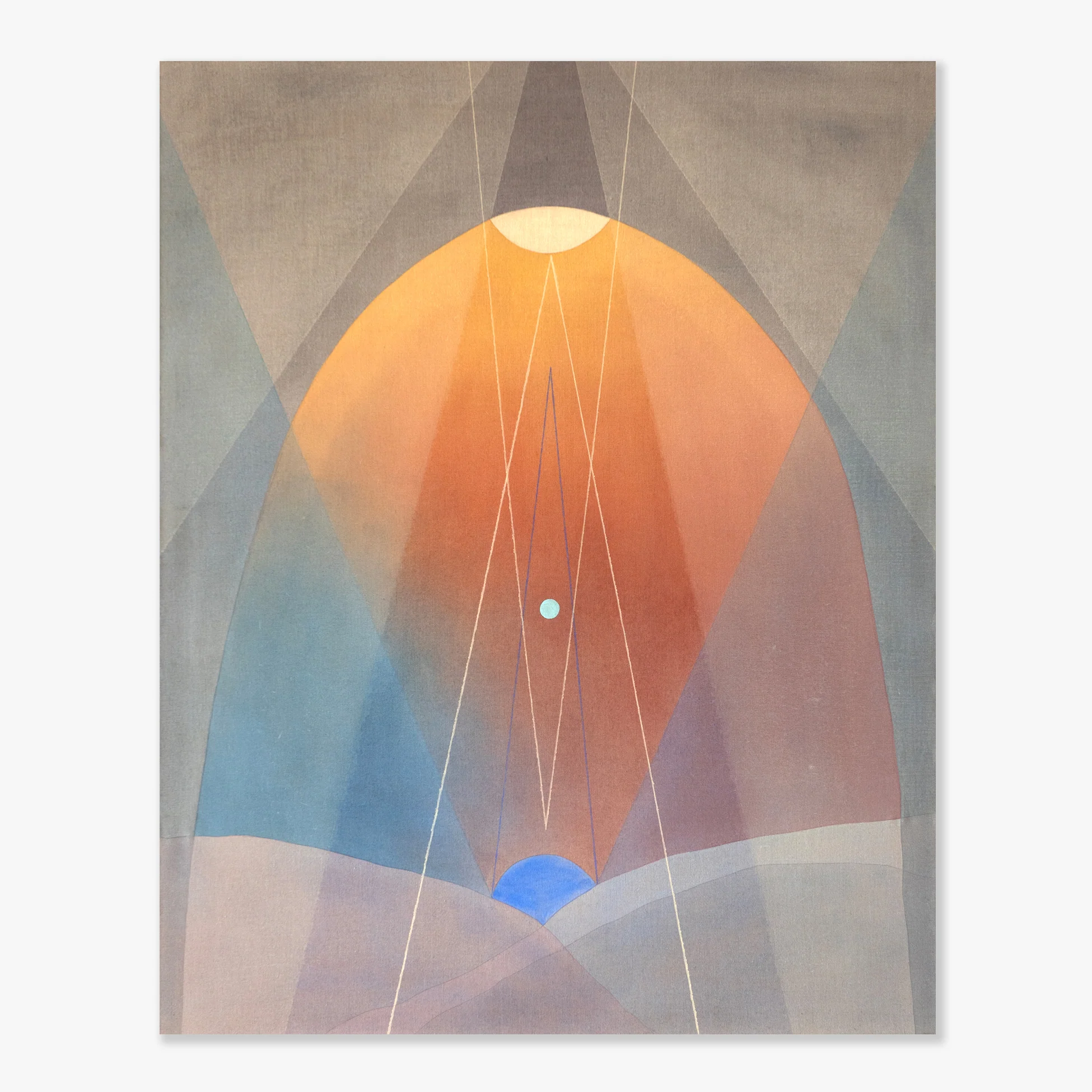
The exhibition title seems to play on the invitation to take visitors "ins Blau" (“into the blue”), into a color rush. At the same time, it evokes the saying „into the blue", turning the journey into one whose destination and endpoint remain open. The color blue refers to the sky and its infinite expanse, which serves as the unifying motif throughout the works in the exhibition.
In some of the works, the sky is crossed by gray or white contrails or by colored plumes of smoke left behind by an aircraft. Viewed in abstract terms, these traces resemble brushstrokes painted across the sky, transforming it into a canvas.
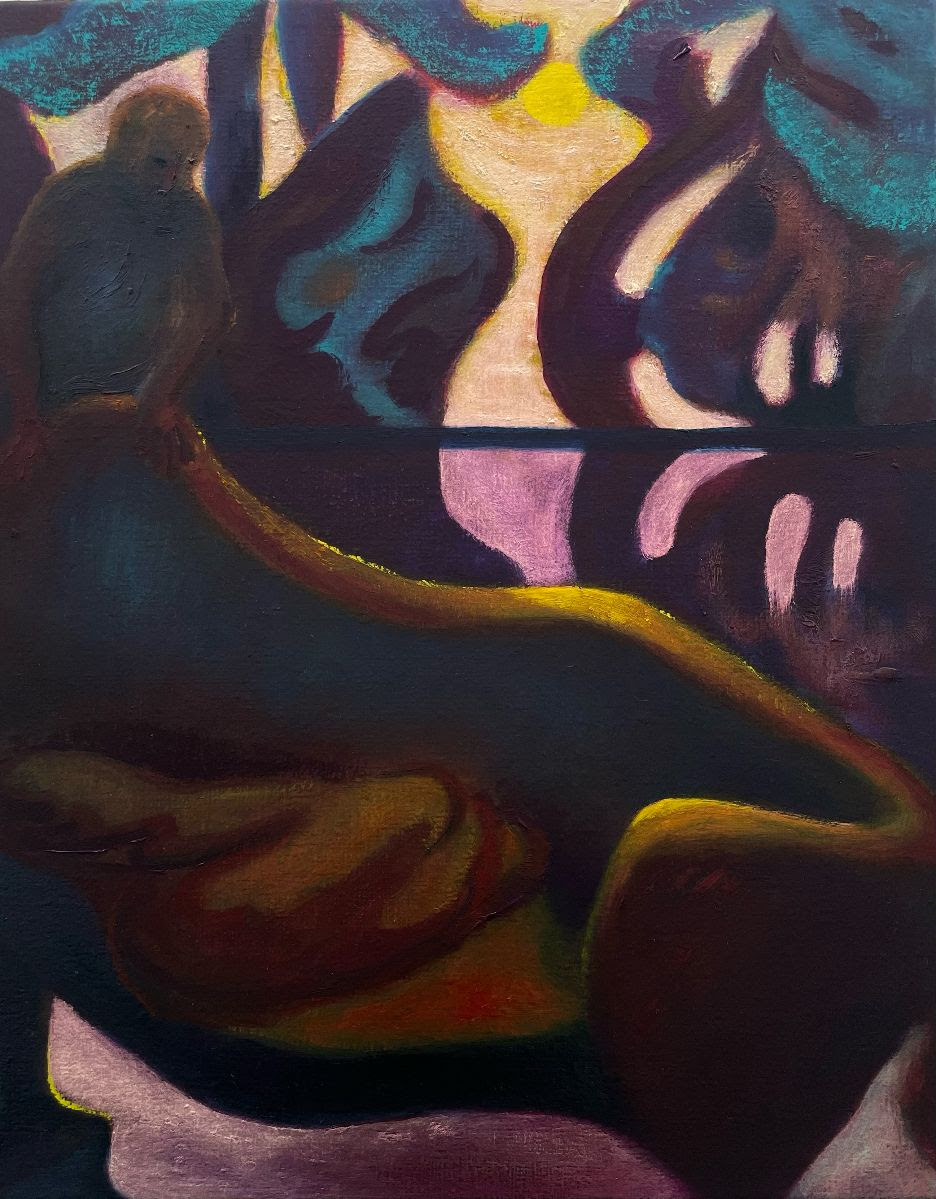
This ambivalence between depicted reality and visible construction is characteristic of Werthefrongel’s visual language. What initially appears to be illusionistic painting reveals itself, upon closer inspection, as a complex interplay of different media layers. Backgrounds turn out to be printed surfaces, while seemingly tangible objects reveal themselves as photographic or printed images. In Werthefrongel’s technically accomplished paintings, the illusion of spatial depth is carefully constructed only to be exposed again in the very same moment. The image does not merely depict something; it also reflects on the conditions that make its visibility possible in the first place.
These perceptual shifts, which viewers experience time and again, evoke Surrealism and its juxtaposition of impossible perspectives, objects, and scenes. Yet Werthefrongel’s paintings are firmly rooted in the present and reveal imaginary worlds of her own making. They emerge through an elaborate, multilayered process. First, the artist arranges objects—such as toys and collectible figurines—as well as printed materials, including postcards and calendars, into small scenes in her studio. She selects these elements for their visual appeal or because they evoke personal memories. She then photographs the arrangements from multiple perspectives before digitally rearranging and recombining them. In this process, she is also drawn to chance and to what might initially appear to be mistakes. In addition, she actively incorporates digital tools as elements within the image itself. As a result, increasingly large areas of these new compositions are erased or bear traces of erasure, reminiscent of techniques familiar from programs such as Photoshop.
The result of this multistage process of construction and deconstruction is a series of painterly collages that continually challenge viewers to reconsider how they see and understand what is before them. And so, one is happy to accept the invitation to venture into the unknown and into the blue, with many moments of surprise to look forward to.
Rosalie Werthefrongel (b. 1993 in Friedberg, Germany) studied Painting and Graphics at the Academy of Fine Arts Munich in Thomas Eggerer’s class and graduated in 2026.
From 2019 to 2023, she studied in Karin Kneffel’s class. She then received an Erasmus+ scholarship for Painting and Animation under Judith Eisler at the University of Applied Arts in Vienna from 2023 to 2024. Afterwards, she completed a guest semester with Cornelius Völker at the Kunstakademie Münster. Since 2024, she has continued her painting studies with Thomas Eggerer at the Academy of Fine Arts Munich and has been his master student since 2025.
Her works have been exhibited, among others, at König Galerie, Munich; Kunstraum Museum Burg Bentheim, Bad Bentheim; Semperdepot, Vienna; Galerie im Traklhaus, Salzburg; Artists Space, New York; and Shandong University, Jinan, China, as well as in numerous other group exhibitions.
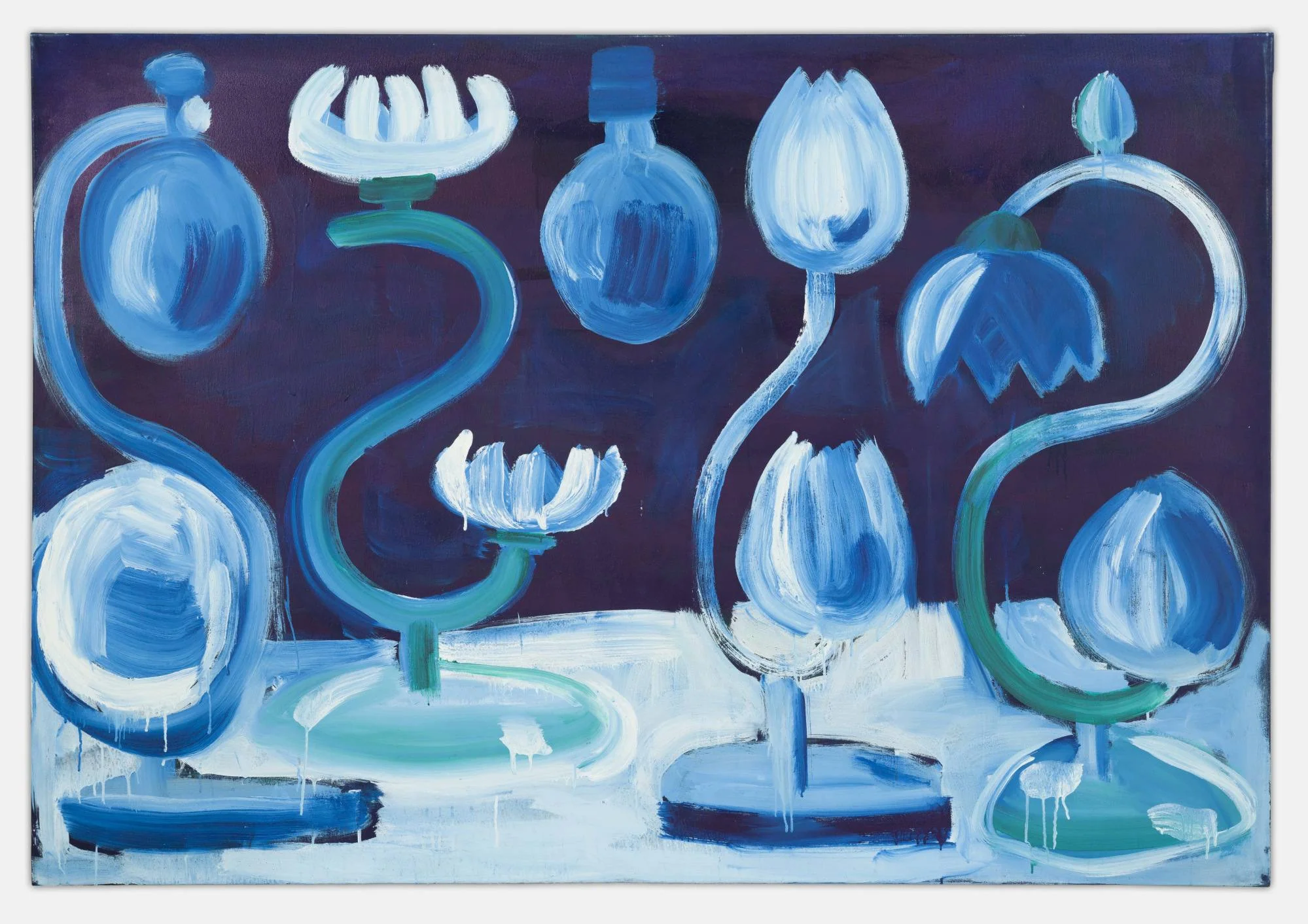
Werthefrongel’s painting moves between still life, stage scenery, and imaginary landscapes. Her starting point is everyday objects, which in new constellations leave behind their usual function and become part of multilayered narratives. Models, collages, and digital editing form the basis of the works, which emerge through multiple layers of acrylic, oil, and drawing elements. In doing so, she explores the relationship between reality and representation, between personal perspective and collective imagery, creating complex pictorial spaces that raise questions about perception, materiality, and staging.