Ended Mar 25
Molly Rose Lieberman
Alive Girl
Feb 24 – Mar 25, 2023
More from Molly Rose Lieberman on Gallop
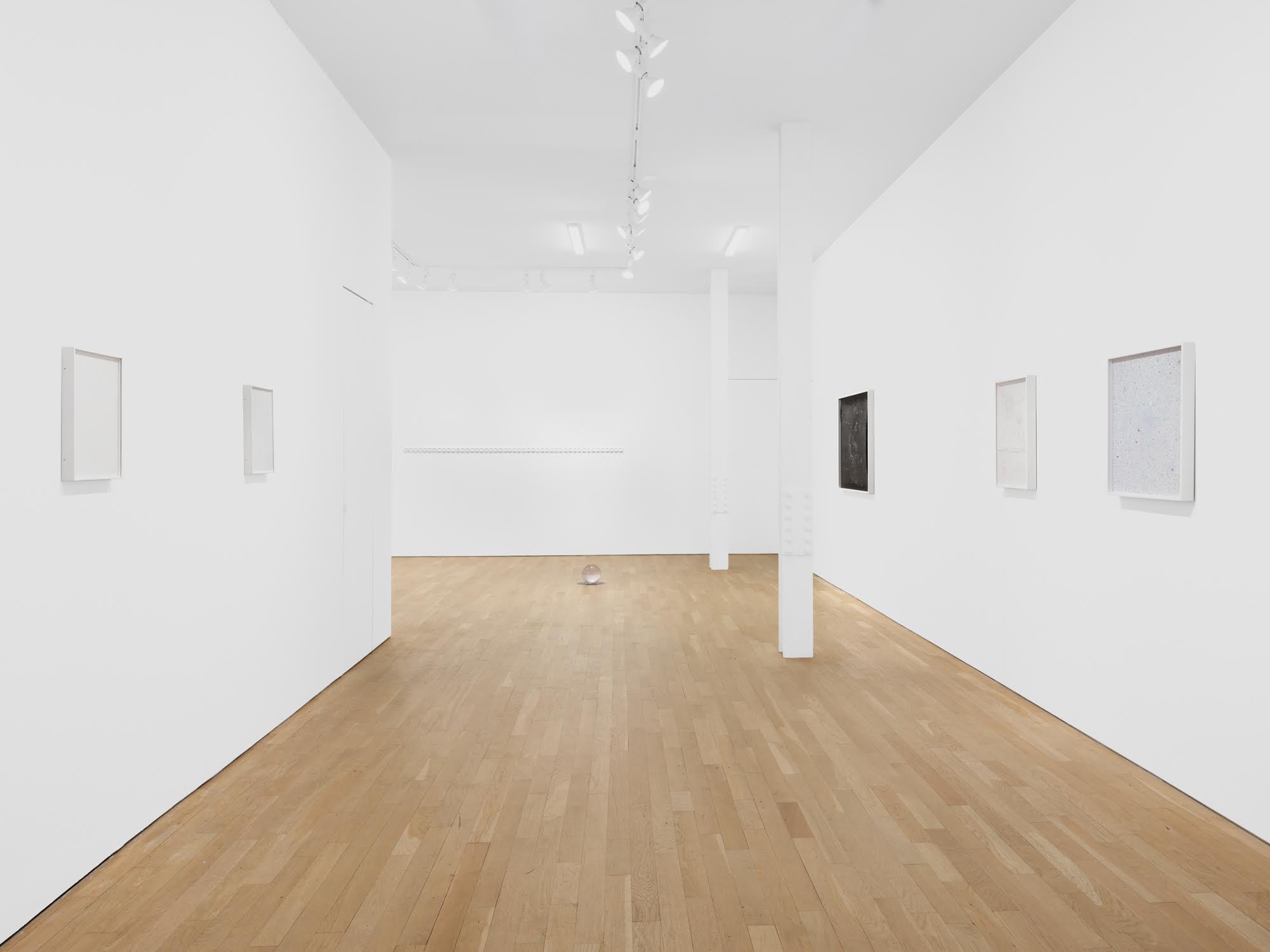
Molly Rose Lieberman spends her days surrounded by the ancillary ephemera of creative production. As an archivist, she works in the stacks with documents, images, and material relics of modern art history. In the evenings she comes home to the apartment she sublets, where any walls not covered in old books on art, philosophy and global interests are painted pumpkin, sky blue, or papered in a pale chartreuse Edwardian print, tacked with her own mementos and bric-a-brac. In the early mornings before work she walks eight blocks to her studio, a second floor former massage parlor that also serves as a storage space for mid-century modern odds and ends her subletters are deaccessioning online, with big windows eye-level to the bouncing paper lanterns strung across Pell Street. The floors here are split between soft sage paint and an oatmeal carpet – a melange that casts a bubbly tranquility one might assume was left by the massage parlor, but wasn’t. It is in each of these spaces that the work for Alive Girl has been conceived. Now, the artist adopts the gallery as her own in a sort of reenactment, resembling the comforts of her environmental palimpsest in place of the white cube’s conventional neutrality.
David Joselit refers to painting as a “live medium,” wherein “the marking and storage or accumulation of time are simultaneous and ongoing.” [1] Lieberman’s practice operates in the perpetual midst of ongoingness, puzzling physical and emotional sensations in response to the rhythms and conflicts of routine. She is a symbiotic inhabitant of her crowded environs, and much of her work repurposes found frames acquired from them as vessels for her own experiences. Layers of memory are embedded in material and affective gestures, filtering a sense of trace for object and place through the poetics of the personal.
Lieberman arrived at the practice of painting through writing, drawing and sculptural assemblage, and this evolution is reenacted in much of the work’s processes. Take Jeans pieces XL, a painting that began in 2018 when she acquired its massive, discarded frame that previously housed an architectural plan. As the frame moved from office storage to multiple studios, the artist traveled out of the country with sheets of blue paper in a suitcase on which she made several drawings. Upon her return, the drawings were ripped into small squares and reconfigured as a grid on the gray mat of the frame’s interior. Its finished materials list reads almost like an assemblage, containing: watercolor, pastel, ink, photographs, and paper, contained in the artist’s frame.
On the other hand, Gray-growing gold is built from language. Its underpainting contains the phrase, “I am in love with the center,” a sentiment both referring to the middle seam of the work’s surface composed of two identical pieces of masonite and celebrating the body’s core strength. The letters act as guides for formal foundations, setting the scene for two figures derived from a historic textile fragment to re-enact the panels’ parity in its center.
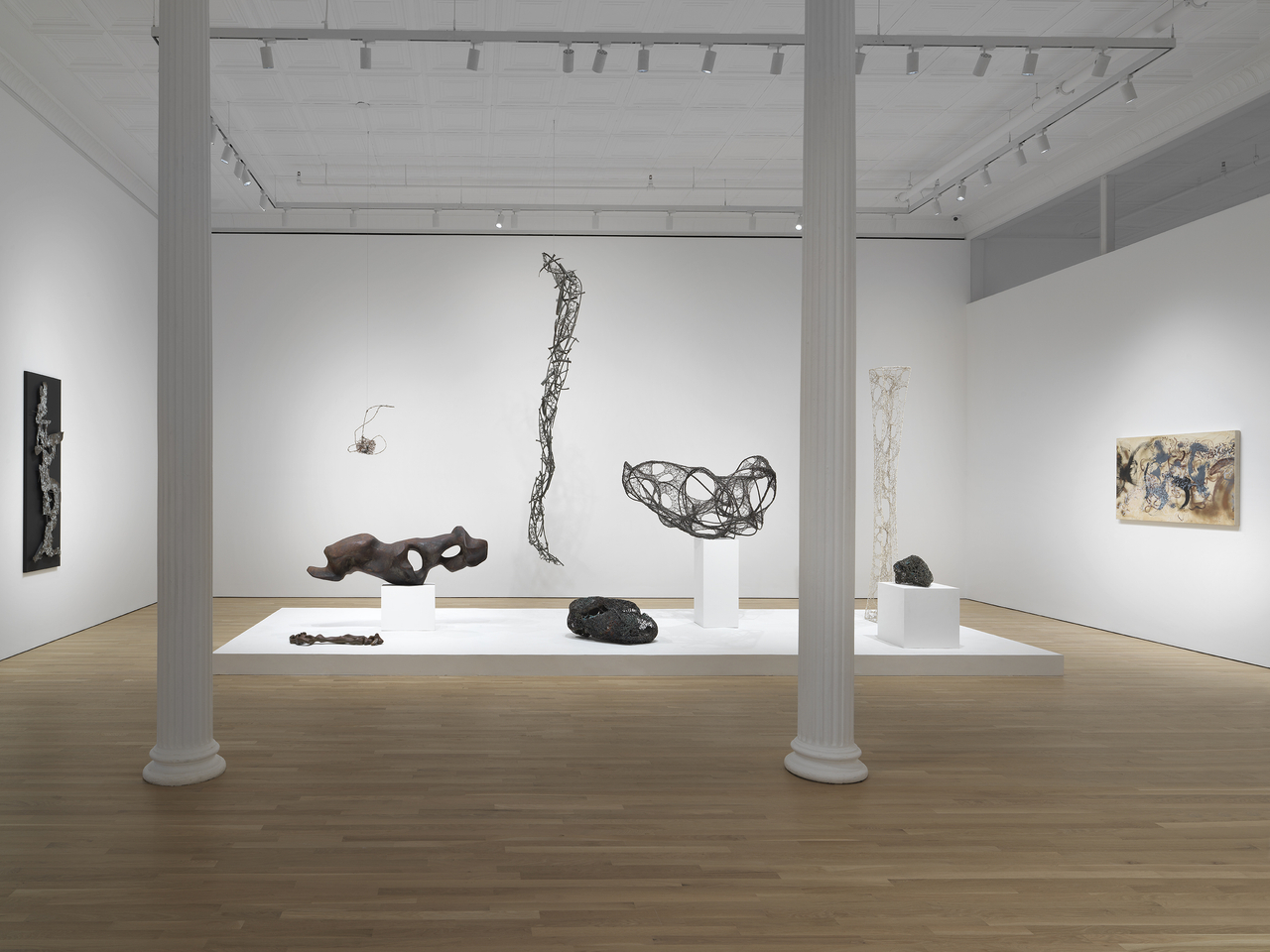
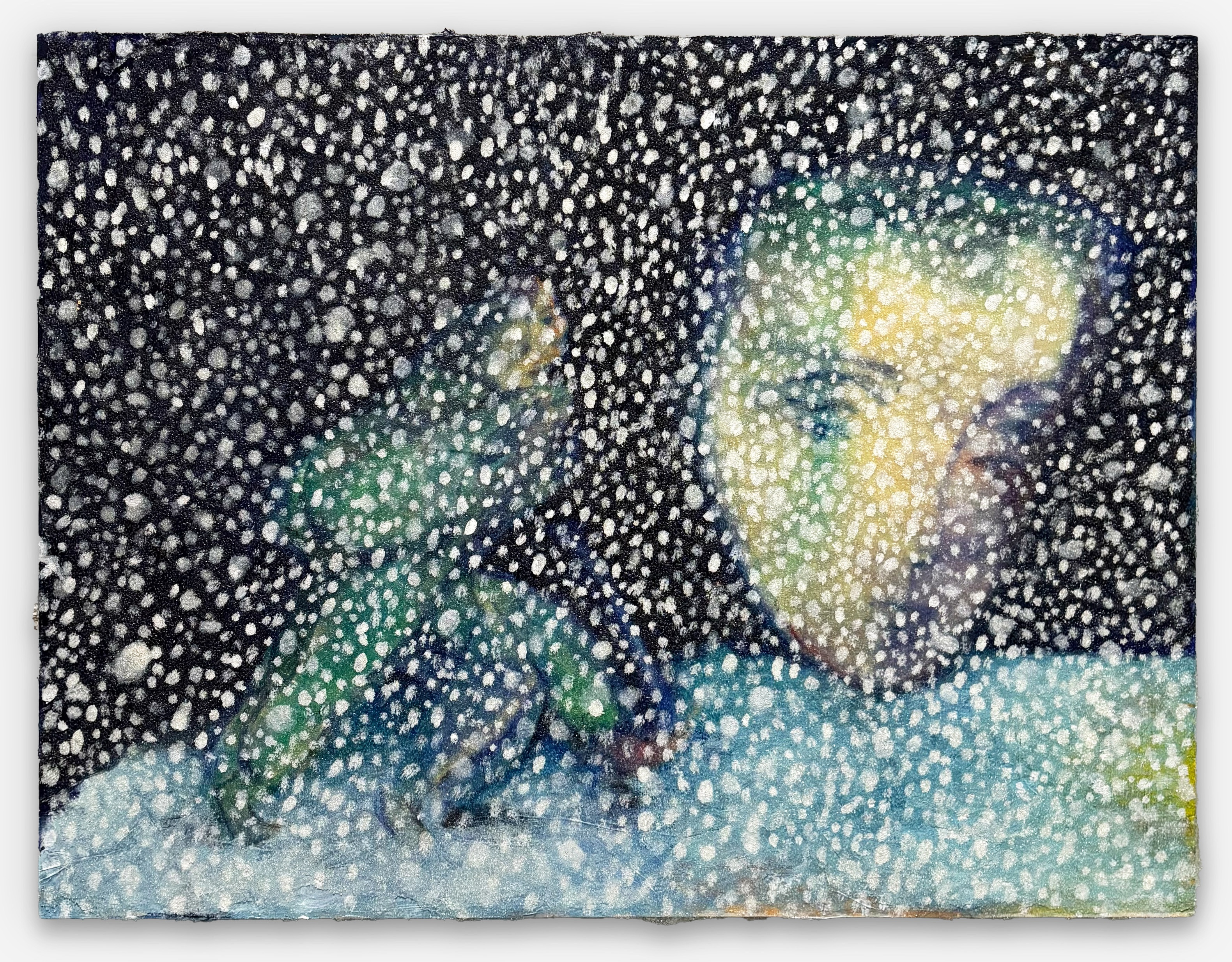
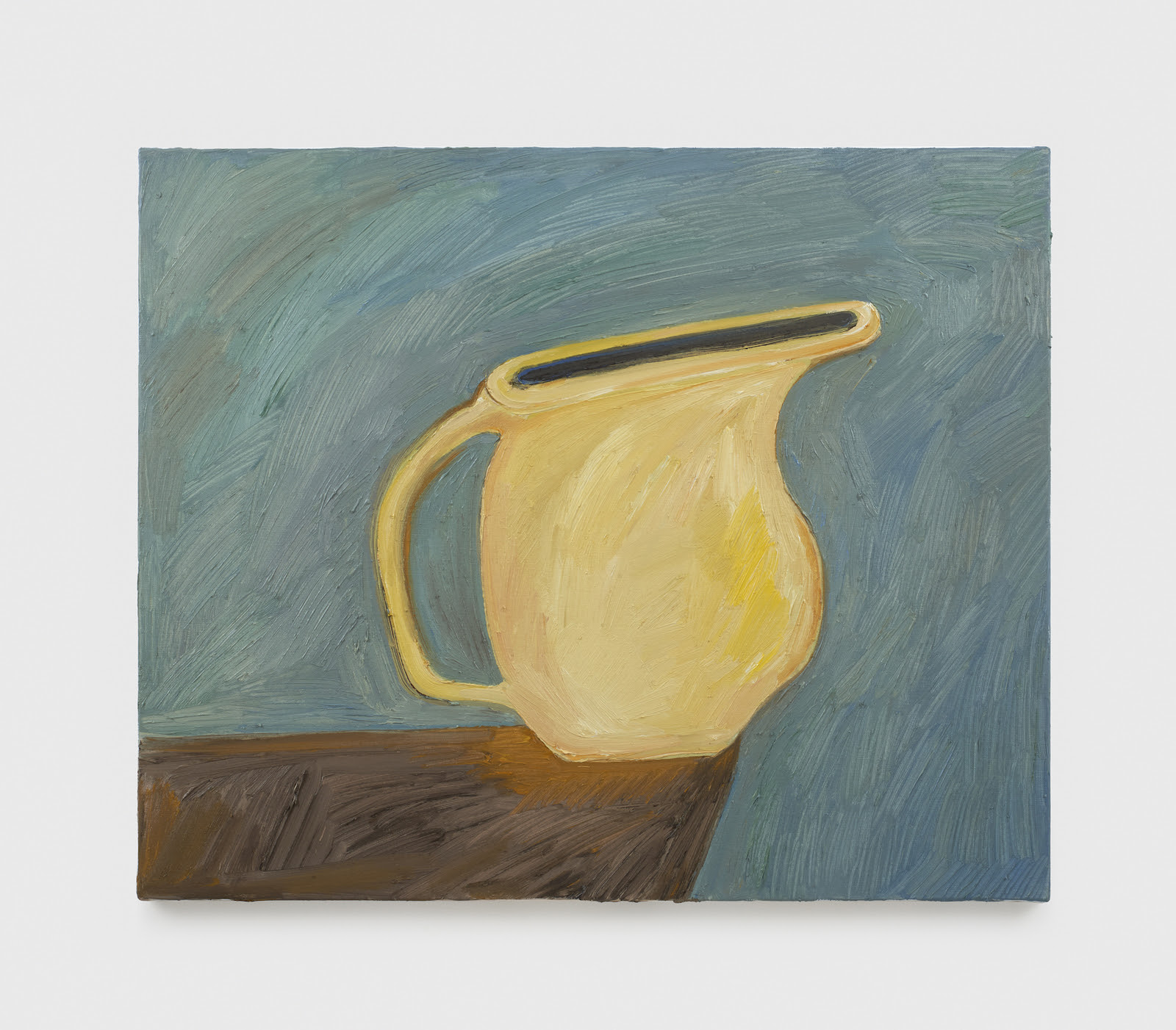
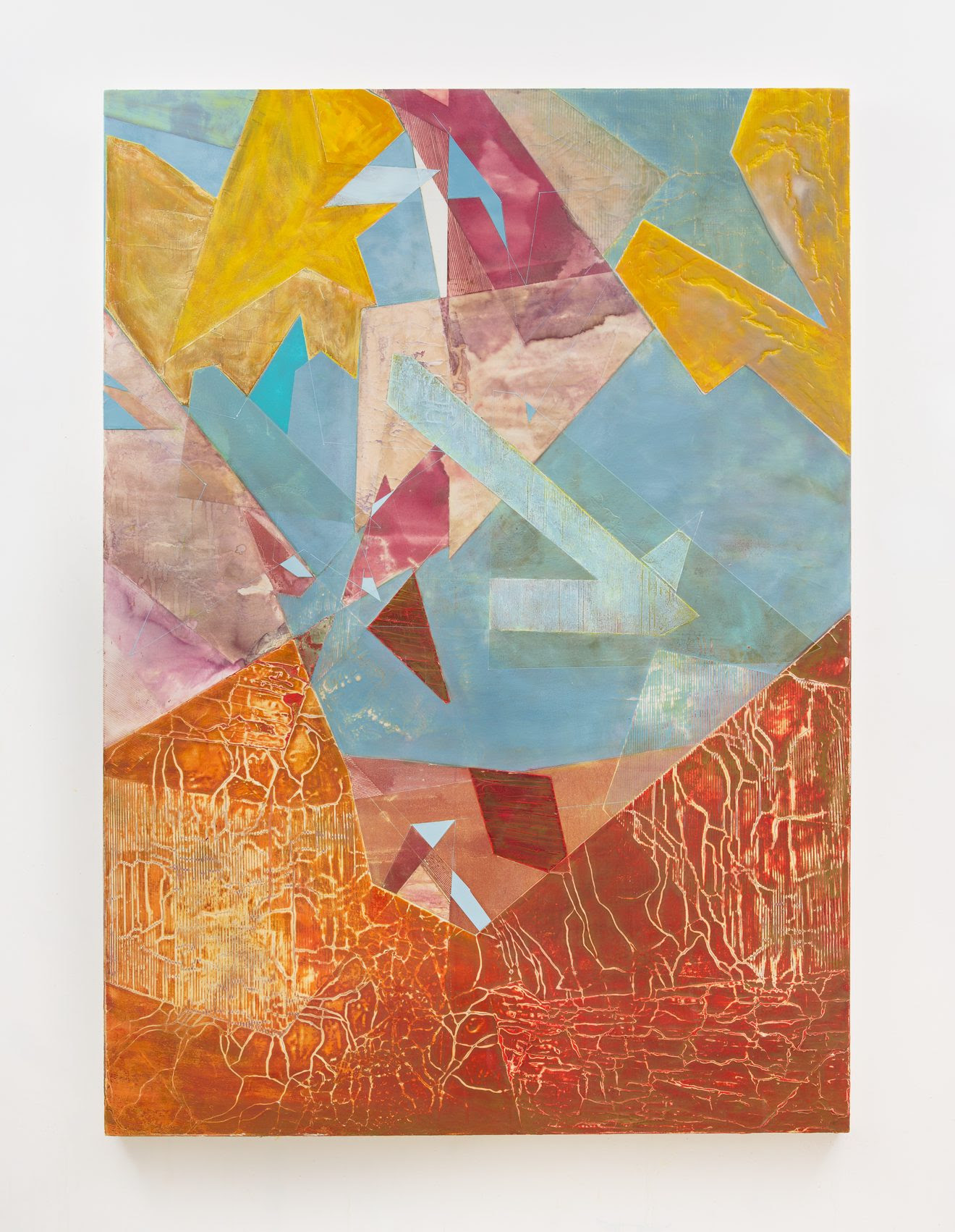
Flowing out from the gallery’s carpeted back room are a series of works emblematic of Lieberman’s dedication to finding possibility within preexisting structures. Found steel frames are flipped inwards, their original backings (also masonite) becoming painted surfaces. Their new backsides are discreetly filled with custom steel sheets one might notice upon angular inspection, as the works float an inch off the wall by Lieberman’s invented embellishment mounts. Within their novel hosts, each painting – ranging from figural to abstract – mediates a balance between intimacy and obscurity, or observation and action.
Molly Rose Lieberman (b. 1994, Brooklyn) lives and works in New York. Selected group exhibitions include: Greene Naftali, New York (2022); Chapter, New York (2022); Theta, New York (2022); and Thierry Goldberg, New York (2020). Prior solo exhibitions include: Gern, New York (2021); and Fonda, Leipzig (2020).
1 - David Joselit. “Marking, Scoring, Storing, and Speculating (on Time).” Painting beyond Itself the Medium in the Post-Medium Condition, edited by Isabelle Graw and Ewa Lajer-Burcharth, Sternberg Press, Berlin, 2016, p. 12.