Ended
Gabriel Chaile
Time, Time, and Half a Time
Jun 1 – Aug 12, 2023
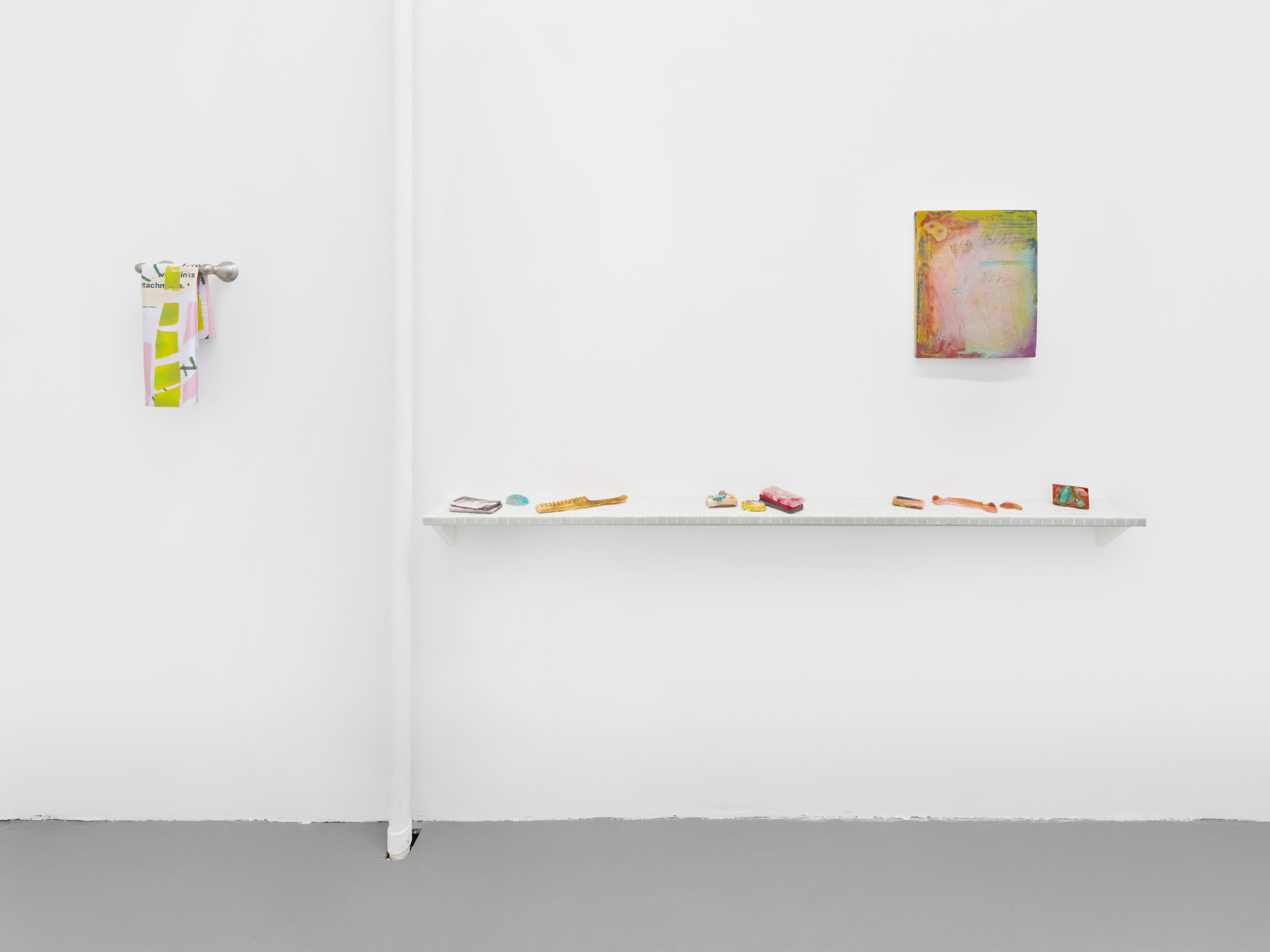
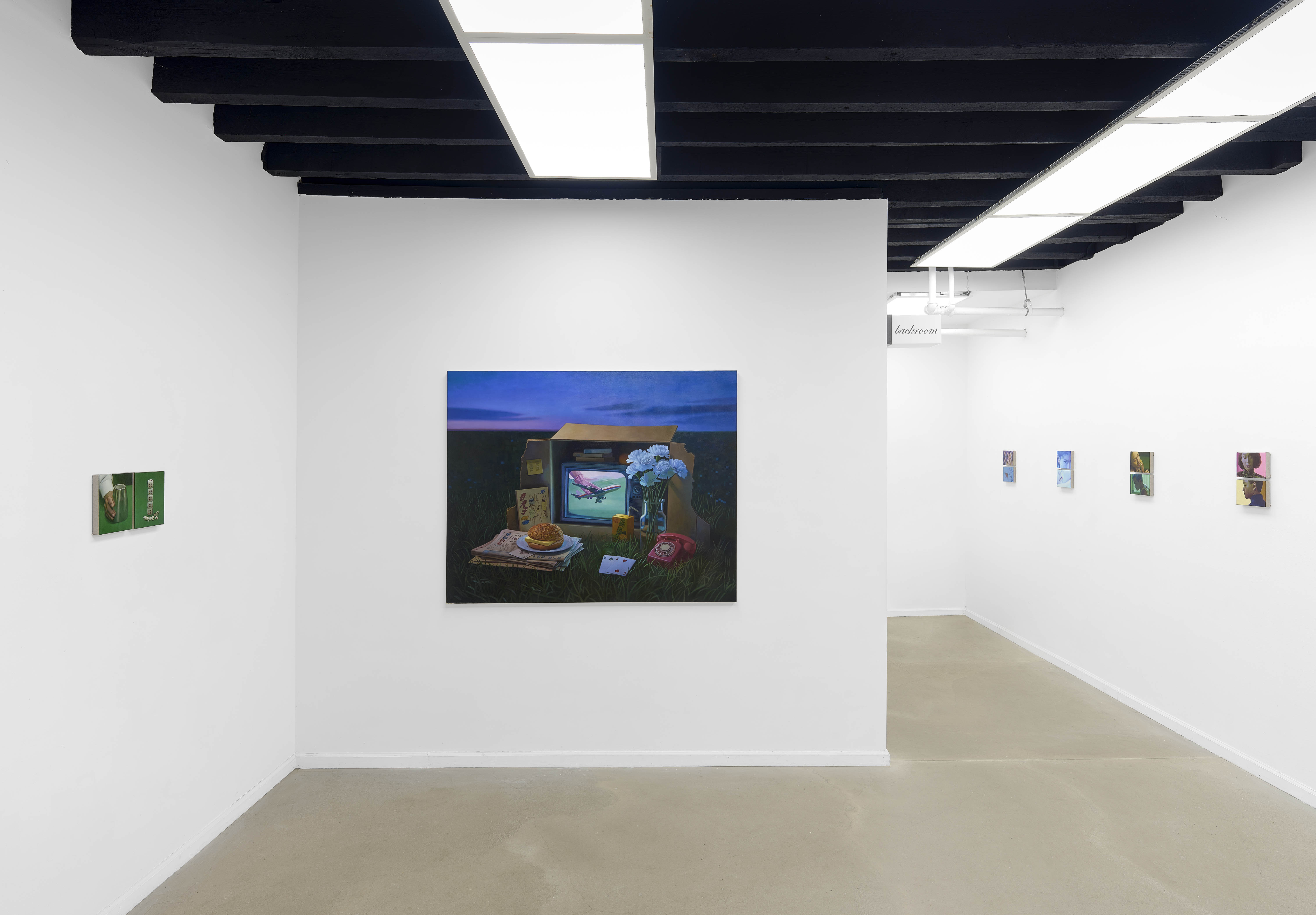
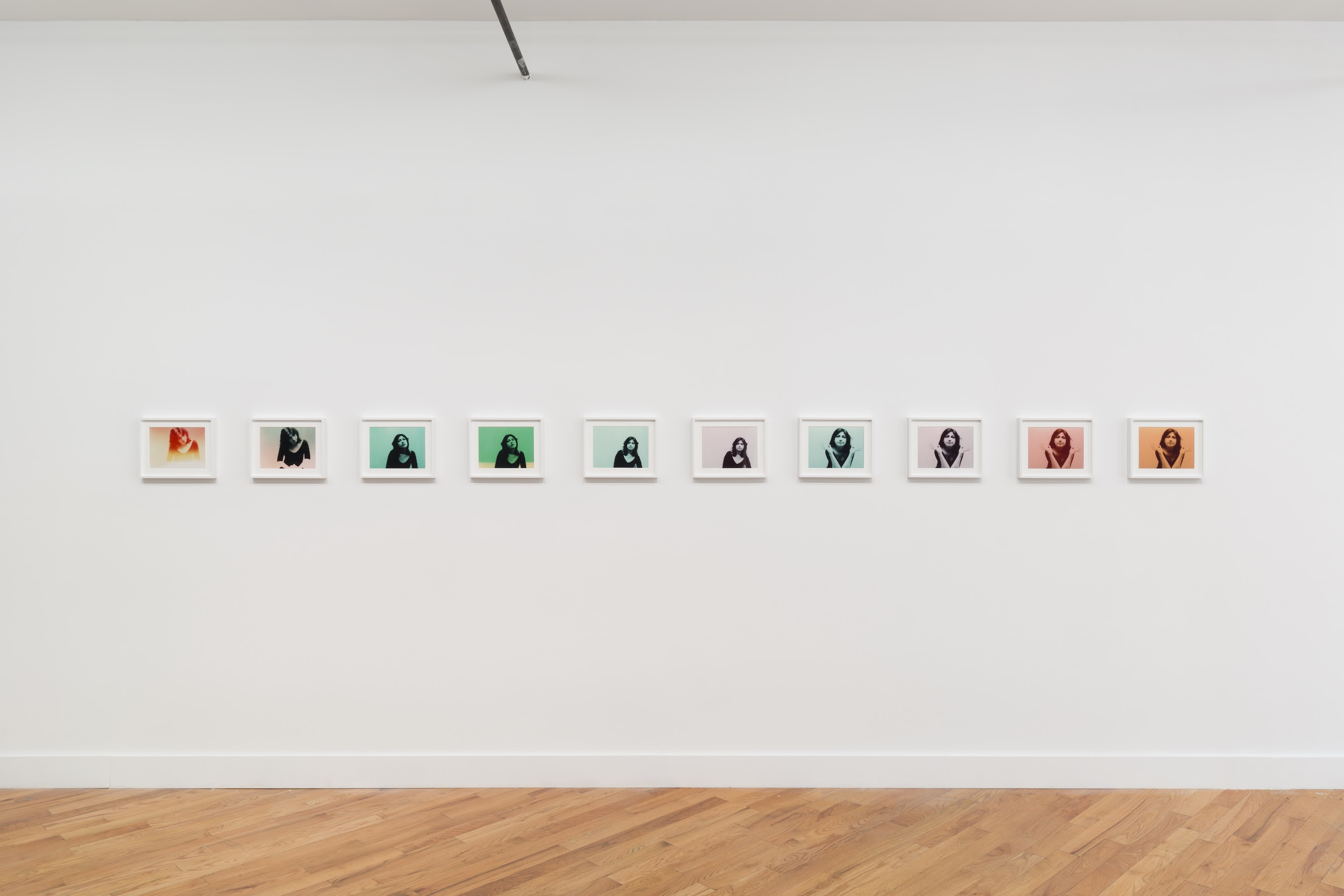
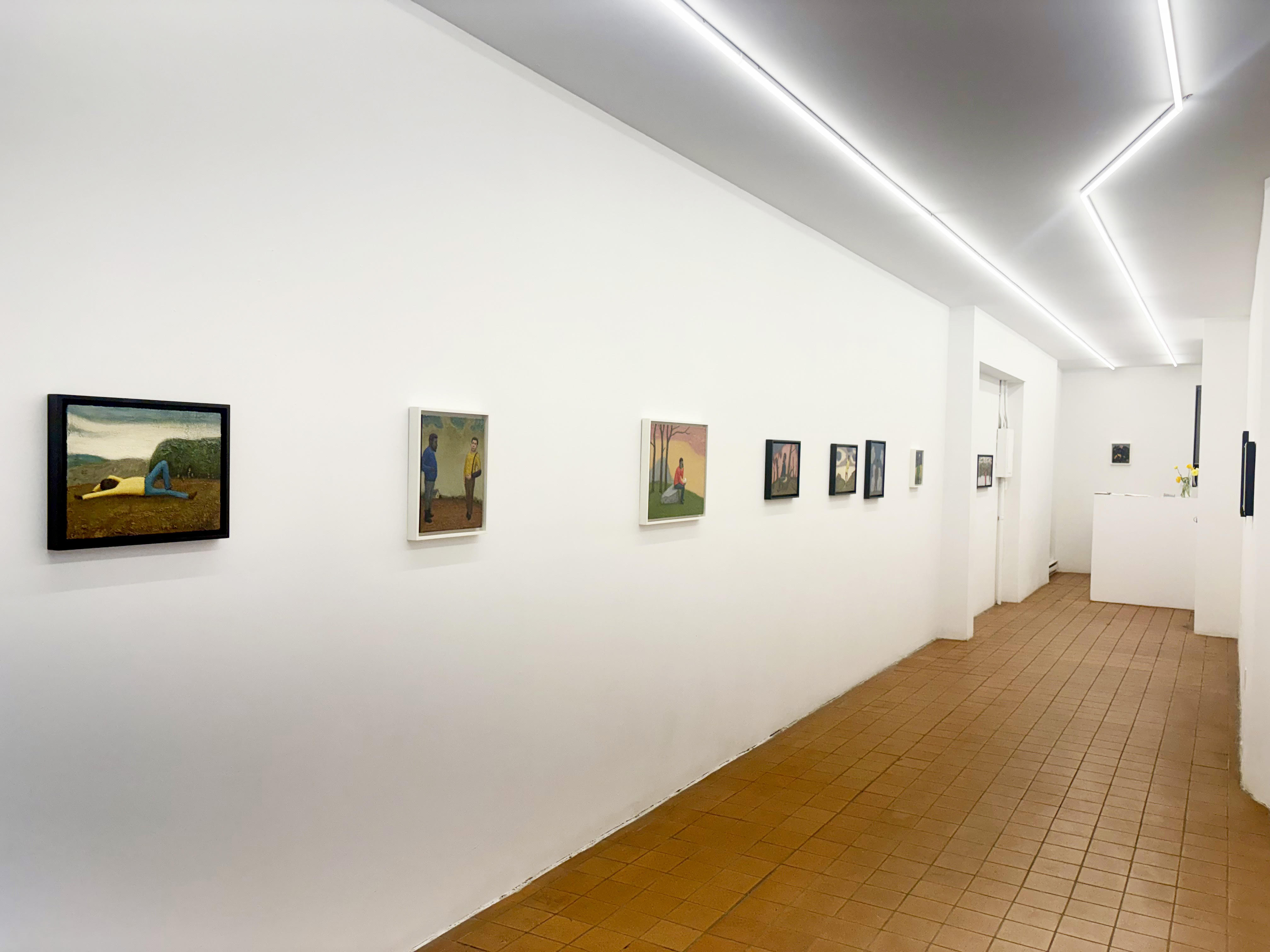
Amid urban sprawl, where towering giants scrape the sky, Gabriel Chaile’s work emerges with his first solo show in New York at Barro Gallery. In the realm of fleeting temporality, where different possibilities of the future intertwine like specters and where parallel existences point towards untraveled paths, Chaile’s work unfolds from different periods of the artist’s creative life. On display in the main room is an installation titled Salir del surco al labrar la tierra: delirios de grandeza II [Leaving the Furrow When Tilling the Soil: Delusions of Grandeur II], and in the second room is Proto, a film represented only by it synopsis, a poster, three sculptures, and a series of ten paintings that build a narrative as if it were an animated sequence.
Time, Times, and Half a Time is presented alongside The wind blows where it wishes, a public art sculpture commissioned by the High Line. The colossal sculpture conceived in adobe, Gabriel Chaile’s signature material, was created from his observations of the detailed interpretation of Leonardo da Vinci’s nature sketches, biblical verses, archaeological pieces, and depictions of natural phenomena woven throughout art history.
Chaile unveils the genesis of culture — a nexus of interwoven relationships born out of conventions, customs, and struggles. He navigates those intertwined destinies that implicate both the individual and the collective. With a penetrating gaze, Chaile delves into the enigma separating beings of the same species, questioning the essence of this existential rift. Like a cosmic symphony, the past, once buried in the sepulchers of antiquity, ignites and is transmuted into a potent political force, breaking the bonds of the present.
In the heart of New York, Chaile unfolds his vision, crossing boundaries between the natural world and his sculptural manifesto. He proposes to the wind, rain, snow, and vegetation — the artisans of nature — to animate his creation with melodies that emerge from the passing through and around his sculpture. Chaile observes how the moss advances on the bricks and constructions in New York City, a vegetal memory that does not allow itself to be forgotten. Chaile lets the moss be part of this new version of his early work, which is a reflection on the genesis. About 485 million years ago, green algae conquered the earth and became the first terrestrial plant: moss is the flower of life.
Chaile evokes the image of a sacred temple where new life forms are incubated. In a temple made of adobe, eggs, organic materials, and iron, Chaile conjures the image of God as that of a tireless bricklayer who erects opulent dwellings for others. In contrast, his own home remains an unfinished monument. Past, present, and future converge in the crucible of creation in a ceaseless dance between weakness and strength. As the apostle Paul affirms: “For when I am weak, then I am strong.”
A nomadic mechanical quadruped traverses a desolate terrain on the ethereal palette of pink-tinted landscapes, feeding on the withered ducts of fossilized flora. A solitary egg and a stoic brick surface: a duo of humble relics whispering forgotten secrets. In a bold union of intentions, the triad converges, giving birth to a symbiotic entity consumed by a singular quest: to ignite the nascent flame of life. Thus begins their pilgrimage, an aimless odyssey marked by chance encounter with the last vestige of what was once our planet: an insatiable mosquito.
Silent witnesses to this odyssey, the stars, emancipated from the chains of predictable cycles, materialize as autonomous entities. Illuminating the heavens with an ethereal luminosity, the celestial bodies intertwine their radiant arms, uniting across the cosmic phases in a fervent quest to conjure the optimal ambient temperature. This cosmic ballet conveys the triad’s deepest longing: an ephemeral whisper of life’s potential.
The dialogue between Barro’s exhibition and the High Line marks a starting point in Gabriel Chaile’s corpus of drawings and sculptures.
Each unit of his installation can be interpreted as cells of his large adobe sculptures. In the same way, he proposes the conceptual basis of what he calls Genealogía de la Forma [the Genealogy of Form], which revisits the visual history of the objects that change over time but maintain a genealogical line.
The show’s title, Time, Times, and Half a Time is derived from a biblical reference that is neither fortuitous nor mechanical (Daniel 12:7). A spirit, a manifestation of the otherness that surpasses and mobilizes living beings, prophetically signals a time free of tears and without pain. The language becomes an object in the hands of an artist who revisits and renews forms previously subjugated as a message of emancipation.
—Andrei Fernández & Syd Krochmalny, May 2023
In the works of Gabriel Chaile (Tucumán, 1985) there is a critical-poetical intersection between anthropology, the sacred and its rituals, the political, and pre-Columbian communities of South America, interpreted artistically and with a certain eccentricity and sense of humor. Gabriel carries out his anthropological and visual research beginning from two key concepts that are present all across the body of his oeuvre. These are the engineering of need, consisting on creating objects and structures from art that collaborate in improving the conditions of a certain borderline situation; and the genealogy of shape, which implies acknowledging that every object in its historical repetition provides a story to tell, that is recovered and updated in relation to the new context. The artist utilizes both axioms to make sculptures, do paintings, and build big scale installations that allow several communities overshadowed by history and power structures to gain visibility and have a voice. Gabriel acts like a visual anthropologist: he studies his surrounding context, deconstructs it in new morphologies, charges it with new meaning and throws it into the world in the form of objects and images inviting to reflect on the relation between each other.
His latest works include Where are the Heirs of these Forms? (De Singel. Amberes, 2022), Migrantes são bem-vindos (Kunsthalle Lissabon. Lisbon, 2022), The Milk of Dreams, curated by Cecilia Alemani (59th Venice Biennale, 2022), Anozero, curated by Elfi Turpin & Filipa Oliveira (Coimbra Biennial of Contemporary Art, Portugal, 2022), The Sowers, curated by Anissa Touati & Nathalie Guoit (Fondation Thalie, Brussels, 2021), Soft Water Hard Stone, curated by Margot Norton & Jamillah James (New Museum Triennal, New Museum, New York, 2021), Pés de Barro curated by Chús Martínez & Filipa Ramos (Galeria Municipal o Porto, Portugal, 2021), Esta canción ya tuvo aplausos (ChertLudde, Berlin 2019), Genealogía de la forma, curated by Andrea Fernández (Barro, Buenos Aires, 2019), Diego, curated by Cecilia Alemani (Art Basel Cities, Buenos Aires, 2018), Sonia (El ondulatorio, La Rioja, 2018), Proto, una película de Gabriel Chaile (Galería Ruby, Buenos Aires, 2017), Patricia, curated by Laura Hackel (Museo de Arte Moderno, Buenos Aires, 2017), Mi nombre es legión porque somos muchos (Centro Cultural San Pablo T, Tucumán, 2016), No es mi culpa si viene del río (Centro Cultural Recoleta, Buenos Aires 2015), Salir del surco al labrar la tierra, delirios de grandeza II (Fondo Nacional de las Artes, Buenos Aires, 2014). Chaile has participated in art fairs such as Art Basel (Basilea), The Armory Show (New York) arteBA (Buenos Aires) and Art Basel Miami Beach (Miami). He has been part of many collective exhibitions in Tucumán, Lima, Montevideo, Paris, Cuenca and Buenos Aires and in 2019 he participated in Bienal de Arte Joven (CCRecoleta, Buenos Aires, 2019), BienalSur curated by Leandro Martinez Depetris (EAC, Montevideo, 2019) and “The last supper” in Faena Festival (Miami Beach). He lives and works between Buenos Aires and Lisbon.