
Ended
Olivia Drusin
Dummy
Mar 7 – Apr 20, 2026
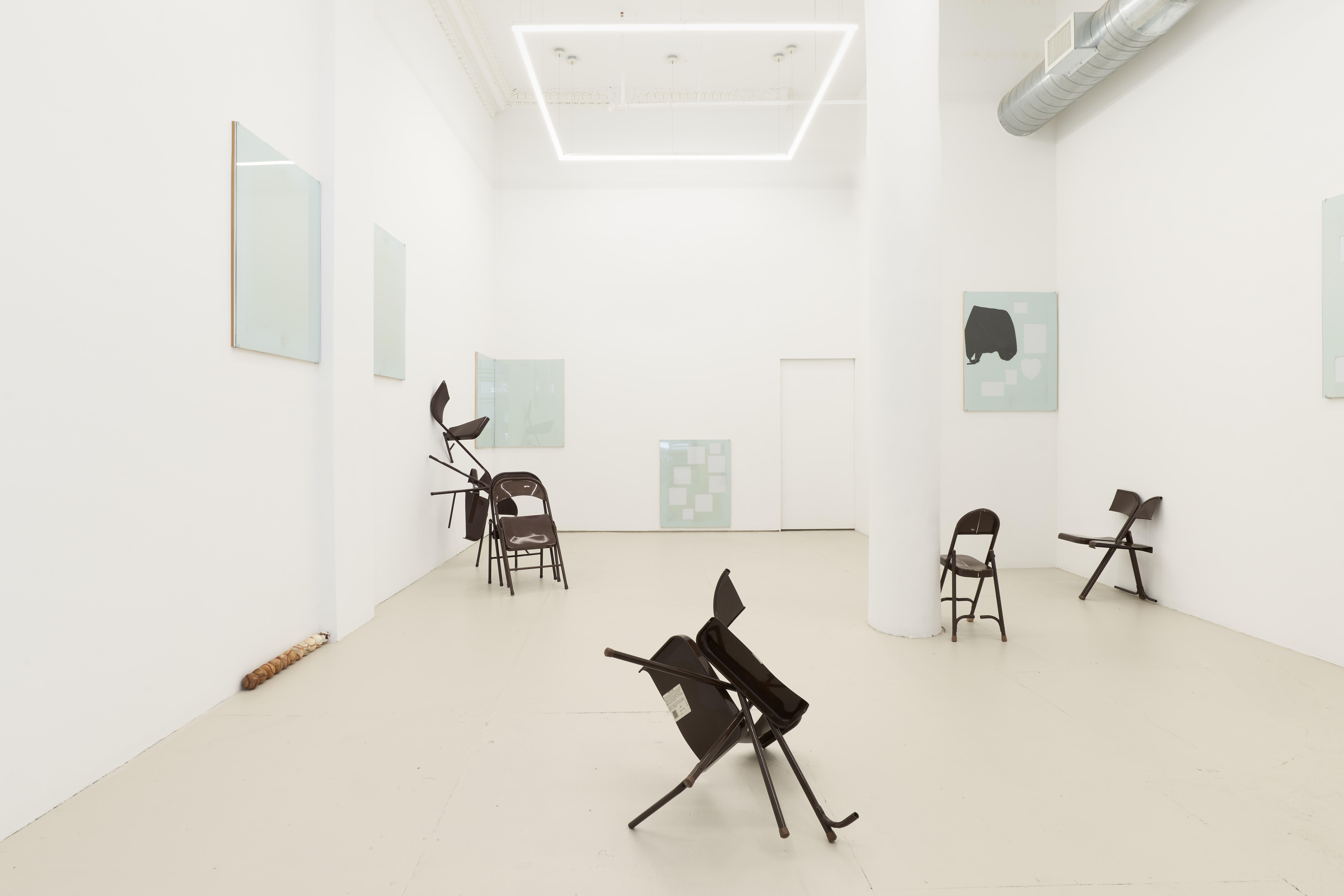
Exactitude signifies that every quality, however subtle, imbues something with its own uniqueness. Exactitude is thin-skinned. It is lean and delicate, offering little shelter. It speaks of translucent layers of pigment, lacking the body to obscure the marks and hues below or the surface on which they rest. An exact painting does not coalesce into expansive blocks of solid color; rather, it invites the eye to discern the meticulous selection and application of each atomized fleck of pigment and medium.
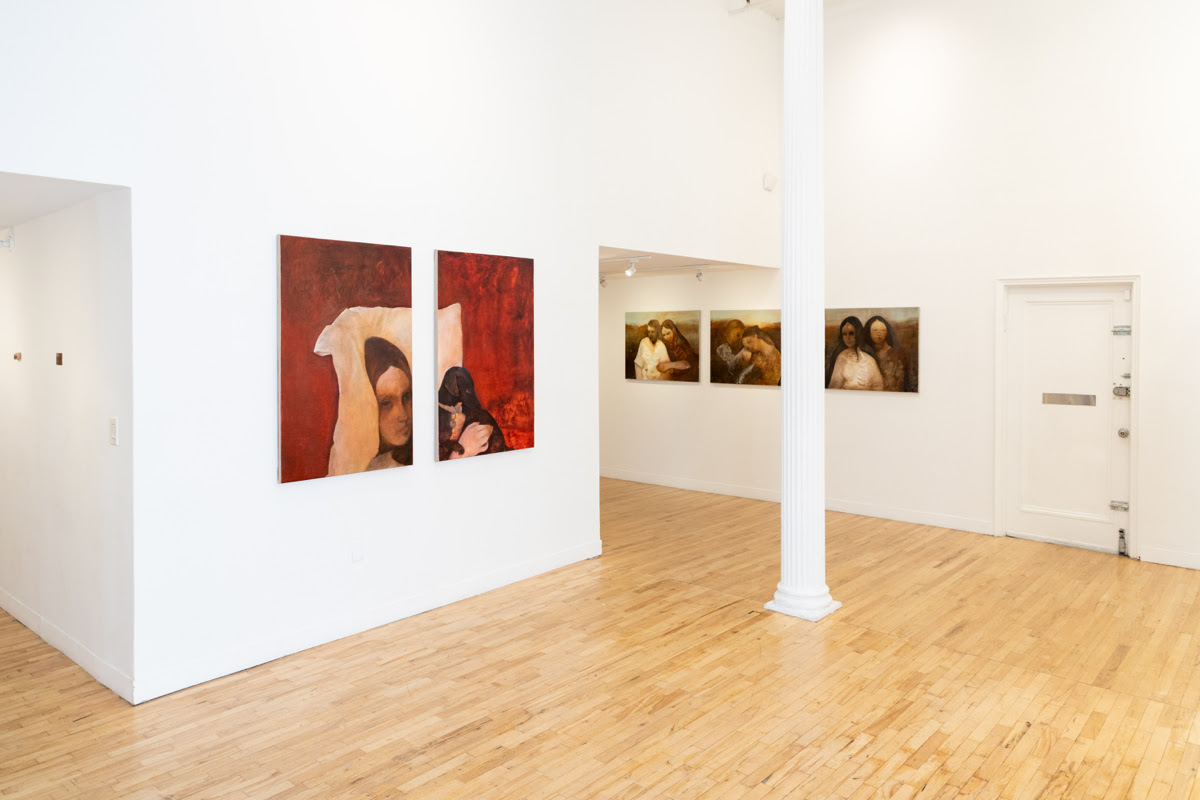
Twine, Fragmented Value, and Threshold Loop—all on wood—illustrate how this exactitude is calibrated to the grounding material, a substratum of painting often overlooked when one becomes absorbed in interpreting the surface. Since this trio resides on wood, it possesses an anatomical clarity. The surface imprints itself upon the image. The accumulation of color is tender and nuanced. Heavy layers might smooth over the peaks and valleys of wood's organic landscape, but that is not the intention here. Instead, these images reveal two truths: the truth of what they depict, and the truth of their material. They are paintings that you can both fall into, and also procedurally fall through.
Another common element in the show is the depiction of reflective surfaces that redirect to light sources outside of the frame. Light in these situations is not pure. It is the precisely-observed banal light that comes from a bulb that is too warm screwed into an unflattering overhead reflected off the walls in a corridor that is too narrow. Or it's the stalking light of an enclosed passage that exudes the smell of ammonia as in Tunneling Scaffolding. It is, again, exact. An observed phenomenon that leads to a process of very precise decisions. In Spider a viridian glimmer, applied early in the composition's development, remains unmasked. The entire visual experience begins with a light source out of frame, refracted through a prism dangling from a chandelier's arm. The subject (a light source) is the ventriloquist's dummy for another light source. It's a nuanced way to render light. It emphasizes its component chromatic ingredients, rather than the thing itself.
Liminal gets overused these days. Its usage chart really shot up after 2000 and continues to reach record levels year after year. I know Drusin dances around this word, preferring to describe scenarios as mundane and intimate as in her most recent two-person exhibition. I understand the aversion, but her painting illustrates an intention captured by that word very well. The liminal by its definition as a transitional moment cannot be really abstracted and moralized. Its mood is not divine or pure or proper. It's really a condition made out of components that are out of the frame, colliding at a threshold. The liminal in painting is about seeing the exact effects of elements as they move through an image, and not the sources and conclusions.
—Eduardo A. Alfonso
Olivia Drusin (b. 1994, New York, NY) is a Brooklyn-based painter whose work examines the psychological dimensions of public and private space through reductive depictions of thresholds, obscured views, and the uncanny within the everyday. Drusin received her MFA from Columbia University in 2024 and her BFA from The Cooper Union School of Art in 2016. Recent duo and group exhibitions include GIVE ME TWO curated by Marcus Jahmal and Giorgia Alliata at Anton Kern, New York, NY; Passion for the Void at Spill 180, Brooklyn, NY; Entanglements at MAMA Projects, New York, NY; Inside Out / Outside In at Martha's, Austin, TX; Landscapes of Fear at International Waters, Brooklyn, NY; All Our Puny Sorrows at Pablo's Birthday, New York, NY; and Painting As Is II at Nathalie Karg Gallery, New York, NY. Her work has been featured in Purple and Topical Cream, and she is a recipient of the Dean's Travel Grant at Columbia University and The Eleanor Gay Lee Gallery Foundation Scholar Award at Cooper Union.