Ended Dec 16
Tony Chrenka
Oct 27 – Dec 16, 2023
More from Tony Chrenka on Gallop
Theta is proud to present Tony Chrenka’s first solo gallery exhibition in New York City.
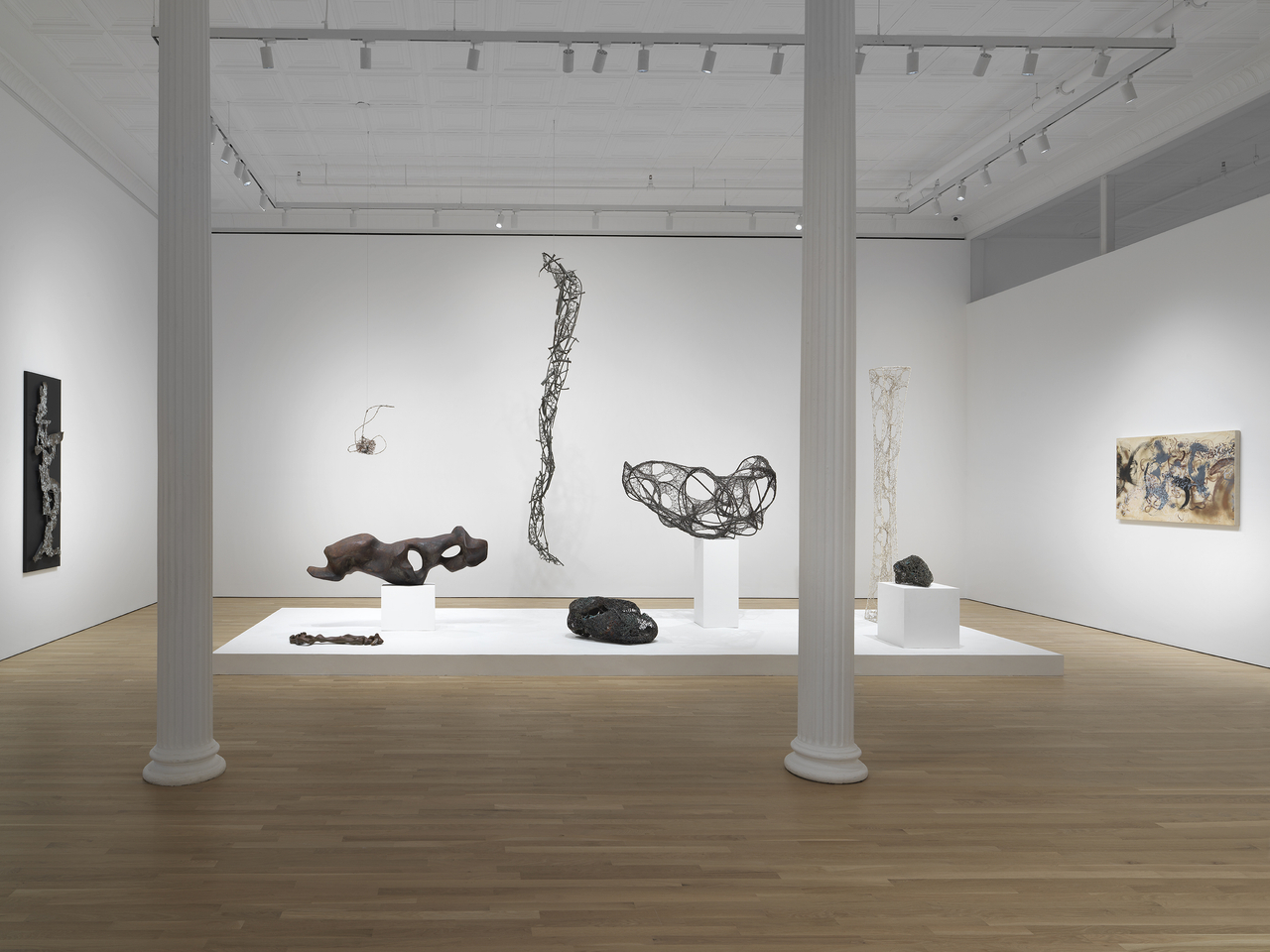
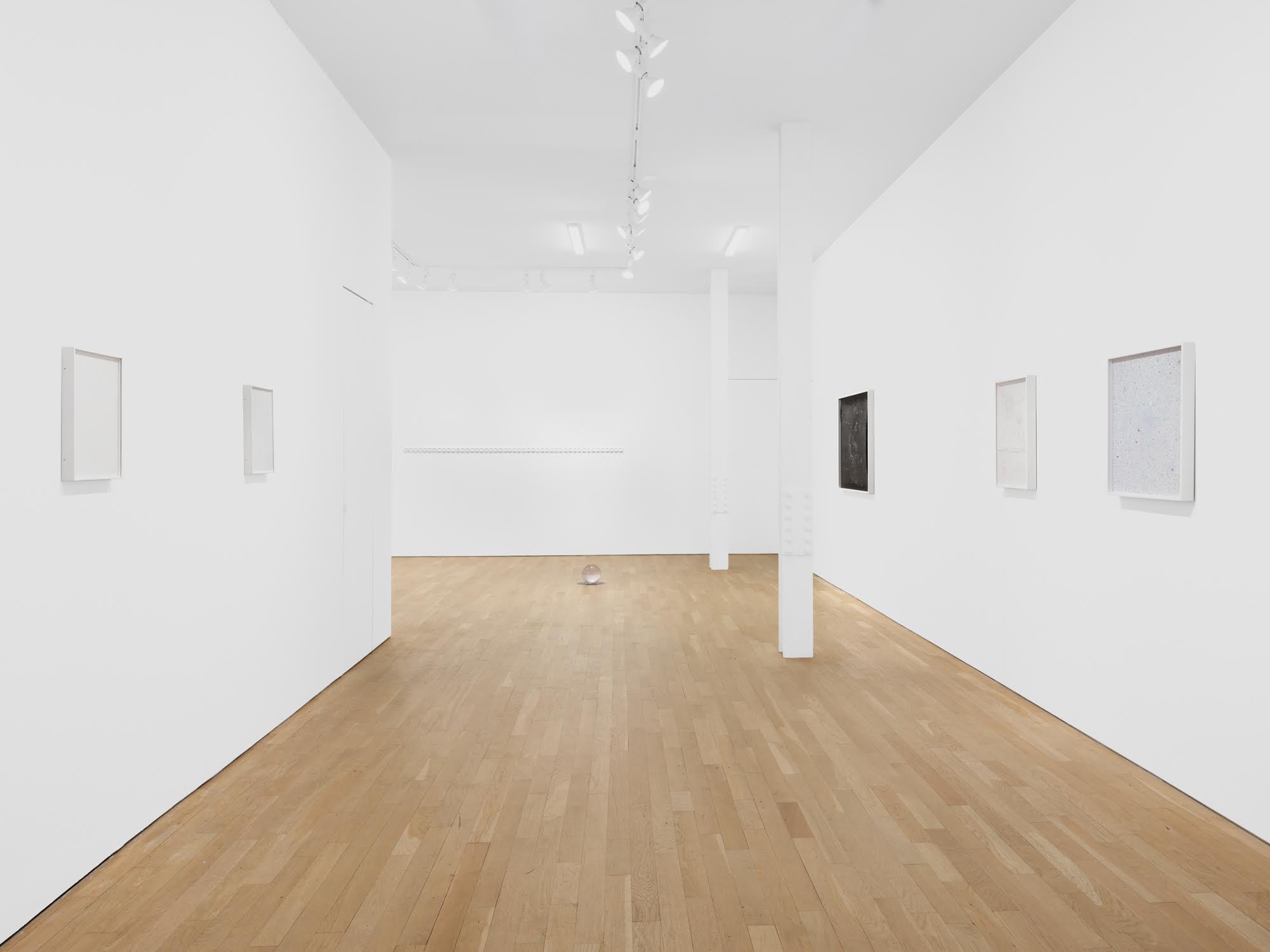
The sculptures in this exhibition compound the margin of error in mylar’s near-total passivity to visible light. Their extreme reflectivity is not the result of polish, but of layering: when clear mylar is wrapped around itself enough times, its minimal refraction becomes exponential, scattering light between its layers. Interleaved within the wrap of each elliptical sculpture are shaped colored lighting gels. They augment this entropy and give each wrap a submerged composition. The work, then, turns on the infra-thin depth of what seems to be surface, and rewards close looking more than their appearance as minimalist sculptures might initially suggest.
Mylar is useful for its protective properties, whether for libraries and antiquariats, sterilized hospitals, or food packaging facilities. It also counts photography among its many applications – particularly in motion film, since its flexibility allows it to spool. Traditionally, the “film” of photography has been celluloid coated with photosensitive emulsion. Celluloid is highly flammable, and even when it doesn’t catch fire it is suboptimally archival. Mylar is more safe, more eternal. Chrenka’s sculptures are not film – although we could imagine them in another life cycle as film’s raw material, like yards of virgin wool. But the exhibition also has photographs.
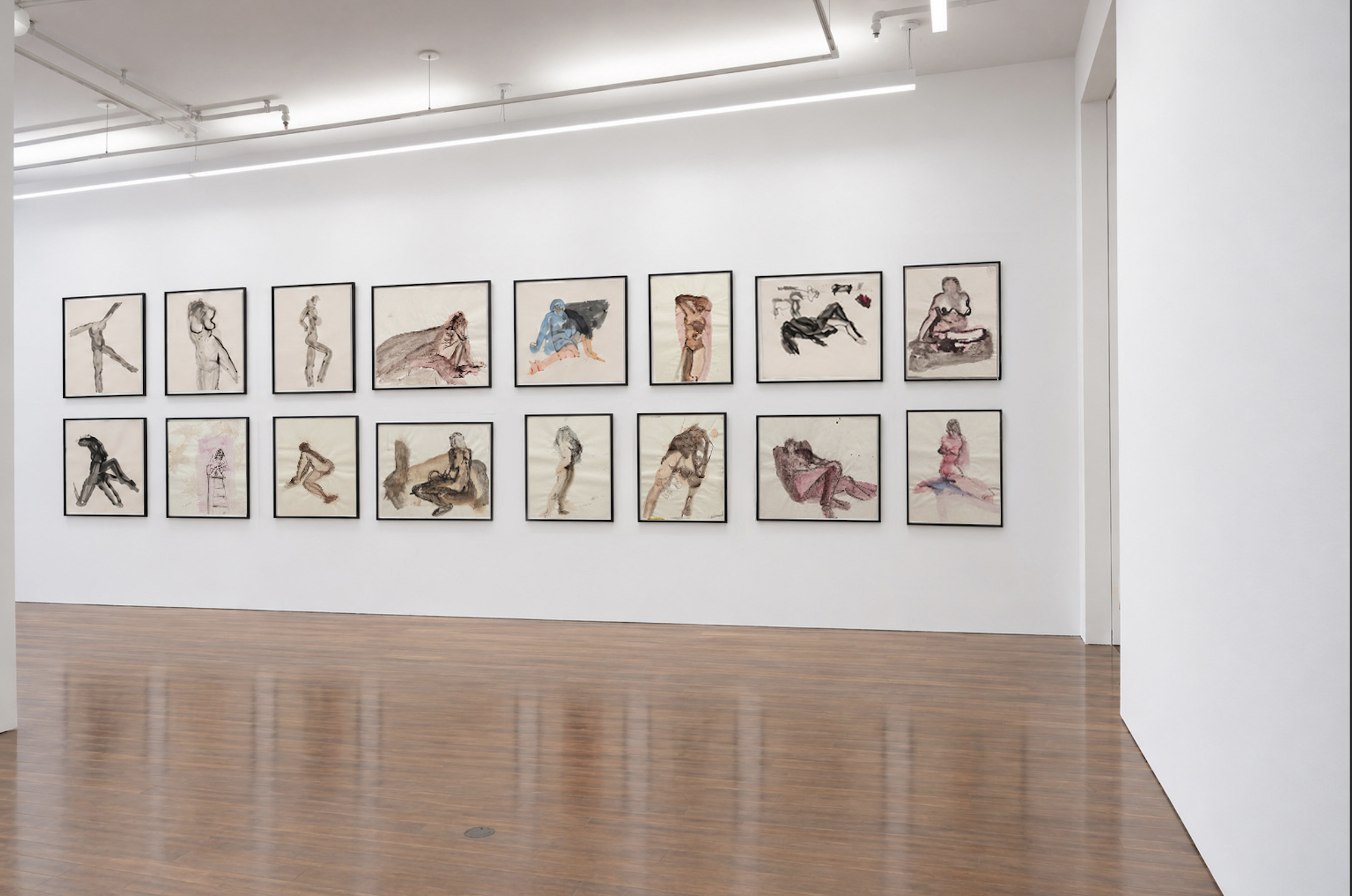
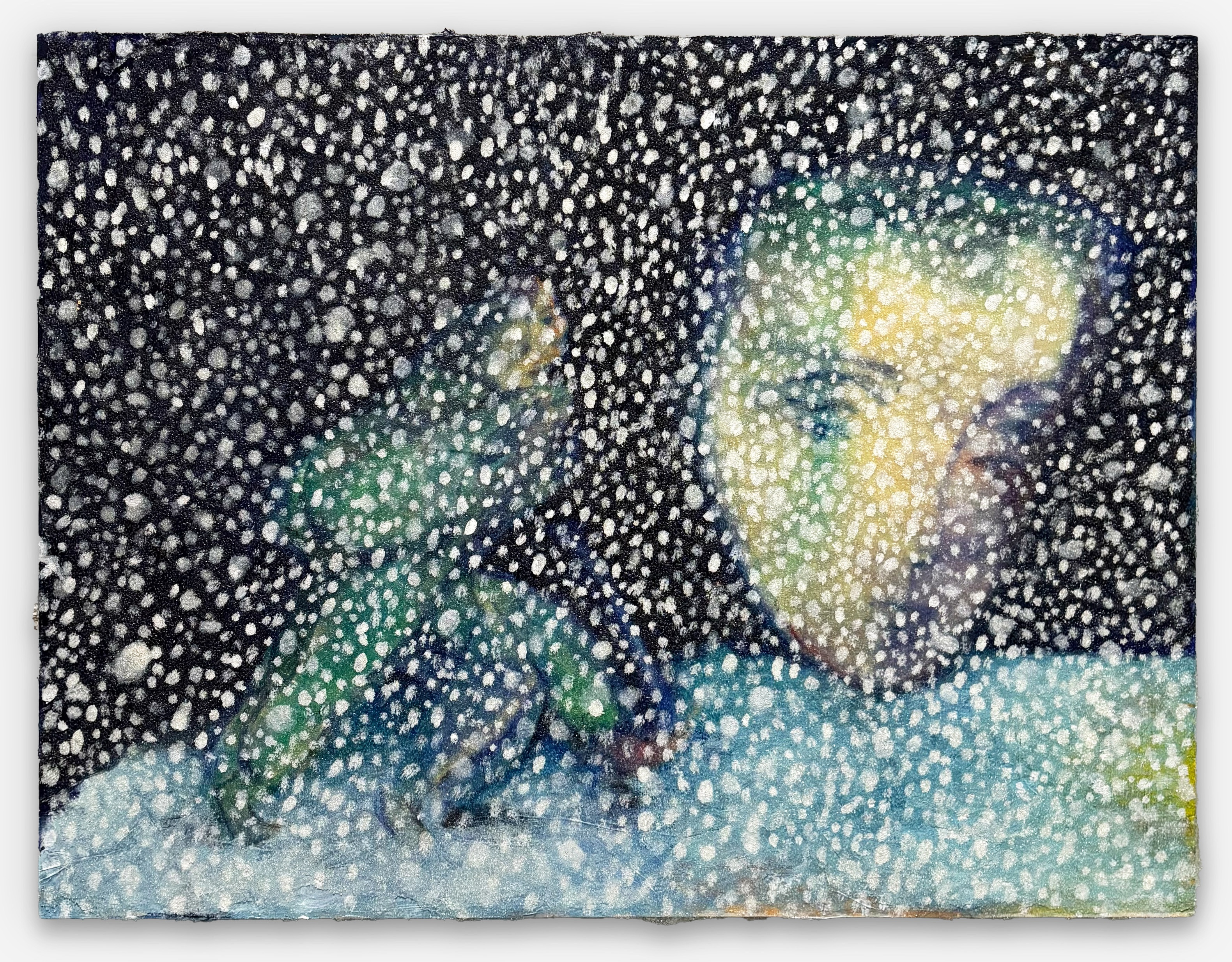
Or does it have one photograph? These ten photographic prints (positives) stem from one 35mm photographic exposure (negative): a shared plastic origin, a shared “motif.” The image itself (a wheatpasted image of a lizard’s eye), like much of the artist’s work across mediums, is interested in refraction and other mimetic seams. Despite their shared origin, the prints diverge wildly in appearance, due to the artist’s rapid improvisations in the darkroom phase. Their variance amplifies the role of the hand in this ostensibly mechanical process of reproduction, to the point that the hand eclipses the referent: each print becomes not a fungible “edition,” but an errant expression of a serial process of transfer.
At first glance, the photographs’ looseness might seem at odds with the apparent solidity of the sculptures. But in fact, the sculptures are homespun, too. Contrary to minimalism’s primordial dream of an artwork without “personal touch,” “a world without creation,”[1] the tubes are a product of handiwork. The rivets of their armatures can be spotted in the depths of their reflection, along with one piece of tape binding each surface; their steel end caps are a product of fervent hand-polishing; and the tightness of their spooling, while aiming for precision, is the result of a careful manual approximation of the machine. For an immortal material, it’s a delicate process. For a steely tube, it’s oddly warm.
—Nick Irvin
Tony Chrenka (b. 1992, Minneapolis) has most recently exhibited work in solo and two-person presentations at Theta, New York (2021) and La Kaje, Brooklyn (2019). In 2023, he participated in the Independent Study Program at The Whitney Museum of American Art. His work has been included in group exhibitions at Clementin Seedorf, Köln (2023), Shoot the Lobster, New York (2022), and Thierry Goldberg Gallery, New York (2021). Chrenka lives and works in New York.
1 - Robert Smithson, unpublished draft of essay "Donald Judd," c. 1965, Robert Smithson and Nancy Holt Papers, 1905-87, bulk 1952-1987, Archives of American Art, Smithsonian Institution, Washinton, DC, Box 3, Folder 29